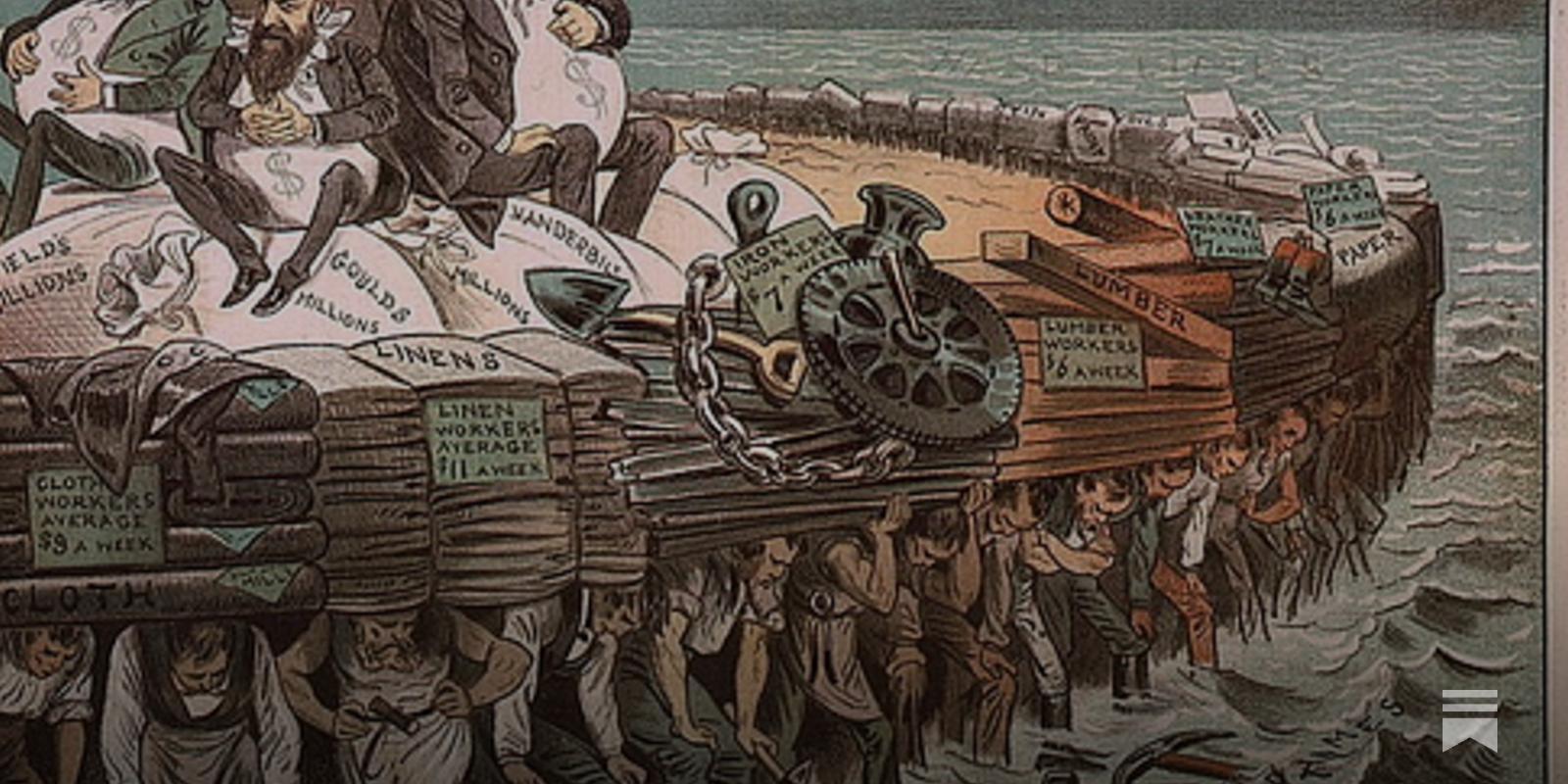
on gradual disempowerment, why UBI and its alternatives won’t work, and what qualities a post-labour, post-AGI wealth distribution system needs.
Universal Basic Income is Capitalism 2.0 | TimJRobinson
A Universal Basic Income (UBI) would improve everyone’s lives, increase our free time, empower workers, and ensure everyone has food and a roof over their head. These are noble goals, but obviously there’s a downside or it would already be implemented, right?
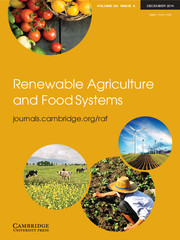
Crop–livestock integration beyond the farm level: a review
AbstractParadoxically, the number of crop–livestock farms is declining across Europe, despite the fact that crop-livestock farms are theoretically optimal to improve the sustainability of agriculture. To solve this issue, crop–livestock integration may be organized beyond the farm level. For instance, local groups of farmers can negotiate land-use allocation patterns and exchange materials such as manure, grain, and straw. Development of such a collective agricultural system raises questions, rarely documented in the literature, about how to integrate crops and livestock among farms, and the consequences, impacts, and conditions of integrating them. Here, we review the different forms of crop–livestock integration beyond the farm level, their potential benefits, and the features of decision support systems (DSS) needed for the integration process. We identify three forms of crop–livestock integration beyond the farm level: local coexistence, complementarity, and synergy, each with increasingly stronger temporal, spatial, and organizational coordination among farms. We claim that the forms of integration implemented define the nature, area, and spatial configuration of crops, grasslands, and animals in farms and landscapes. In turn, these configurations influence the provision of ecosystem services. For instance, we show that the synergy form of integration promotes soil fertility, erosion control, and field-level biological regulation services through organizational coordination among farmers and spatiotemporal integration between crops, grasslands, and animals. We found that social benefits of the synergy form of integration include collective empowerment of farmers. We claim that design of the complementarity and synergy forms of crop–livestock integration can best be supported by collective participatory workshops involving farmers, agricultural consultants, and researchers. In these workshops, spatialized simulation modeling of crop–livestock integration among farms is the basis for achieving the upscaling process involved in integrating beyond the farm level. Facilitators of these workshops have to pay attention to the consequences on governance and equity issues within farmers groups.
How to Star-Man | Arguing from Compassion | Center for Inquiry
For example, that universal basic income (UBI) could ameliorate the loss of jobs due to automation, a straw man would be, “So you want people to sit at home all day and collect free money?” Recently, the term has become a cudgel in the culture wars.

Small Family Farms Aren’t the Answer
The romance of neoliberal peasant farming blinds us to our collective power

Sweat Equity — FARMore
The Sweat Equity Program is a volunteer-driven initiative providing hands-on assistance to farmers who need it most. More than just lending a hand, it shows how vital, soulful, and impactful farming is for all of us. This program bridges the gap between urban and rural communities through meaningful service and education. Together, we are building relationships based on reciprocity and inspiring:
Bradley Nook Farm – Farm Transformers
Jay Wilde’s family bought the farm in 1956 and Jay helped his father run it as an organic farm until his father’s death in 2011. As a long term vegetarian, Jay found taking the cows to be slaughtered to be very unsettling and was always on the lookout for alternatives. In the summer of 2017, after speaking to The Vegan Society, the 59 year old farmer decide to give up 59 of his cattle to a UK sanctuary to be cared for. He felt so guilty sending the cows to be slaughtered that he could no longer operate the farm the same way he had in the past and believed he could create an alternative business model that did not rely on animals as commodities. They have kept a handful of cows on the property as they truly care for the animals and enjoy their presence.

CIBO Technologies
CIBO’s advanced technology seamlessly integrates funding access, agronomic expertise and frictionless measurement to unlock the full potential of regenerative agriculture. Launch and grow high impact programs faster, with lower costs and greater confidence.

Power, Food and Agriculture
One of the most pressing concerns about the industrialization of agriculture and food is the consolidation and concentration of markets for agricultural inputs, agricultural commodities food proces…

How Babylonstoren Turned A Farm Into A $100M Destination (Design Breakdown)
Farm | Highfield Regenerative Farm | Calgary
Homepage for Highfield Regenerative Farm. A community urban farm hub in Calgary. Land revitalization, Regenerative Food, Community Building.
Home | BC Association for Regenerative Agriculture
Farm like an Ecosystem
From my vantage point — which is sitting in the chicken yard, eating just-harvested mulberries, my fingers all blue — farming within an ecosystem can be joyful and meaningful, life-affirming. It should be an integral part of the way we feed the world and revitalize our degraded land.
‘Gigantic’ power of meat industry blocking green alternatives, study finds
Analysis of EU and US shows livestock farmers receive about 1,000 times more public funding than plant-based and cultivated meat

A social-ecological framework for analyzing and designing integrated crop–livestock systems from farm to territory levels
Integrated crop–livestock systems are often considered a promising way to address agricultural sustainability issues. Many authors claim that complementarities and synergies between crops and livestock can improve nutrient cycling and delivery of ecosystem services (ES) in agricultural systems. They have analyzed effects of interactions at the farm level and affirmed the potential advantage of developing crop–livestock interactions at the territory level. However, potential benefits of developing synergies beyond the farm level have not been clearly identified. Thus, we developed a conceptual framework that can be used to analyze, design and perform integrated assessment of crop–livestock systems at the territory level. To address crop–livestock interaction issues, we define it as a social-ecological system called the territorial crop–livestock system (TCLS). The ecological system is represented as three interacting components, crops, grasslands and animals, allowing description of various land uses and their potential effects on nutrient cycling and ES. The social system, represented as farmers interacting with natural-resource managers and agro-food chain actors, determines land use and the nature and intensity of ES delivered. We highlight the importance of coordination and learning among actors to support implementation of complex adaptive systems such as TCLSs. We illustrate the expressive power of our conceptual framework through development of a generic typology of crop–livestock systems. Then we show how our conceptual framework can be used as an intermediary object with stakeholders in participatory design approaches. We illustrate this process by representing four archetypal TCLSs. We provide an example of the design approach implemented in Southwestern France to address severe recurrent water shortages, which includes analysis of land use in the current crop–livestock system and the associated key metabolic and ES issues, identification of options for change and multi-criteria analysis of these options. We conclude that this framework shows great potential to support development of sustainable farming systems at the territory level.