


How to make better software with systems-thinking
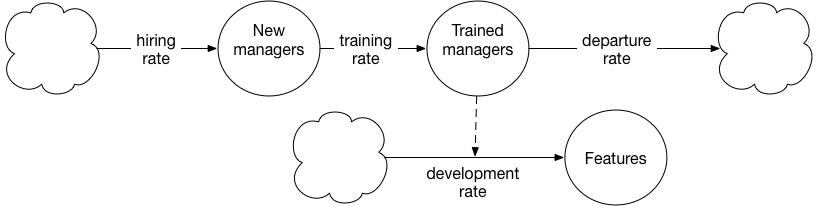
Introduction to systems thinking.
Many effective leaders I’ve worked with have the uncanny knack for working on leverage problems. In some problem domains, the product management skillset is extraordinarily effective for identifying useful problems, but systems thinking is the most universally useful toolkit I’ve found.
Enosis Solutions - Software Development and Testing Services
We design, build, test, modernize, and scale software across the entire product lifecycle, combining deep technical expertise with an AI-accelerated build process.

The mythical 10× programmer is just a good leader
sourcehut is a network of useful open source tools for software project maintainers and collaborators, including git repos, bug tracking, continuous integration, and mailing lists.
The $70B Open Source Software Paradox
It’s no news that over the last 10-15 years, particularly noticeable in the last 5 years, the enterprise software industry has gradually transformed from complex, expensive, closed-source (proprietary) software stacks to extensible/configurable,...

The Case for ‘Developer Experience’
How are developers supposed to manage and coordinate fast-moving, heterogeneous systems including maintenance & operations — and free themselves to build?

Aaron Boodman on Twitter / X
There is this tension in dev tooling right now: Lots of people want to self-host, and not depend on a service. Lots of people also want the vibes of open source - being part of an open development community, having the code, etc.But builders still need to make a living...— Aaron Boodman (@aboodman) January 23, 2024
A plan for open source software maintainers
It seems to me that this is a case where problems are in fact solutions to other problems. To wit:
10 More (Leadership!) Lessons from 10 Years Working in a Fully-Distributed and Remote Company
To make a distributed team work in the long-term it takes deliberate planning and thoughtfulness about your culture, leadership, strategic planning, and team-building.

Cracks in Containerized Development
Nerd rants about developing software in isolation from the home system; toolbx, distrobox, devcontainers, nix, etc
Large tech companies don't need heroes
Large tech companies operate via systems. What that means is that the main outcomes - up to and including the overall success or failure of the company - are driven by a complex network of processes and incentives. These systems are outside the control of any particular person. Like the parts of a large codebase, they have accumulated and co-evolved over time, instead of being designed from scratch.

Why Distributed Systems Are Hard to Develop — and How to Fix It
Here’s what’s missing when developing distributed systems today: Structure. Consistent, codified structure.

Sustainable software manifesto
The systems we build are never neutral. They can magnify harm or support a just and sustainable society. How we build today shapes tomorrow’s possibilities.
Habits of High-Functioning Teams
I often struggle to explain what it means to be part of a high-functioning software team. Sure, there are mountains of literature, and an entire genre of LinkedIn thought leadership that professes all kinds of guidelines and heuristics about what makes teams work, but in my experience, it’s hard to internalize these ideas and follow someone else’s model if you’ve never seen what good looks like.
Malleable Software in the Age of AI - Geoffrey Litt
Plan 9 from Bell Labs
Plan 9 from Bell Labs, an open-source distributed system from the creators of Unix.
daniel: "I don't think we need 10x developers to build great things. I think we need 10x teams – groups of people who care about the same problem, who iterate together, and who make each other better" 🤍

daniel r(ooooooh) at jsconf mx 🇲🇽
wrote a few words on why I think @npmx.dev might be going places
