

A tool for communities to measure and reward value creation.
The community-first software era
Some ideas about how to encode our values into the tools we use

Open Social Network Cookbook
The Open Social Network Cookbook is the collective product of the Open Social Incubator, a cohort that MEDLab hosted from Fall 2024 to Spring 2025. At the heart of our work together was the question: How can the online communities that we participate in use tools that truly reflect our values?
Hypercerts: Recognizing and Rewarding Impact – ATProto Implementation
Hi all, excited to share some of what we’ve been building and to introduce hypercerts to the ATProto community. Where we started The hypercerts project began at Protocol Labs with a simple goal: improve how we fund public goods. Many of the contributions society relies on most—open-source software, scientific R&D, and ecological regeneration—remain underfunded because their value is hard to see, coordinate around, and reward. What are hypercerts Hypercerts address this by serving as digital im...
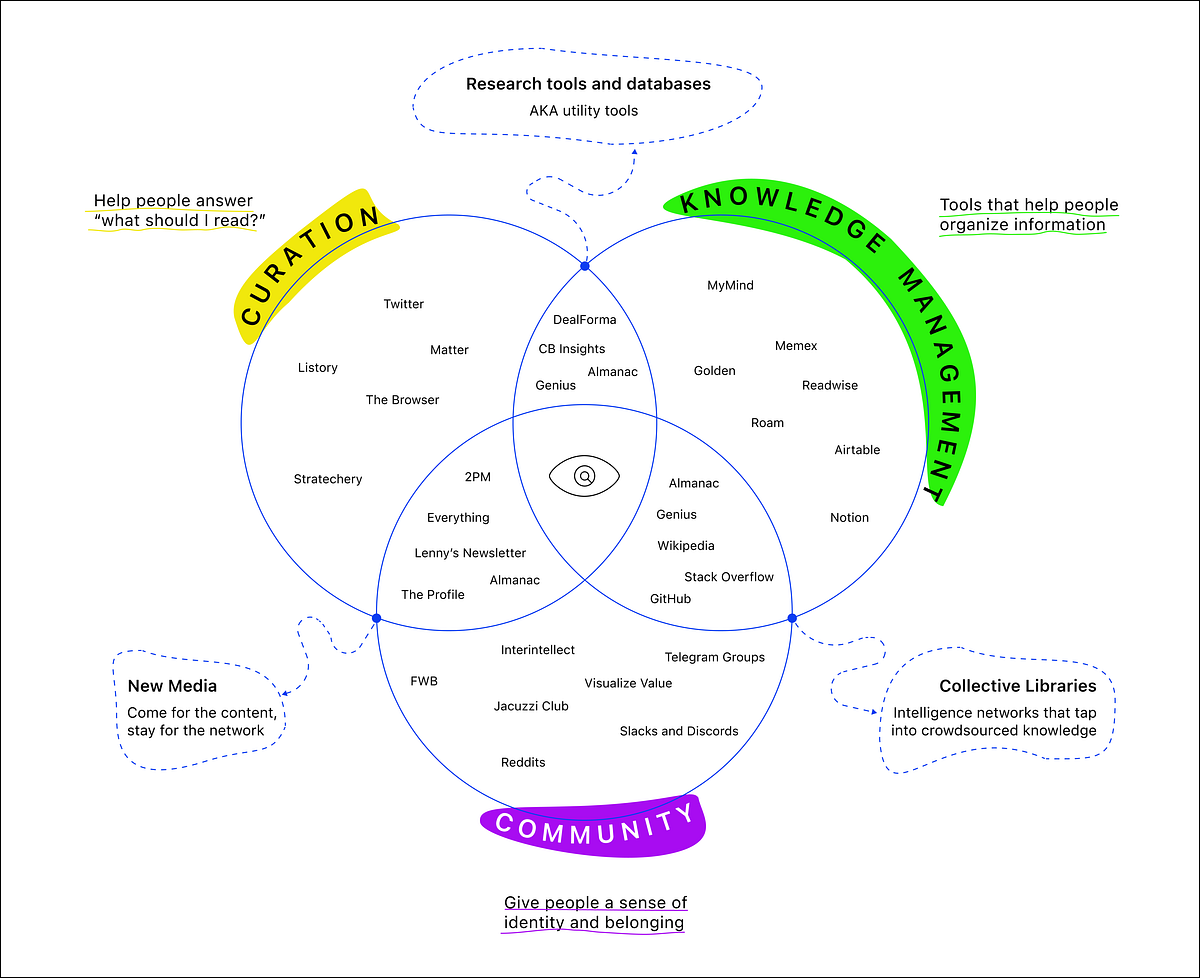
The rise of community-curated knowledge networks
The Internet put thousands of years of human thought at our fingertips, and enabled billions of people to create content. At least 2.5…
When the Scoreboard Becomes the Game, It’s Time to Recalibrate Research Metrics - The Scholarly Kitchen
Today's guest post discusses research metrics and their relationship to research integrity, inclusivity, and long-term impact.

Community by Design
Social media empower distributed content creation by algorithmically harnessing "the social fabric" (explicit and implicit signals of association) to serve this content. While this overcomes the bottlenecks and biases of traditional gatekeepers, many believe it has unsustainably eroded the very social fabric it depends on by maximizing engagement for advertising revenue. This paper participates in open and ongoing considerations to translate social and political values and conventions, specifically social cohesion, into platform design. We propose an alternative platform model that includes the social fabric an explicit output as well as input. Citizens are members of communities defined by explicit affiliation or clusters of shared attitudes. Both have internal divisions, as citizens are members of intersecting communities, which are themselves internally diverse. Each is understood to value content that bridge (viz. achieve consensus across) and balance (viz. represent fairly) this internal diversity, consistent with the principles of the Hutchins Commission (1947). Content is labeled with social provenance, indicating for which community or citizen it is bridging or balancing. Subscription payments allow citizens and communities to increase the algorithmic weight on the content they value in the content serving algorithm. Advertisers may, with consent of citizen or community counterparties, target them in exchange for payment or increase in that party's algorithmic weight. Underserved and emerging communities and citizens are optimally subsidized/supported to develop into paying participants. Content creators and communities that curate content are rewarded for their contributions with algorithmic weight and/or revenue. We discuss applications to productivity (e.g. LinkedIn), political (e.g. X), and cultural (e.g. TikTok) platforms.

AI creates asymmetric pressure on Open Source
How Open Source communities can adapt to AI-generated contributions without overwhelming Open Source maintainers

Where Tech Companies Build Communities
The customizable, scalable community platform powering over 22,000 communities. Create knowledge through conversation.
The Open-Source Ecosystem Canvas
An ecosystem canvas makes an open-source project say who it's really for. Here's what ours surfaced about stdlib's value propositions.
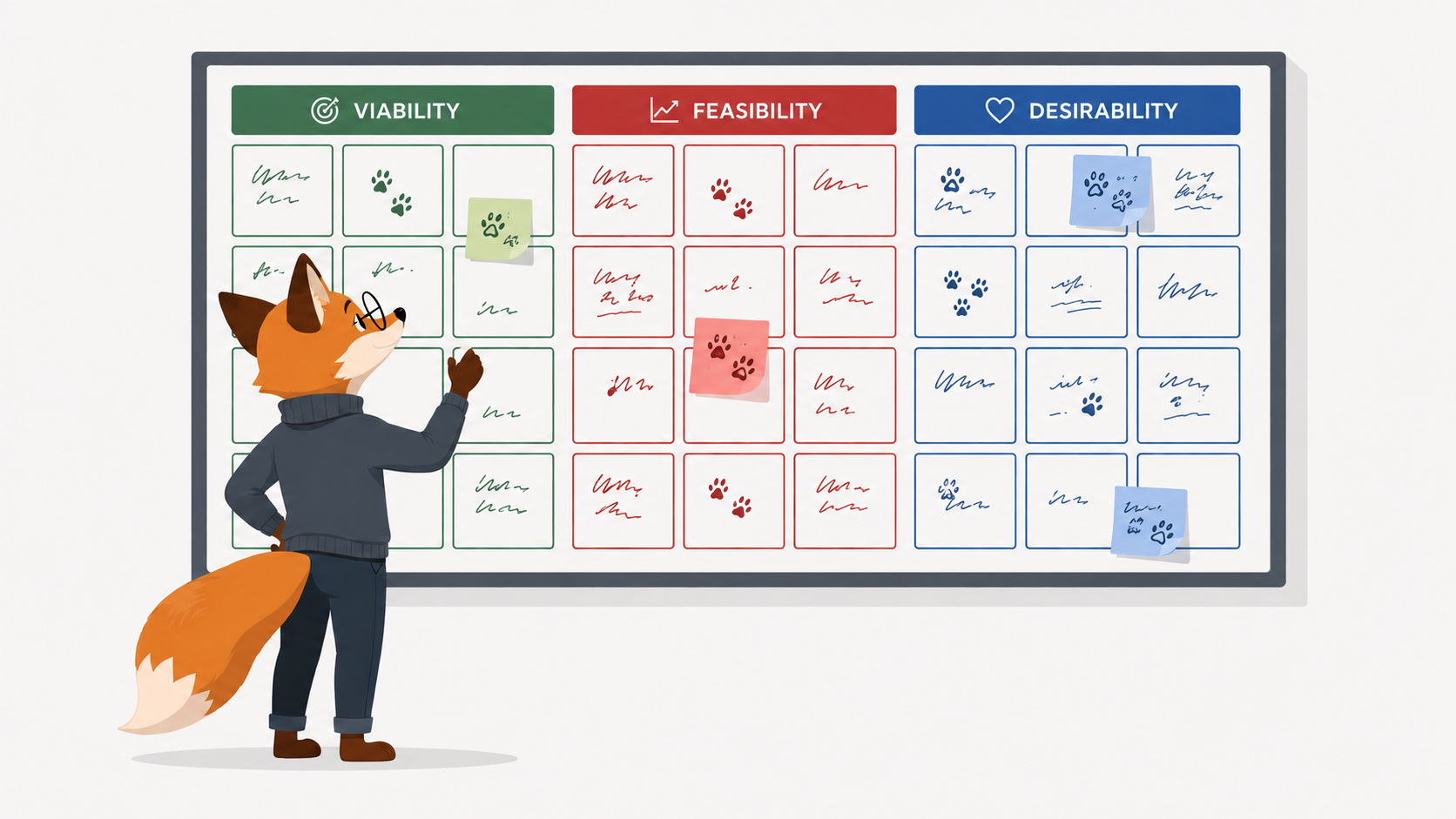
From Social Network to Sense Making
In an era where research evaluation methods are evolving, the Research Contribution Claim Network makes trustworthy tracking of non-traditional research output easy!
In this whitepaper, Patrick Hochstenbach (Ghent University Library), Thomas van Himbergen (SURF), Laurents Sesink (SURF) and Herbert Van de Sompel (DANS) introduce the...

A method for giving credit to organizations that contribute code to Open Source
By tracking organizational contributions in Git commits, we can give organizations more tangible reasons to fund open source and help sustain it over time.
Do our social media algorithms correctly reflect our values? Our new article published today in @pnas.org shows that the answer is often not, and that the content that gets promoted into their ranked feeds is often actively counter to our values.
Do our social media algorithms correctly reflect our values? Our new article published today in @pnas.org shows that the answer is often not, and that the content that gets promoted into their ranked feeds is often actively counter to our values.
dc: data provenance and source attribution

Part of the datacounterfactuals.org reading lists. Research on data provenance, dataset documentation, licensing and attribution audits, and technical source-attribution methods for understanding which data sources are available, permitted, or responsible for model behavior.
WASA: WAtermark-based Source Attribution for Large Language Model-Generated Data
SILO Language Models: Isolating Legal Risk In a Nonparametric Datastore
Datasheets for Datasets
Documenting Large Webtext Corpora: A Case Study on the Colossal Clean Crawled Corpus

A large-scale audit of dataset licensing and attribution in AI
