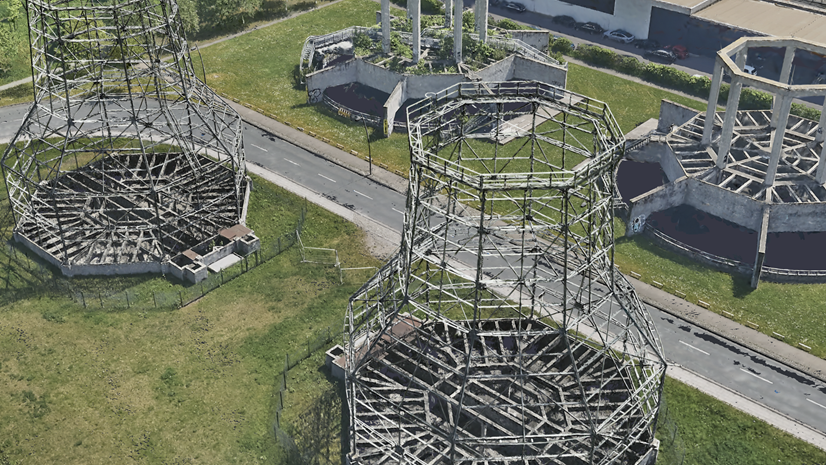
An advanced 3D Gaussian Splatting renderer for THREE.js
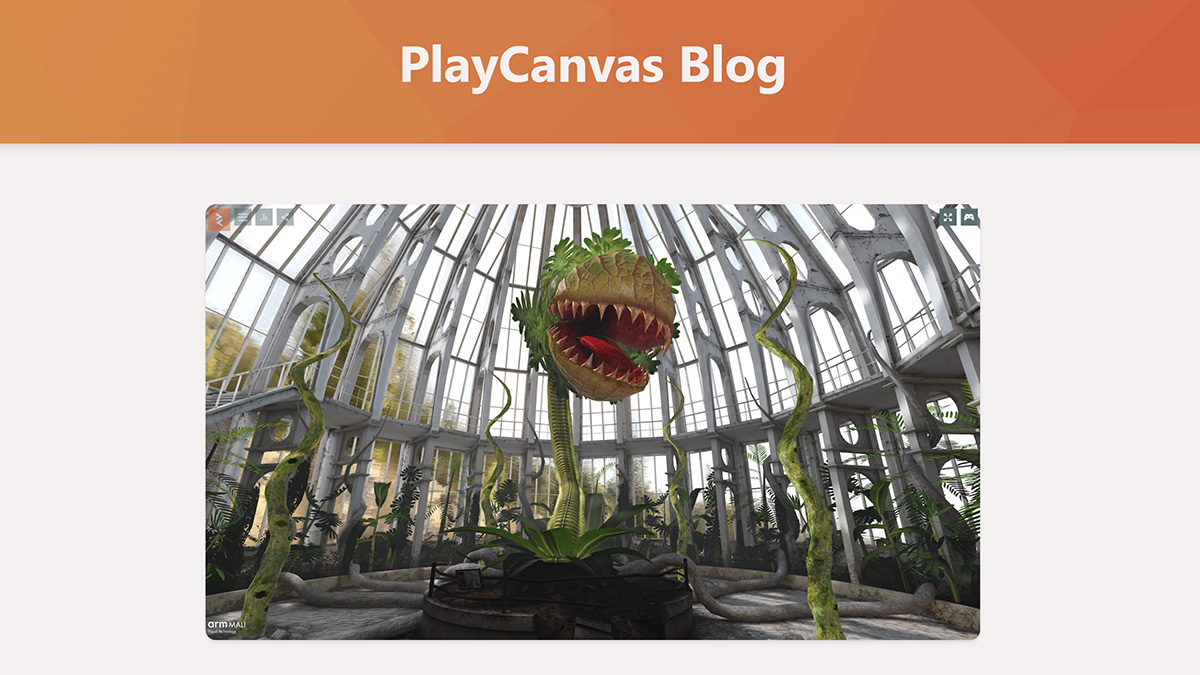
Turning a Gaussian Splat Into a Videogame | PlayCanvas Blog
How I turned a photogrammetric 3D Gaussian Splat scene into a playable browser FPS - with collision, pre-baked lighting, navmesh-driven NPCs and behavior-tree AI, all in PlayCanvas.
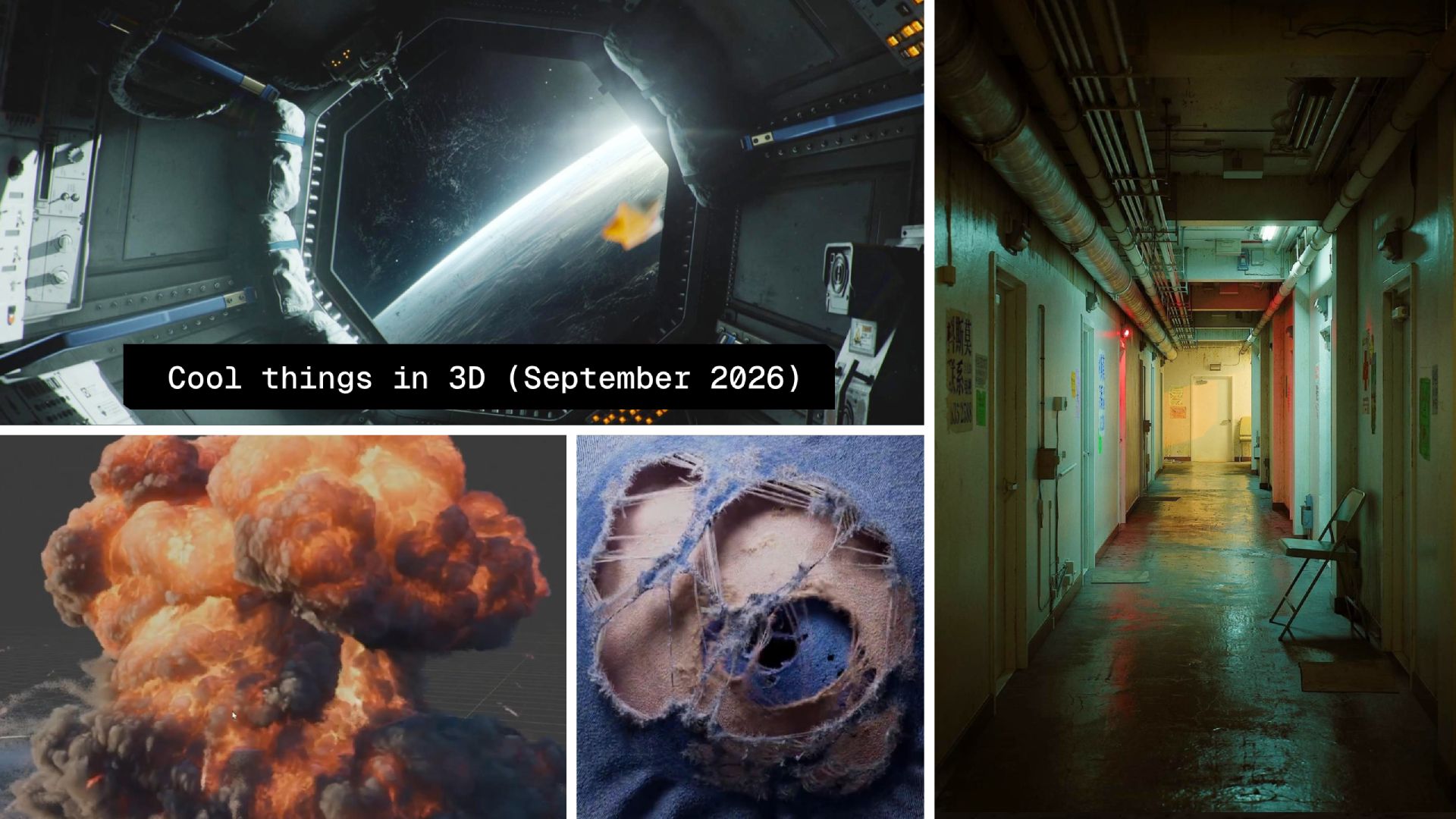
Cool Things in 3D (September 2026) • Creative Shrimp
Here’s a look at some of the coolest things happening in 3D this month - from Gaussian splats in Blender 5.3 and panoramic cameras in EEVEE to dispersion in Cycles, the most realistic Blender short film, and the GPUs the Blender community is actually using.
Three.js From Zero — Creative Web 3D for Artists · MasterAllArts
Learn Three.js as part of the MasterAllArts creative 3D roadmap: turn drawings, models, shaders, and portfolio ideas into interactive Web 3D scenes. Free articles with live demos.

WhitestormJS/whs.js
:rocket: 🌪 Super-fast 3D framework for Web Applications 🥇 & Games 🎮. Based on Three.js
flo-bit/stylized-dioramas
Six interactive Three.js dioramas — one collection of small worlds
Three.js Roadmap — Learn WebGL/WebGPU Development | Three.js Roadmap
Learn WebGL/WebGPU development with Three.js through structured video courses and ready-to-use assets. Build stunning 3D games, visualizations, and interactive web experiences.

glyphcss — turn 3D models into ASCII art (browser, React/Vue & terminal)
Render 3D models (OBJ, glTF, GLB, STL, .vox) as ASCII art — in the browser, in React or Vue, or straight in your terminal. A three.js-style API with no WebGL and no canvas: just text in a single <pre>.
Evaluating and Sampling Glinty NDFs in Constant Time
Geometric features between the micro and macro scales produce an expressive family of visual effects grouped under the term 'glints'. Efficiently rendering these effects amounts to finding the highlights caused by the geometry under each pixel. To allow for fast rendering, we represent our faceted geometry as a 4D point process on an implicit multiscale grid, designed to efficiently find the facets most likely to cause a highlight. The facets' normals are generated to match a given micro-facet normal distribution such as Trowbridge-Reitz (GGX) or Beckmann, to which our model converges under increasing surface area. Our method is simple to implement, memory-and-precomputation-free, allows for importance sampling and covers a wide range of different appearances such as anisotropic as well as individually colored particles. We provide a base implementation as a standalone fragment shader.

Bluesky Firehose in 3D (live)
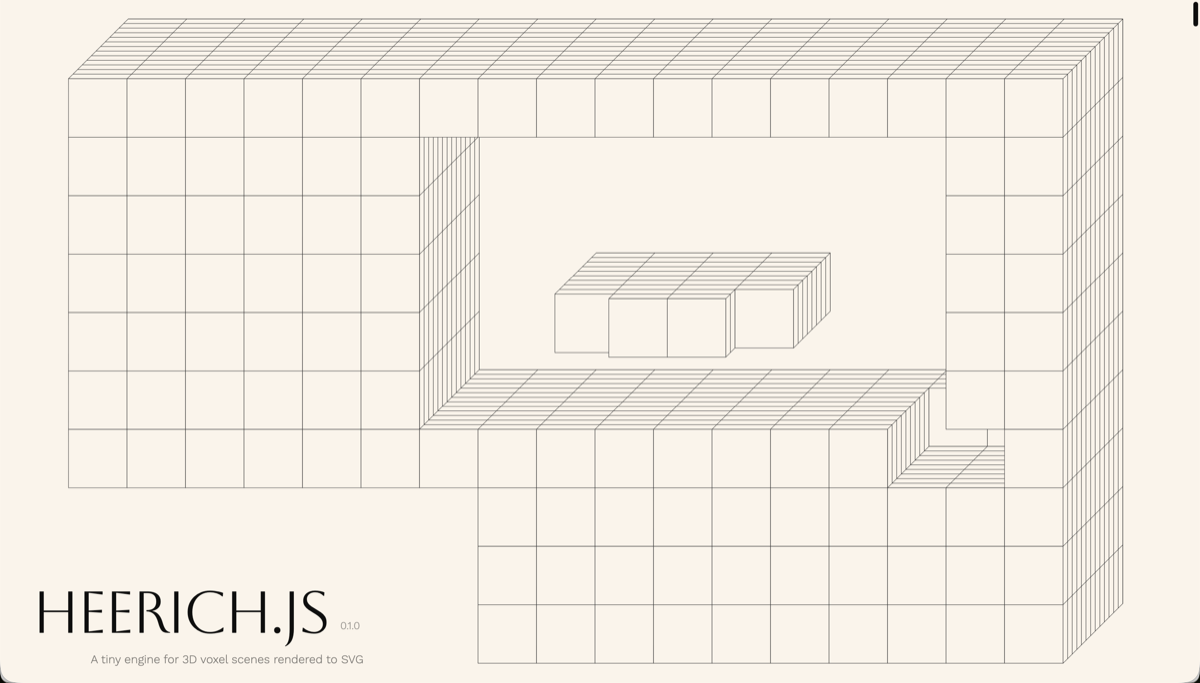
heerich.js
Tiny engine for 3D voxel scenes rendered to SVG — boolean ops, oblique/perspective cameras, zero dependencies.
Generating 3D Meshes From Text
I recently had a desire to convert text to 3D meshes that I could render and manipulate as part of my Geotoy project and Geoscript language. I did some research into tools and libraries that could solve different pieces of this, and I put together a pipeline that implements the whole thing - yielding nice, 2-manifold 3D meshes with arbitrary fonts, text styles, and more.

Khronos Showcases Significant glTF Momentum for Efficient Transmission of 3D Scenes and Models
The Khronos™ Group, an open consortium of leading hardware and…

Article 09: Performance: Instancing, LOD, Draw Calls — Three.js From Zero · MasterAllArts
Performance: Instancing, LOD, Draw Calls is Article 09 of Three.js From Zero, a MasterAllArts free interactive lesson for artists learning creative 3D on the web.
Meshes vs. Gaussian Splats: Which reality representation should you choose?
Learn the differences between meshes and Gaussian splats, how each represents reality, where they excel, and why the most effective reality mapping workflows increasingly leverage both.