


My experiment with an IEEE journal revealed AI’s threats to scholarly publishing
False authorship: an explorative case study around an AI-generated article published under my name
The proliferation of generative artificial intelligence (AI) has facilitated the creation and publication of fraudulent scientific articles, often in predatory journals. This study investigates the extent of AI-generated content in the Global International Journal of Innovative Research (GIJIR), where a fabricated article was falsely attributed to me.
AI Use in The Scholarly Kitchen - The Scholarly Kitchen
Some thoughts on the reader response the Scholarly Kitchen has seen regarding AI use by authors, a recent Nature News article on the efficacy of AI detection tools, and why it's important to keep experimenting to figure out what's ethically acceptable.
Fake scientific papers made with AI used names of 3 Japan researchers
TOKYO -- A disreputable scientific journal used generative AI to create bogus papers, using the names of three Japanese researchers without permission

Is the scientific paper still a fraud?
How we write scientific papers does not reflect how we do science. Their formal structure infers a pre-ordained linear process rather than reflecting the messy creativity of research. This matters in the AI age because it masks the human in the process.
Illicit Use of AI by Philosophers Refereeing for Journals - Daily Nous
In 2024, a study found that “7–17% of the sentences in the reviews [of computer science manuscripts] were written by LLMs”. It was only a […]
Is AI Flooding Medical Journals With 'Meaningless' Research?
'It's not fraudulent, and it's not really slop,' one expert says

Project Rachel: Can an AI Become a Scholarly Author?
This paper documents Project Rachel, an action research study that created and tracked a complete AI academic identity named Rachel So. Through careful publication of AI-generated research papers, we investigate how the scholarly ecosystem responds to AI authorship. Rachel So published 10+ papers between March and October 2025, was cited, and received a peer review invitation. We discuss the implications of AI authorship on publishers, researchers, and the scientific system at large. This work contributes empirical action research data to the necessary debate about the future of scholarly communication with super human, hyper capable AI systems.

Why We’re Banning AI
We urgently need to protect human thought and creativity. Our magazine is committing itself to remaining handmade. Ensure every publication you support does the same.
We Talked to a Writer Accused of Publishing An AI-Generated Essay in The New York Times
She was accused of publishing AI slop in The New York Times. She says she didn't use AI to generate content — but did use AI to get published.
New York Times Accused of Running AI-Generated Article
People are speculating that an essay published in the New York Times' "Modern Love" was AI-generated. What's definitely real? AI paranoia.
How to build an AI scientist: first peer-reviewed paper spills the secrets
AI Scientist, an autonomous research tool, first released in 2024, has now undergone peer review, highlighting its strengths and limitations.

AI in scientific publishing: Slower, worse, and more expensive
There’s a saying in the management world, popularized by NASA administrator Daniel Goldin in the 1990s, that the goal of technological improvements is to make products faster, better, and cheaper. Although this strategy had some success in the aerospace industry, the zealots of artificial intelligence (AI) have been making the same argument regarding how it will transform work, claiming that so little human effort will be required that humanity will enter an era of radical abundance, free from disease, drudgery, and danger, among other benefits, leaving society with more time for creative pursuits. But history tells a different story. When machines began to increase productivity during the second industrial revolution, American engineer Frederick Winslow Taylor’s The Principles of Scientific Management encouraged corporations to use surveillance to get employees to work harder and longer, an approach that exhausted and discouraged workers and led to the transfer of knowledge and any decision-making from workers to management, while enriching the profits for only those at the top. Yet, it remains foundational to the American economic enterprise. Indeed, scientific publishing is starting to experience some Taylorism with the insertion of AI. Rigorous human checking of AI-generated research papers is creating bottlenecks as publishers strive to maintain the integrity of the scientific record. The challenge is requiring even more human effort, making the whole endeavor slower and more expensive.

Honey, We Bought an AI Story — Bona Books
Bona Books share a hard-learned lesson: we accidentally bought AI-generated fiction. This deep dive into our experience with submission fraud covers the "red flags" we missed, the toll it took on our small press, and our call for industry-wide solidarity against AI-written content. Learn h

Is the scientific paper due to be replaced?
AI is pushing scientific publishing to the brink. For neuroscience, the crisis may be an opportunity to finally connect findings across subfields.
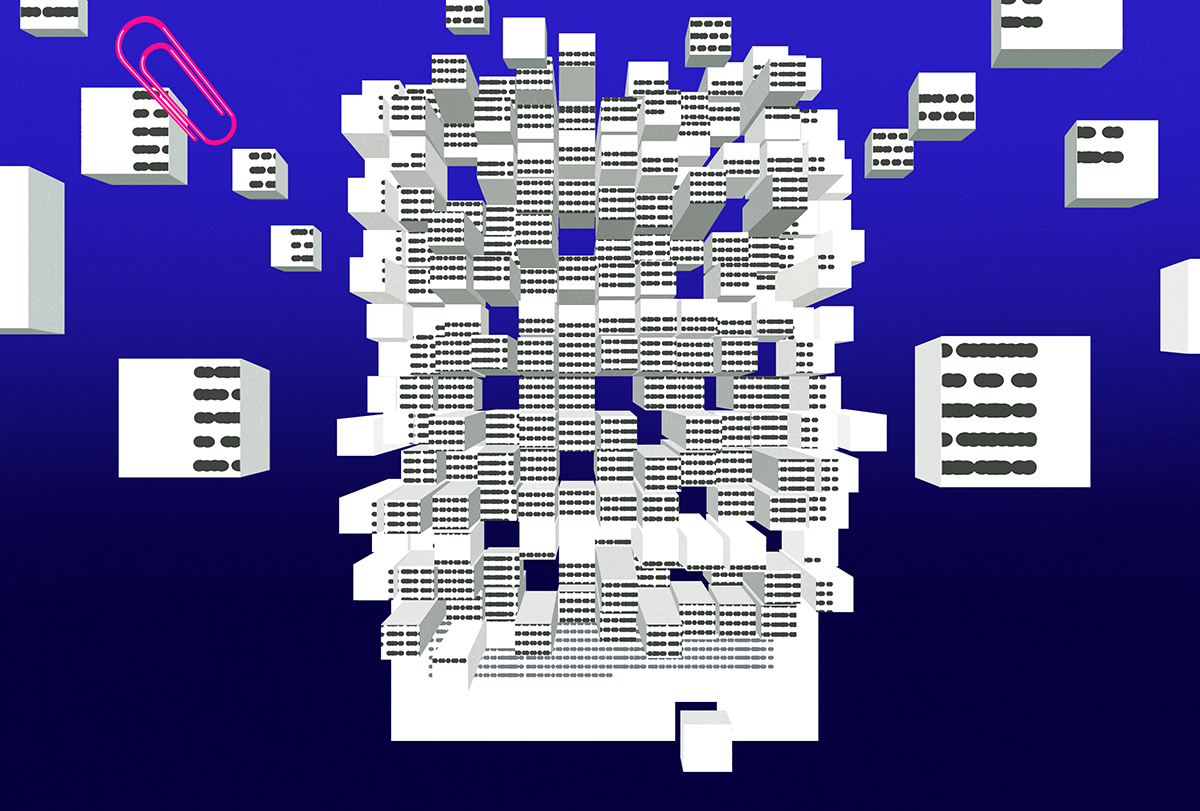
Absolutely incredible figure from this journal article arguing that AI should be accepted into the publication and peer review process. #MedSky doi.org/10.1515/cclm-2025-1180
Absolutely incredible figure from this journal article arguing that AI should be accepted into the publication and peer review process. #MedSky doi.org/10.1515/cclm-2025-1180
