


How did Jimi Hendrix turn his guitar into a wave synthesizer? Dive into the engineering behind his iconic sound.
Learning Synths | Hacker News
It teaches you step by step all the aspects of a synth engine: oscillators, wave shapes, amplitude, filters, modulation, unison, FM… But most of all it trains your ear, which allows you to replicate the sound in your head and build it from scratch.
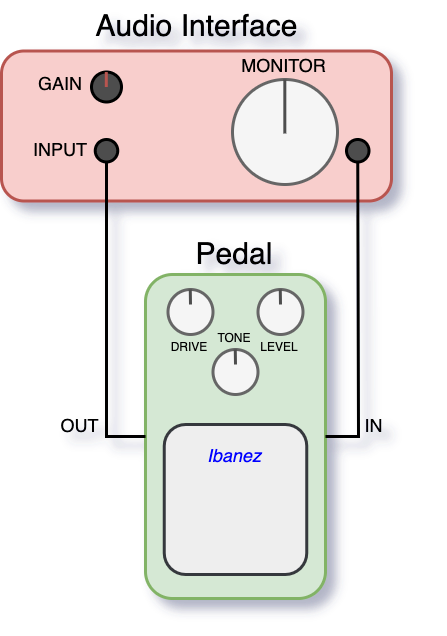
Deep Learning for Guitar Effect Emulation
Since the 1940s, electric guitarists, keyboardists, and other instrumentalists have been using effects pedals, devices that modify the sound of the original audio source. Typical effects include distortion, compression, chorus, reverb, and delay. Early effects pedals consisted of basic analog circuits, often along with vacuum tubes, which were later replaced with transistors. Although many pedals today apply effects digitally with modern signal processing techniques, many purists argue that the sound of analog pedals can not be replaced by their digital counterparts. We’ll follow a deep learning approach to see if we can use machine learning to replicate the sound of an iconic analog effect pedal, the Ibanez Tube Screamer. This post will be mostly a reproduction of the work done by Alec Wright et al. in Real-Time Guitar Amplifier Emulation with Deep Learning (Wright et al., 2020).
Devices | Audiotool
Explore Audiotool's collection of synthesizers, drum machines, and effects. From powerful synths like Heisenberg and Pulverisateur to classic drum machines and professional effects.
The Sound Lab Is a Simple Analog Synth
David Johnson-Davies' single-board synth works without a microcontroller.

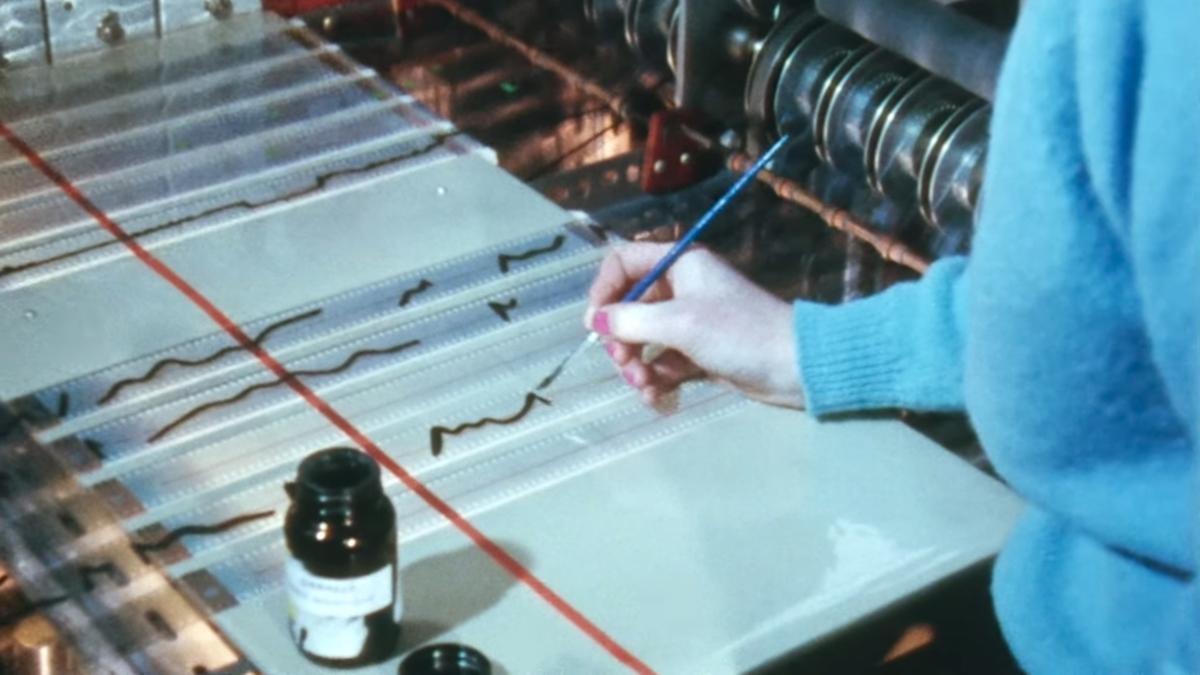
A dispatch from the dawn of the electronic music age | Aeon Videos
These days, synthesised sound is easy to access – but early electronic music pioneers had to get hands on to produce it
Sine, Saw, Square, Triangle, Pulse: Basic Waveforms in Synthesis and Their Properties
Learn the properties of 5 basic waveforms in sound synthesis to use their full potential in your synthesizer performance or design.
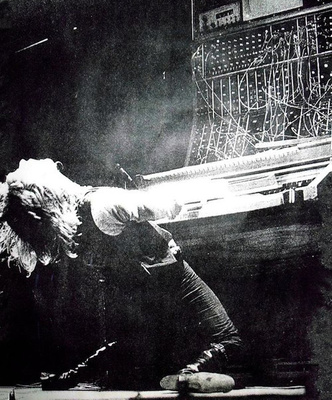
Rise of the Synthesizer: How an Electronics Whiz Kid Gave the 1980s Its Signature Sound
In the summer of 1970, after popping into a pub for a pint, rock keyboardist Keith Emerson sat down at his enormous Moog modular synthesizer in London’s...
He Was Present at the Birth of Punk, and He Took Notes (Published 2014)
From the Doors to the Ramones, Danny Fields witnessed a revolution from the inside, and kept records.


CHIMERA
CHIMERA: a physically modelled voice synthesizer. Every sound comes from a simulated airway.
Open source modular synth software lets you create 70s & 80s electronic music | Hacker News
Hardware is much more hands on, with real dials, switches, and other means of physical interaction which screens and mice don't come close to matching. Hardware does exist through which musicians can interact with computers, but it's usually MIDI, which has its own limitations compared to fully analog gear.
Serum 2: Advanced Hybrid Synthesizer
The original motivation for creating Serum was to have a dream synthesizer that did not exist: a wavetable synthesizer with a truly high-quality sound, visual and creative workflow-oriented interface to make creating and altering sounds fun instead of tedious, and the ability to "go deep" when desired - to create / import / edit / morph wavetables, and manipulate these on playback in real-time.
He coined the term EDM, became the first ever computer musician, AND created the electronic drum kit... meet Richard James Burgess: “I said ‘one day all records will be made this way’, and that prediction came true”
The unsung hero of music production, Burgess has been there or thereabouts in just about every major innovation of the last 50 years…
Art of Noise
A multi-sensory exploration of how design has changed the way we’ve experienced music over the past 100 years.

Tone.js
Tone.js is a Web Audio framework for creating interactive music in the browser. The architecture of Tone.js aims to be familiar to both musicians and audio programmers creating web-based audio applications. On the high-level, Tone offers common DAW (digital audio workstation) features like a global transport for synchronizing and scheduling events as well as prebuilt synths and effects. Additionally, Tone provides high-performance building blocks to create your own synthesizers, effects, and complex control signals.