Release Cycles have been debated for the last 30 years and will certainly be for the next 30. Arguments for longer release cycles with larger releases usually focus on how risky these rapid releases are and the stability and polish these larger releases with their longer cycles bring. These arguments are absolute rubbish. To add to the discussion I’ll put a different emphasis than I’ve heard before. Release early and release often to minimize risk.
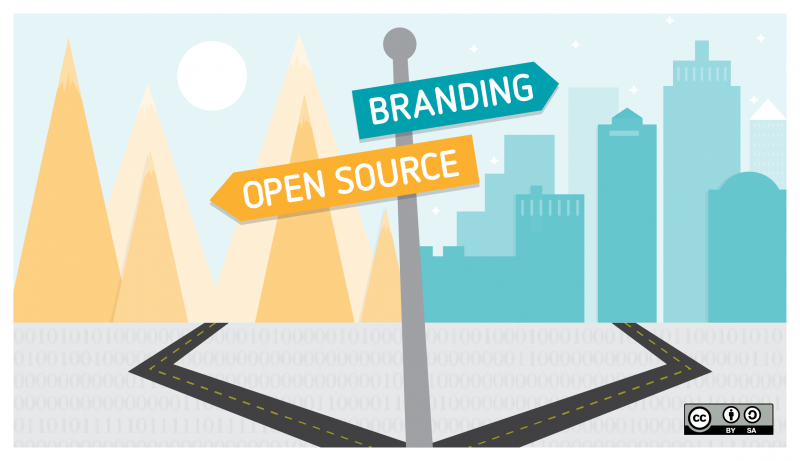
How to apply 'release early, release often' to build a better brand
Try this faster, more collaborative process to promote your project.
The future of software In the limit, software won't mean anything anymore. But in the interim period we'll wander through an increasingly odd "in-between" age for software. This… | Thomas Wolf | 63 comments
The future of software In the limit, software won't mean anything anymore. But in the interim period we'll wander through an increasingly odd "in-between" age for software. This transition period will be defined by three new precepts. Everflux software - instead of stepping from release to release, software now evolves continuously. Software creation has broken the sound barrier of our own keystrokes, and every model release pushes it faster. There is no reason to wait weeks or months for the next release when a single company merges over 30,000 code changes a day. Bug and vulnerability fixes need to ship quickly and continuously. And every piece of software sits in a lattice of dependencies, each one now shipping at a blistering pace. Translucent sources – A new territory has opened between open source and closed source. Today Claude will happily pick apart any Electron app, and any binary shipped with debug symbols has become a reverse-engineering playground for LLMs. In other words, much so-called closed-source software is now open source in all but name, and keeping code closed makes less and less sense. Even the notion of IP and copyright is breaking in software. I'm writing this text on a personal text editor I prompted Claude to vibe-code from a few videos of people demoing editor features they liked. A mere description of the interface is increasingly enough for an LLM to rebuild the internals. Software IP seems to be dissolving like cotton candy in a raccoon's paws. Bespoke features - Now that all software is open source, nothing prevents us from modifying everything. And personalization is just one prompt and a couple million tokens away, so there is absolutely no reason anymore to wait for someone else to add this feature you want. Everyone becomes their own product manager. Want a search box, an API bridge, a custom button? It's a couple of minutes away. A major challenge appears when bespoke features crash into our first tenet: everflux software. I could fork it for good to add my search box, but I'd lose all future benefit from the software creator. How do you personalize software that was never meant to be personalized, without shouldering all of its future maintenance? Merge conflicts won't be the exception anymore; they'll be a constant of everflux software. Agents will rebase our personal features onto each new release overnight, and software will look less like a product and more like a living species, evolving through constant mutation. Substack post: https://lnkd.in/dw2Re-kA Image: M.C. Escher, Metamorphosis II, November 1939 - March 1940 | 63 comments on LinkedIn

Balancing “If it ain’t broke, don’t fix it” vs. “Release early and often”
Every organization faces a war between two schools of thought, with “If it ain’t broke, don’t fix it” on one side and “release early and often” on the other. This blog post looks for a way for enterprise consumers to embrace fast-paced changes in the software industry.
New tools for production safety — Gradual deployments, Source maps, Rate Limiting, and new SDKs
Today we are announcing five updates that put more power in your hands – Gradual Deployments, Source mapped stack traces in Tail Workers, a new Rate Limiting API, brand-new API SDKs, and updates to Durable Objects – each built with mission-critical production services in mind

Matt Mullenweg Addresses Concerns That WordPress is Moving Too Fast
There are at least three major releases of WordPress per year where users can expect new features and major bug fixes about every four months. While this is great for users, some companies, plugin,…

Holochain: Wins, Missteps, and Next Steps
Holochain solves many difficult dApp use cases, but decisions around releases have delayed a thriving dApp ecosystem. What’s next?

Opinion | When It Comes to Covid-19, Most of Us Have Risk Exactly Backward (Published 2020)
We aren’t very good at discussing trade-offs, but we need to make some during this pandemic.

The disproportionate influence of early tech decisions
On how software that survives first encounter with production tends to live longer than we think it should.

macOS High Sierra: The MacStories Review
Since Mac OS X 10.5 Leopard was released in 2007, Apple has periodically paused to release updates to what is now known as macOS that are more a refinement of their predecessors than major upgrades. Apple signals each refinement release by picking a name that relates to the one immediately before it. In 2009, that
How Marvel Could Take Its Biggest Risks Next Year On Television
We're looking at what's undoubtably going to be a big upcoming year for Marvel's movies. But, while the theater screens may have our focus for now, the

No one wants yearly Android releases
After a year, Android Marshmallow has barely managed to hit 7.5 percent, and in a few weeks Google will unveil the next release that no one will want.

Releasing Windows 11, version 23H2 to the Release Preview Channel
Hello Windows Insiders! Today we are making Windows 11, version 23H2 Build 22631 (Windows 11 2023 Update) available in the Release Preview Channel for Windows Insider Program for Business


Optimistic Provide: How We Made IPFS Content Publishing 10x Faster
How a statistical approach cut IPFS content publishing times by over one order of magnitude.