


Choosing a discovery mechanism means choosing assumptions about authority, delegation, privacy, and control. The answer is rarely simple.
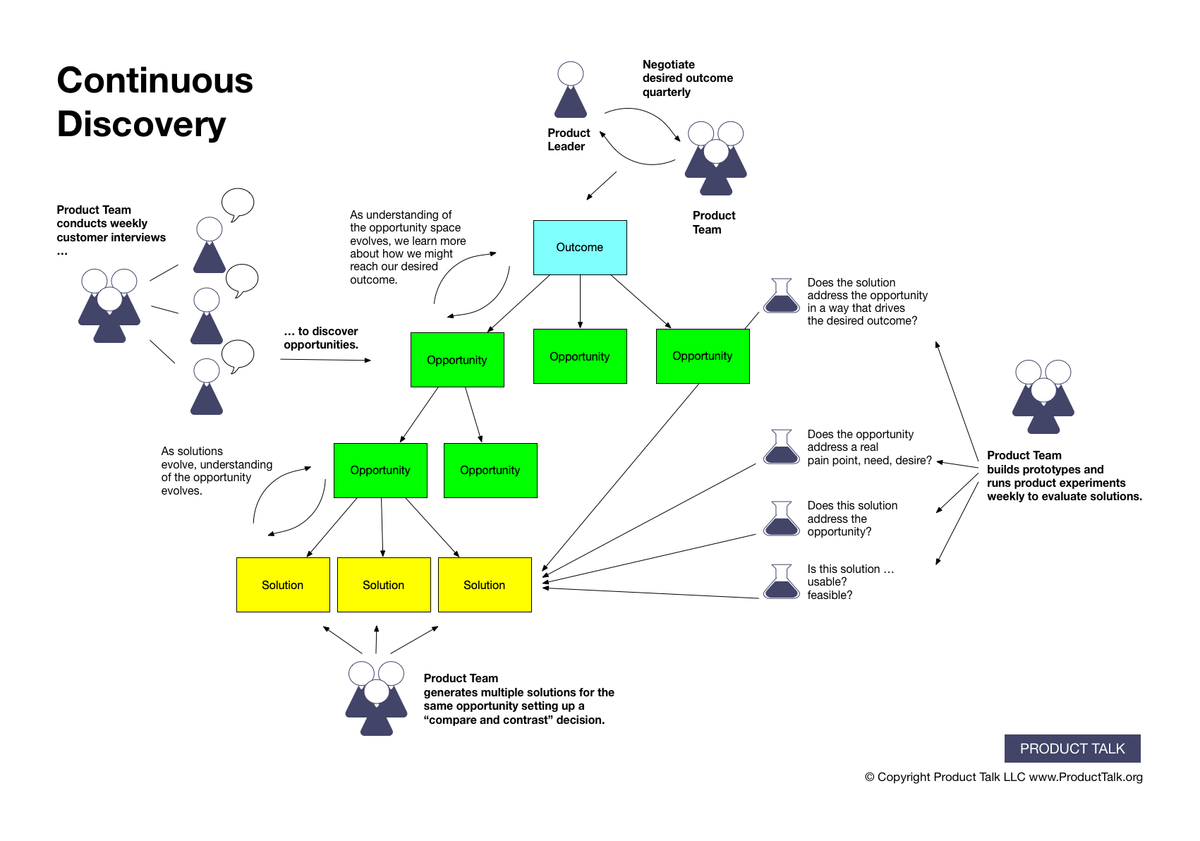
Continuous Discovery | Definition and Overview | Product Talk
Weekly touch points with customers by the team building the product, where they conduct small research activities in pursuit of a desired outcome.
Reinventing Discovery
How the internet and powerful online tools are democratizing and accelerating scientific discovery

Reinventing Discovery: The New Era of Networked Science
In Reinventing Discovery, Michael Nielsen argues that w…

AI scientists are changing research — institutions, funders and publishers must respond
The ability to automate the discovery process in some areas of scientific inquiry raises unanswered questions about how research should be conducted.
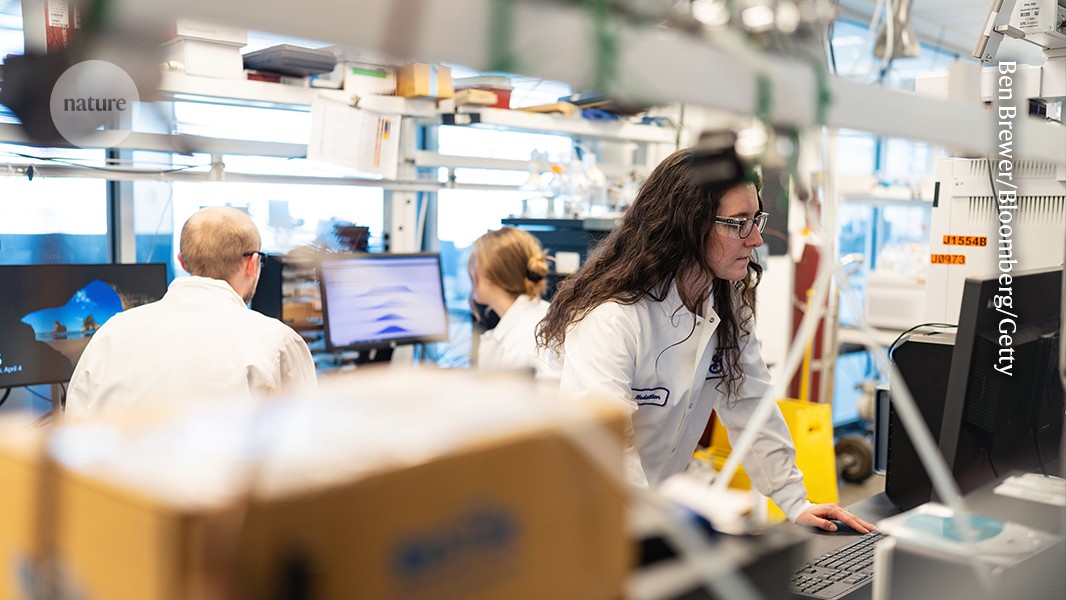
The Engine of Scientific Discovery: How New Methods and Tools Spark Major Breakthroughs
Abstract. How do we spark new scientific discoveries? Why do some breakthroughs seem even accidental? And most importantly, how can we accelerate them and
Building a Privacy Preserving Intent-Driven Discovery Protocol
Inventing New Nature
Defining the Protocol Institute's research mission

Agentic Laboratories of the Future: Towards World Models for Scientific Discovery
Scientific discovery is fundamentally a problem-solving process involving distributed intelligence. Human intuition, computational reasoning, and experimental execution are distributed across people, instruments, and software systems, limiting the speed and scale of discovery. Although automation, high-throughput experimentation, foundation models, and cloud infrastructure have accelerated individual stages of the scientific workflow, they have not unified the discovery process. We hypothesize that the next generation of laboratories will be agentic: environments in which scientists, AI systems, and robotic platforms operate as collaborative discovery partners, with humans contributing the parts of discovery that remain hardest to make explicit: asking the right questions and holding provisional mechanistic models of how a system works. The key missing layer is an agentic harnessing layer that continuously integrates hypothesis, literature-derived evidence, experimental data, uncertainty, and experimental state into a shared “laboratory world model”—a dynamic representation of the scientific system and its evolving context. By maintaining and updating this lab world model, the agentic harnessing layer enables coordinated decision-making, adaptive planning, and increasingly autonomous scientific workflows across humans and machines. A central challenge is that much of the scientific research process remains inaccessible to machines, including tacit knowledge, human observations, adaptive decision-making, and evolving experimental context. Advances in multimodal AI and immersive interfaces may help bridge this gap, allowing humans, agents, and robotic systems to collaborate seamlessly in scientific discovery rather than simply automating isolated tasks. Agentic laboratories could provide a new architecture for science, integrating human, artificial, and physical intelligence into a unified discovery system.

Bending the Curve: How AI is Transforming Scientific Discovery
Discover how researchers use LLMs and specialized AI models like AlphaFold as complementary tools to accelerate innovation and expand the scientific frontier.

No. 022: Palomar proof registry, autonomous protein design, synthetic consensus - The Hallway Track
The Hallway Track No. 022 - How AI is affecting the practice of science
Fulcrum - Leverage for Discovery
We place AI engineers with research labs working on hard scientific problems.
Demonstrating end-to-end scientific discovery with Robin | FutureHouse
Robin is the first multi-agent system for discovery in biology that integrates novel hypothesis generation with experimental data analysis in one continuous workflow.

Four Ps for Building Massive Collective Knowledge Systems
Design principles for collective knowledge systems—permanence, provenance, permission, and placement—that enable robust networks for evidence-based decision making.
Four Ps for Building Massive Collective Knowledge Systems
Design principles for collective knowledge systems—permanence, provenance, permission, and placement—that enable robust networks for evidence-based decision making.
Ground the model, or it invents the evidence
Trusted, curated, subject-specific models are needed for academia
Something I’ve been thinking about recently: A lot of useful discoveries come from “the process” - understanding a system, seeing its behavior, getting curious, playing with it, the surprising finds along the way. I’m concerned that by “abstracting” the process we’ll significantly harm that
