

The shock-of-the-new is back in literature, rebooted for screen time – and with it, the question: To what end should writing reflect our networked selves?
This is Not the End of Reading. It's the End of Modernism.
Why academics and journalists are confusing Modernism with reading itself.
Post-Modernism | The Paper Pilot
The Paper Pilot's digital garden of thoughts on philosophy, politics, and sociology
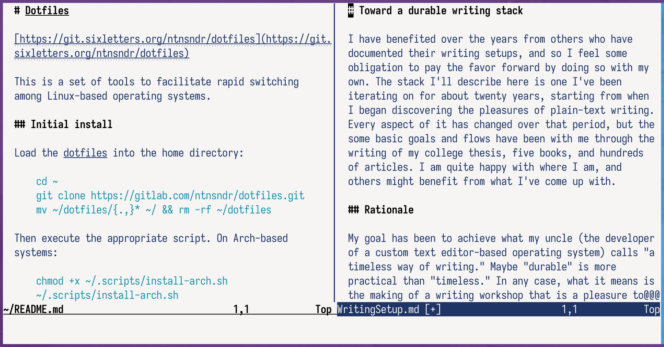
Toward a durable writing stack – Writings and rehearsals by Nathan Schneider
I have benefited over the years from others who have documented their writing setups, and so I feel some obligation to pay the favor forward by doing so with my own. The stack I’ll describe here is one I’ve been iterating on for about twenty years, starting from when I began discovering the pleasures of plain-text writing. Every aspect of it has changed over that period, but the some basic goals and flows have been with me through the writing of my college thesis, five books, and hundreds of articles. I am quite happy with where I am, and others might benefit from what I’ve come up with.
Brett Scott (@brettscott)
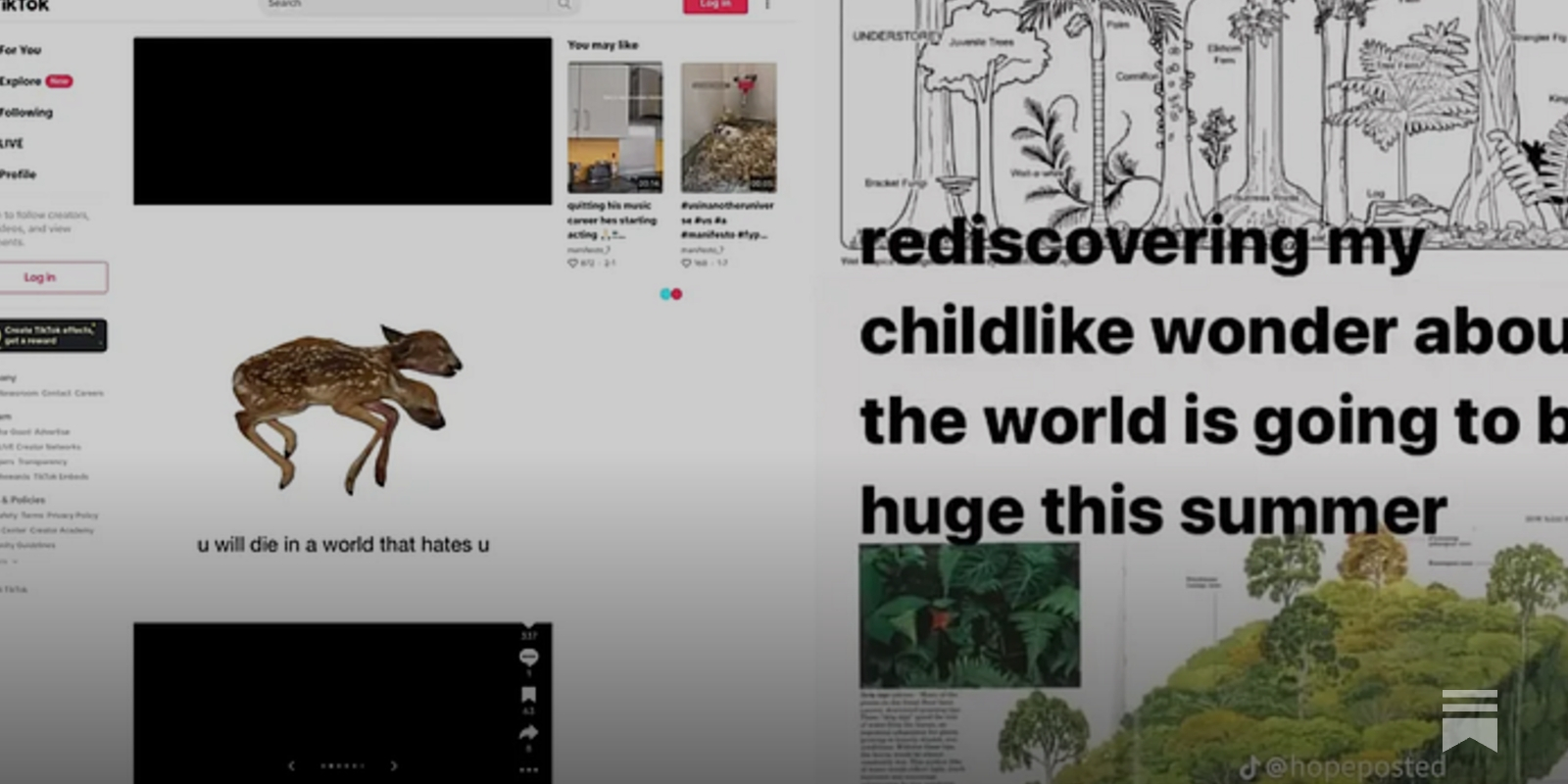
Marshall McLuhan is famous for his observation that the form of a communication technology can shape our mind and society The age of the printed book, for example, carried with it a particular way of being. Regardless of the differing content of different books, all books required a particular mindset in which a thread is followed from the beginning to the end through an arc I feel the age of social media is like the age of a ripped up book, as if we were surrounded by torn shards and shreds of paper floating like confetti around us. We grab for them, hoping for some tiny insight, but not having any way of knowing where it fits in the overarching narrative This note is one such shard. You can toss it away now

on ui as a metaphor
a personal manifesto and declaration - also known as I am threading a connection through all the notes I've sent myself over the last six months
Publishing is fucked. The ATmosphere could save it. | Paul Stephenson | Offprint
Building a future for publishing that keeps authors and readers at its heart.

Internet Phone Book – Back in stock!
An annual publication for exploring the vast poetic web, featuring essays, musings and a directory with the personal websites of hundreds of designers, developers, writers, curators, and educators. Published since 2025.
Clouded skies for open networks
Last week, I finished an essay about platform design affordances and content moderation expectations and community-level context collapse on Bluesky for Tech Policy Press and set it aside to cool before a last read-through. An hour later, the Trump administration brought to Bluesky a propaganda-zombie army made
What’s Happening to Reading?
For many people, A.I. may be bringing the age of traditional text to an end.

Everything is In-Between — Douglas Rushkoff
I’ve begun this piece maybe twenty times in the past three weeks. By the time I’ve finished the first paragraph, some new thing happens that obsolesces whatever event I’m writing about. And I’m not even writing about the news, so much as using one shared moment as a “peg” for a piece about some larger phenomenon or strategy.
Guide to Incrementals/Defining the Genre | The Paper Pilot
The Paper Pilot's digital garden of thoughts on philosophy, politics, and sociology
Culture & truth : the remaking of social analysis
xii, 253 pages ; 22 cm; Argues for a new approach to thinking and writing about culture. Exposing old conceptions, the book argues that new ethnographic writing must come to terms with the dynamic nature of social reality - with history, spontaneity, and human emotions; Originally published: Boston: Beacon, 1989; Includes index; Self-Renewing 2017; Includes index

Collapse — Oakland Public Library
Collapse — Dallett, Cassandra, — <p>COLLAPSE is a doomed love, temporary, free on bond, haunted by rage and regret, fueled by Hip-Hop beats, and clinging like the remains of the Ghost Ship fire--with the world burning around us, it is time and place, politics and anarchy, connection for the broken.</p><p>Poetry. California Interest.</p>
crawshaw - 2018-07-30
This content covers my recent exploration of writing internet services, iOS apps, and macOS programs as an indie developer.
“The task that generative A.I. has been most successful at is lowering our expectations, both of the things we read and of ourselves when we write anything for others to read.” — Ted Chiang

Why A.I. Isn’t Going to Make Art
www.newyorker.com