
You can’t expect others to fix your problems. When you take responsibility for making the best of any situation, you have the power to make things better.
How to take things less personally and avoid mind reading | Psyche Guides
Always blaming yourself or assuming others think ill of you? A CBT therapist shares ways to break these self-critical habits

You're not powerless, you're just under attack.
A phenomenon that I’ve noticed frequently: people believing they are powerless.

Opinion | To Make the World Better, Think Small (Published 2016)
It is easy to become numb to suffering. Feeling empathy for individual victims can overcome the numbness.

Mis-Nudging Morality
Morals constrain self-serving behavior. Yet, self-regulation failures in the face of monetary temptation are common at the workplace. To limit such failures, organizations can design environments that limit the temptation to behave self-servingly, nudging workers to uphold their morals. In a series of experiments where participants may be tempted to take excessive pay after exerting effort, we study whether a simple intervention—asking individuals to state the wage they believe should be paid ex ante, before facing the temptation to take excessive compensation—prevents self-serving behavior. In contrast to lay beliefs and the predictions from prior work, we find that such an intervention is not effective, leading to self-serving behavior. However, a more realistic elicitation procedure of the appropriate wage mitigates this effect. These findings contribute to work on the malleability of moral behavior showing that simple interventions thought to effectively mitigate self-serving behavior can prompt individuals to stretch their moral boundaries. They also stress the importance of properly testing interventions that might seem intuitive. This paper was accepted by Yan Chen, behavioral economics and decision analysis. Funding: Financial support from the Israel Science Foundation [Grant 766/19] is gratefully acknowledged. Supplemental Material: The online appendix and data are available at https://doi.org/10.1287/mnsc.2022.4344 .

Fairness is what the powerful ‘can get away with’ study shows
The willingness of those in power to act fairly depends on how easily others can collectively push back against unfair treatment

AI, Pluralism, and (Social) Compensation
One strategy in response to pluralistic values in a user population is to personalize an AI system: if the AI can adapt to the specific values of each individual, then we can potentially avoid many of the challenges of pluralism. Unfortunately, this approach creates a significant ethical issue: if there is an external measure of success for the human-AI team, then the adaptive AI system may develop strategies (sometimes deceptive) to compensate for its human teammate. This phenomenon can be viewed as a form of social compensation, where the AI makes decisions based not on predefined goals but on its human partner's deficiencies in relation to the team's performance objectives. We provide a practical ethical analysis of the conditions in which such compensation may nonetheless be justifiable.

How Shifting Responsibility for AI Harms Undermines Democratic Accountability | TechPolicy.Press
The moralization of individual AI use deflects responsibility away from powerful actors like corporations and governments, Suvradip Maitra and others write.

David (@noz.am)
"Why assume the worst about our motives" says while accusing people of being paid by "someone"


How to not screw up your product strategy | Jade Rubick - Engineering Leadership
An overview of common mistakes people make while developing a product strategy, tips for creating a successful strategy, and how to communicate and execute on a product strategy.

The Engineering Manager’s Guide to Emotional Tolerance
Five ways to lead with emotion without losing yourself in the process.

The Unaccountability Machine, by Dan Davies
I read an online excerpt of this book and was immediately intrigued by the idea of an “accountability sink”, which is a mechanism by which “The communication between the decision-maker and the decided-upon has been broken – they have created a handy sink into which negative feedback can be poured without any danger of it affecting anything.” This lack of accountability where people shrug their shoulders and ask “What else could we do?” really frustrates me, as I believe that we should take responsibility for our actions and their consequences. So I bought the book and inhaled it in a few days.
Human Responsible · AI Contribution Policies
Your tools are your business, but everything you submit must be yours.
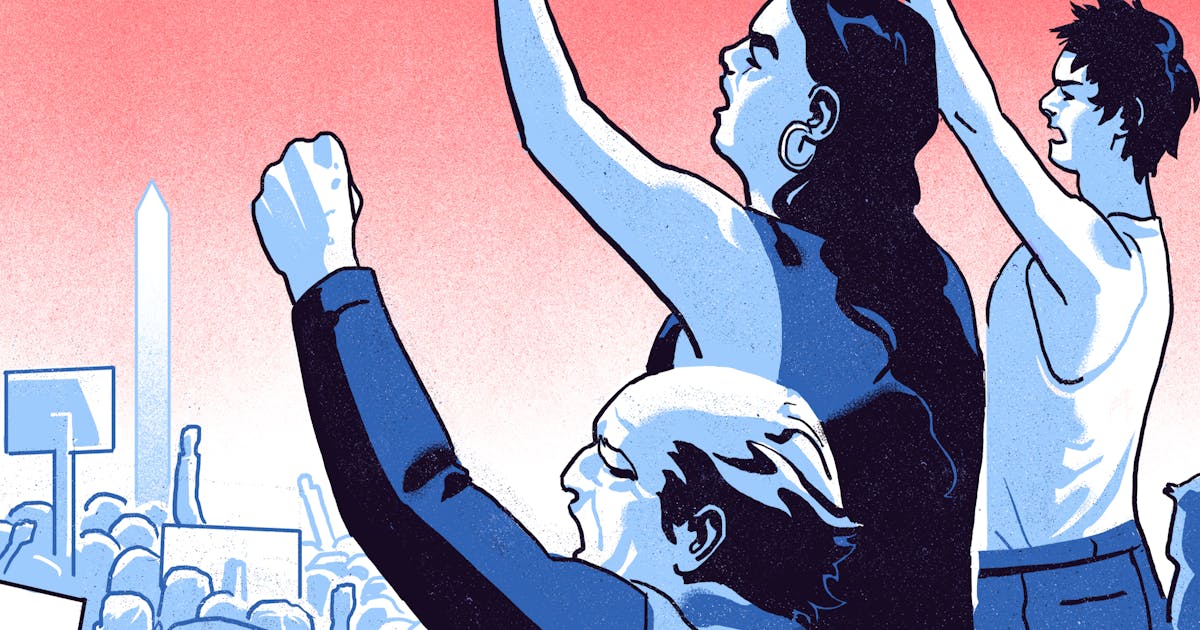
Fighting Back: A Citizen’s Guide to Resistance
Ordinary people have more power than they know.
How to Deliver Constructive Feedback in Difficult Situations
Thoughtful, empathetic language can make or break your business relationships
Beyond the Pentakill: 21st Century Competition
There’s been a lot of discussion about how to prevent toxic behavior in players of online competitive games. Today I’d like to suggest a different approach.