Creating a direct connection between any two computers (not just from client to server) over the internet is notoriously difficult. Many home networks are behind NATs which prevent new inbound connections. Sometimes these NATs are from the ISP (carrier-grade NATs) which are impossible to work around with port forwarding and/or UPnP. While hole punching techniques can break through NATs, it's far from guaranteed. Thus, we need something that works in the general case: relays.
Platform
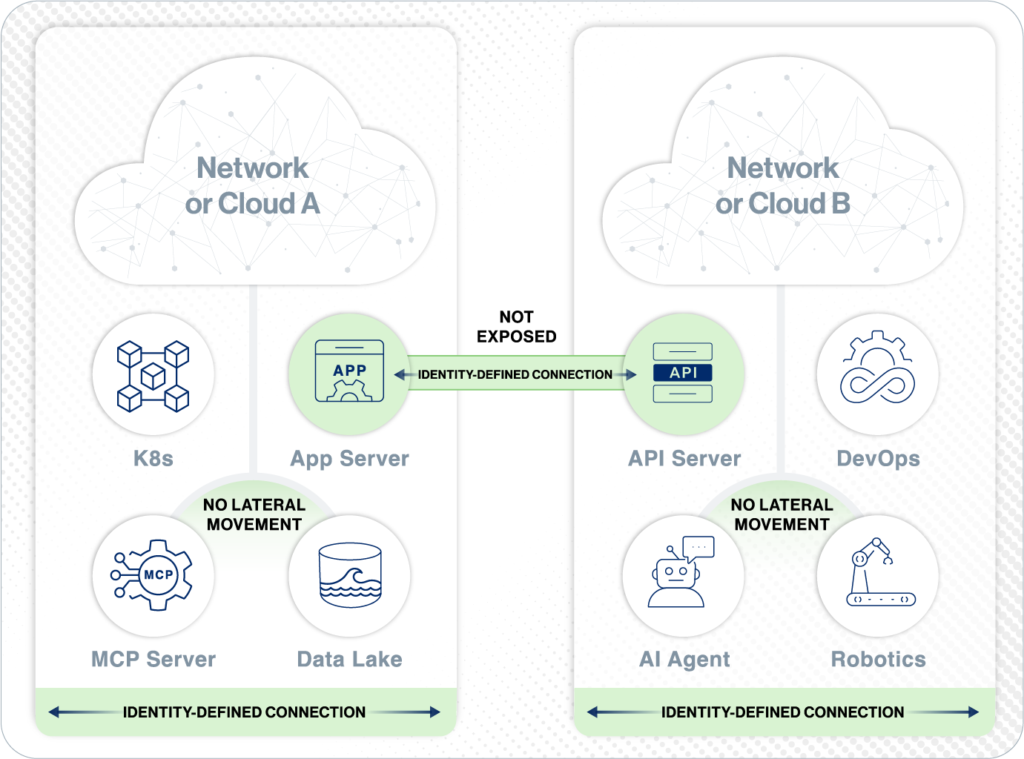
Secure workloads with Identity-First Reachability. NetFoundry closes inbound ports and replaces VPNs for simpler, zero-trust networking.
Intro to Ockam | Ockam
Impossible connections become possible. Establish secure channels between systems in private networks that previously could not be connected because it is either too difficult or insecure.

opentunnel — public urls for anything
a cli and sdk to create end-to-end encrypted public urls for apps running on your machine. the relay cannot read your traffic.
HOW TO: Self-hosting and securing web services out of your home with Argo Tunnel, nginx reverse proxy, Let's Encrypt, Fail2ban (H/T Linuxserver SWAG)
215 votes, 102 comments. Changelog V1.3a - 1 July 2023 DEPRECATED - Legacy tunnels as detailed in this how-to are technically no longer supported…
Secure MCP Tunnel | OpenAI API
Connect private or on-prem MCP servers to supported OpenAI products with an outbound-only MCP tunnel, without exposing them to the public internet.
CryptPad: end-to-end encrypted collaboration suite
CryptPad: end-to-end encrypted collaboration suite
CryptPad: end-to-end encrypted collaboration suite
CryptPad: end-to-end encrypted collaboration suite
Decentralised Identity 🤝 Mesh Networking - Thinking with portals
How you can invite your Bluesky friends into your Tailscale network using an OIDC shim
An exploration of Wi-Fi Aware for Bitchat (and other ad-hoc networks) - HackMD
Bitchat is an open source peer-to-peer mesh communication network started in the summer of 2025 by Jack Dorsey. It's available on iOS, Android, and MacOS. Others have explored beyond this, with a terminal client and a self-powered ESP32-based mesh relay node. In theory, Bitchat enables cross-platform peer-to-peer messaging even when there's no cellular or Wi-Fi network available. In practice, it's not proven to be reliable in an offline environment. However, I believe it could be, and it's clear that the team agrees and is actively working toward that end.
Tailscale’d Into Homelabbing
Having my own homelab was something I wanted to try for a long time. However, I just couldn’t get started. Mostly because I kept overthinking it. How will I handle dynamic IPs? Do I need something like a local DNS on my router for that? Even if I solve things inside the home, how am I supposed to access it remotely? Do I need port forwarding at the NAT layer? And what about TLS certificates, how do I even manage those without using a public certificate authority?

netbirdio/netbird
Connect your devices into a secure WireGuard®-based overlay network with SSO, MFA and granular access controls.
Threat Model
A private, p2p alternative to Slack and Discord built on Tor & IPFS - TryQuiet/quiet
Confessions to a data lake
I’ve been building Confer: end-to-end encryption for AI chats. With Confer, your conversations are encrypted so that nobody else can see them. Confer can’t read them, train on them, or hand them over – because only you have access to them.