

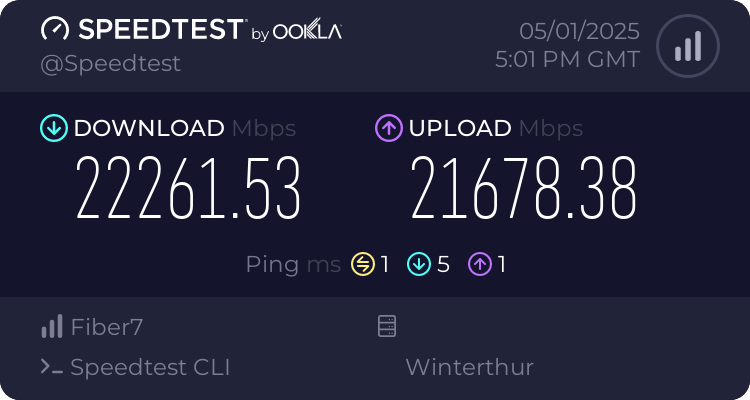
The Free Market Lie: Why Switzerland Has 25 Gbit Internet and America Doesn't
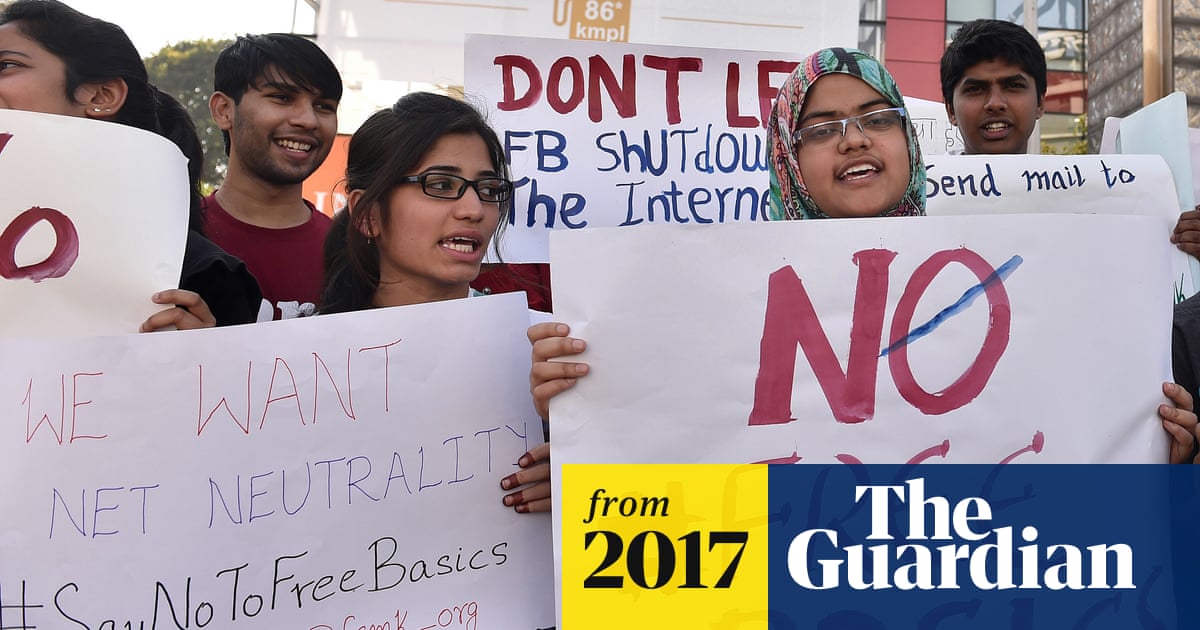
'It's digital colonialism': how Facebook's free internet service has failed its users
Free Basics, built for developing markets, focuses on ‘western corporate content’ and violates net neutrality principles, researchers say
The Case for Open Sovereignty in a Fragmenting Internet
Once, the Internet promised to dissolve borders. It was humanity’s great experiment in connection — a place where ideas, innovation, and communities could move freely, unburdened by geography or...

Internet for the People: The Fight for Our Digital Future
"For all the informational convenience the internet offers, it is deeply flawed. How can it be improved? Writer Ben Tarnoff proposes one possibility in this intriguing book, which urges the development of 'a public lane on the information superhighway.' It's worth checking out for yourself." – Seth MacFarlane Why is the internet so broken, and what could ever possibly fix it? In Internet for the People, leading tech writer Ben Tarnoff offers an answer. The internet is broken, he argues, because it is owned by private firms and run for profit. Google annihilates your privacy and Facebook amplifies right-wing propaganda because it is profitable to do so. But the internet wasn't always like this—it had to be remade for the purposes of profit maximization, through a years-long process of privatization that turned a small research network into a powerhouse of global capitalism. Tarnoff tells the story of the privatization that made the modern internet, and which set in motion the crises that consume it today. The solution to those crises is straightforward: deprivatize the internet. Deprivatization aims at creating an internet where people, and not profit, rule. It calls for shrinking the space of the market and diminishing the power of the profit motive. It calls for abolishing the walled gardens of Google, Facebook, and the other giants that dominate our digital lives and developing publicly and cooperatively owned alternatives that encode real democratic control. To build a better internet, we need to change how it is owned and organized. Not with an eye towards making markets work better, but towards making them less dominant. Not in order to create a more competitive or more rule-bound version of privatization, but to overturn it. Otherwise, a small number of executives and investors will continue to make choices on everyone’s behalf, and these choices will remain tightly bound by the demands of the market. It's time to demand an internet by, and for, the people now.
Internet for the People: The Fight for Our Digital Future
"For all the informational convenience the internet offers, it is deeply flawed. How can it be improved? Writer Ben Tarnoff proposes one possibility in this intriguing book, which urges the development of 'a public lane on the information superhighway.' It's worth checking out for yourself." – Seth MacFarlane Why is the internet so broken, and what could ever possibly fix it? In Internet for the People, leading tech writer Ben Tarnoff offers an answer. The internet is broken, he argues, because it is owned by private firms and run for profit. Google annihilates your privacy and Facebook amplifies right-wing propaganda because it is profitable to do so. But the internet wasn't always like this—it had to be remade for the purposes of profit maximization, through a years-long process of privatization that turned a small research network into a powerhouse of global capitalism. Tarnoff tells the story of the privatization that made the modern internet, and which set in motion the crises that consume it today. The solution to those crises is straightforward: deprivatize the internet. Deprivatization aims at creating an internet where people, and not profit, rule. It calls for shrinking the space of the market and diminishing the power of the profit motive. It calls for abolishing the walled gardens of Google, Facebook, and the other giants that dominate our digital lives and developing publicly and cooperatively owned alternatives that encode real democratic control. To build a better internet, we need to change how it is owned and organized. Not with an eye towards making markets work better, but towards making them less dominant. Not in order to create a more competitive or more rule-bound version of privatization, but to overturn it. Otherwise, a small number of executives and investors will continue to make choices on everyone’s behalf, and these choices will remain tightly bound by the demands of the market. It's time to demand an internet by, and for, the people now.
The Internet Has Become Too American to Trust | The Walrus
Trump and Big Tech have fused into a new kind of threat

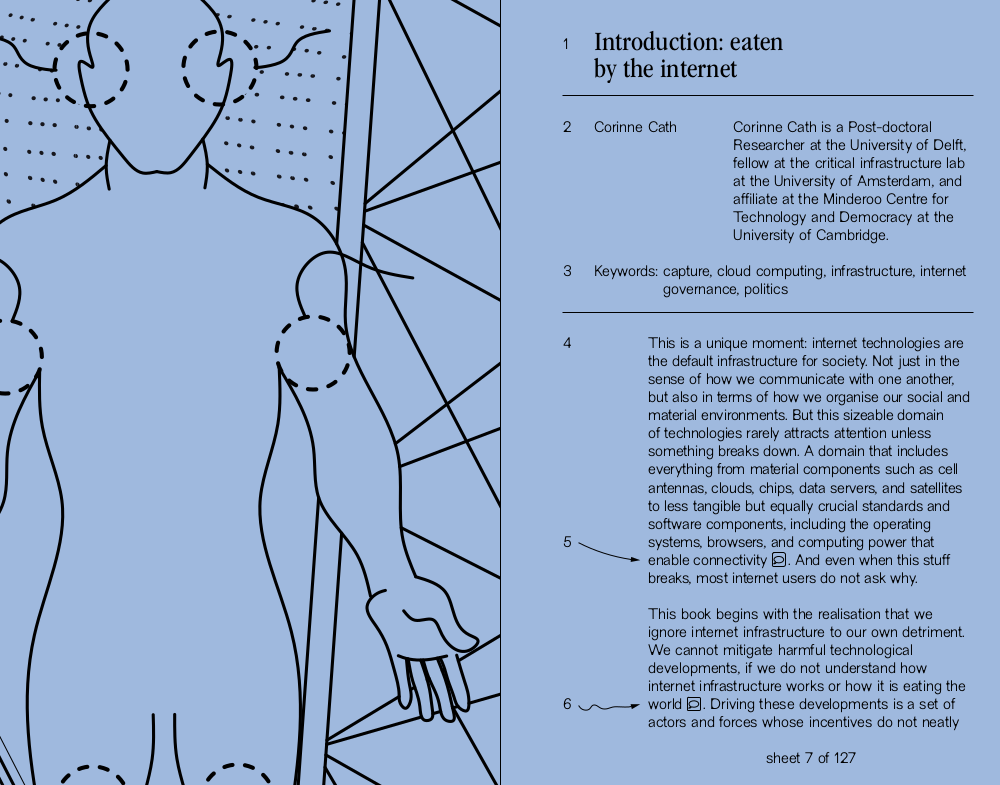
Eaten by the Internet
This book makes internet infrastructure visible as a force of political power, which is transforming the social world, from the bottom up—through fifteen chapters contributed by a global set of researchers, activists, and techies. We are living a unique moment: internet technologies are the default infrastructure for society, not just how we communicate but also how we organise our social life, politics, and economy, all the way down to our material environments, like cities. Our world is eaten by the internet. This means that those who control the internet control the bounds of public speech, economic production, social cohesion, and politics, making its infrastructure a core political terrain in the networked age. The book’s chapters cover a wide set of topics, spanning from the global politics of content moderation by internet infrastructure to the colonialism inherent in the race to plug the moon, from the harms wrought by blockchain companies in rural America to the particularities of online censorship across Asia. The chapters take on thorny topics, discussing power consolidation in the advertisement and cloud industry, the role of internet infrastructure in the war in Ukraine, and tech’s environmental impact—amongst others. In doing so, this book roots contemporary technology debates in the politics of internet infrastructure and urges us to ask how can we ensure our infrastructures sustain us, rather than consume us?
Dare Obasanjo (@carnage4life@mas.to)
The decline of the advertising supported internet is inevitable yet sad. Tech has been unique in being an equalizer. A poor Nigerian kid, a techie in the US or Jeff Bezos all used the same apps and websites. Now many charge $5-$15 per month creating a huge financial divide. Online advertising is a progressive form of taxation as the rich, mostly US-based consumers who buy goods & services from ads subsidized the internet for everyone else. We now live in the flat tax version of the internet.
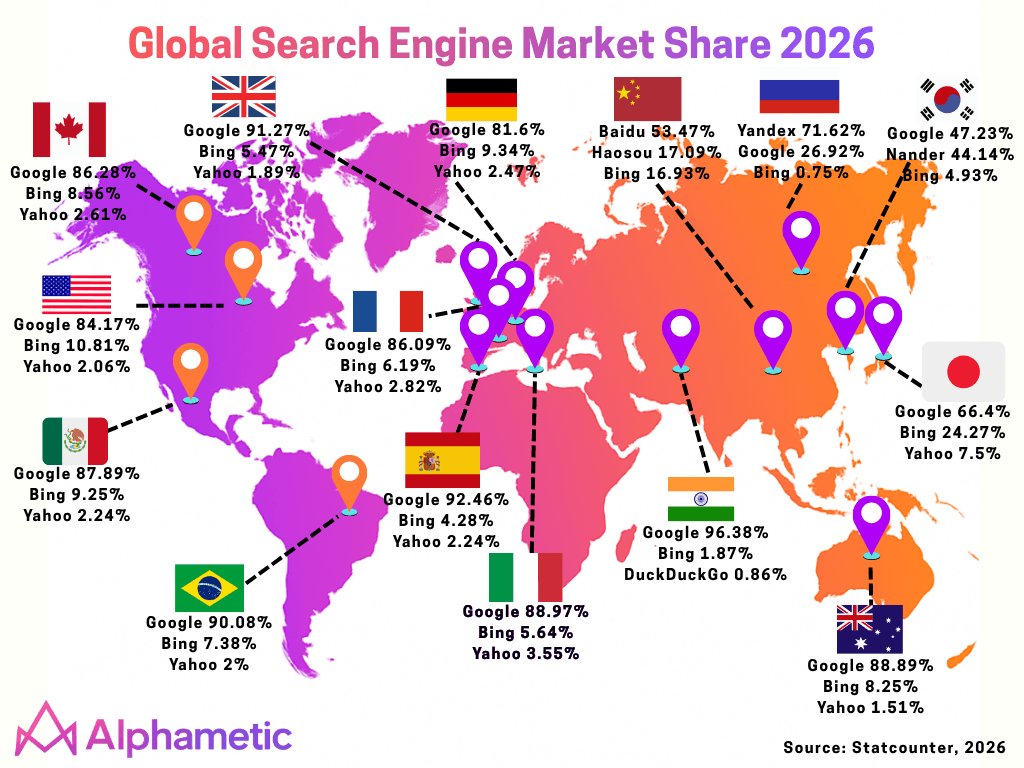
Global Search Engine Market Share in the Top 15 GDP Nations (2026)
While Google takes a large share of the global search engine market, there are other search engines like Bing and Baidu that capture their share of international SEO.
Tim Sweeney on Twitter / X
Finally, American developers will be free to compete with Apple’s App Store and payment systems here at home!A solid move to free the United States from the crony capitalist intentions of Big Tech and Big Law. https://t.co/7NXHiQxhEf— Tim Sweeney (@TimSweeneyEpic) April 1, 2025
Investing in what moves the internet forward | The Mozilla Blog
Firefox is the only major browser not backed by a billionaire and our independence shapes everything we build. This independence allows us to prioritize bu


European Commission (@EUCommission@ec.social-network.europa.eu)
Attached: 1 image A strong Europe needs independent digital spaces. We believe true digital sovereignty thrives on a competitive, contestable, open ecosystem where diverse platforms co-exist. Today, we’re expanding our presence to W, the new social media. By being on W, we want to boost alternatives and support all efforts toward a decentralised web. And we continue to invest into our presence on the Fediverse!
About Us
Around the world, building the internet’s operating system—and a better way to work. In a world of tech companies fighting for growth at any cost, imagine one that gives away its most successful pr…

Real Names and Responsible Speech: The Cases of South Korea, China, and Facebook — Yale Journal of International Affairs
By David Caragliano Human psychology and market incentives make real name registration an unpalatable proposition both to netizens and to online service providers charged with implementing the policy. In time, this article argues, internet policy makers will conclude that real nam

The EU's Digital Markets Act is delivering real wins for consumers in the EU, and in some cases globally. Apple and Google are opening up functionality that was previously reserved for their own products. But one glaring failure remains: browser engines on iOS. 🧵👇️ (1/23)

The Digital Markets Act Is Delivering Real Wins, But Not Yet for Browser Engines - Open Web Advocacy
open-web-advocacy.orgThe internet has evolved to foster a fatal expectation: that the things we depend on every day are free. They aren't, but we're allowed to pretend they are with the help of ad-driven business models. The real cost is substantial, and can be measured in time, money, relationships, health, and more.

Fund Your Internet
fundyourinternet.org
