

The Social Sciences and Humanities Research Council (SSHRC) is the federal research funding agency that promotes and supports research and research training in the humanities and social sciences.
PARCC
The Partnership for Assessment of Readiness for College and Careers (PARCC) is a consortium that includes the US Department of Defense Educational Activity and the US Bureau of Indian Education. Consortium members work to create and deploy a standard set of K–12 assessments in Mathematics and English,[1] based on the Common Core State Standards.
Combining Social Science and Environmental Health Research for Community Engagement
Social science-environmental health (SS-EH) research takes many structural forms and contributes to a wide variety of topical areas. In this article we discuss the general nature of SS-EH contributions and offer a new typology of SS-EH practice that situates this type of research in a larger transdisciplinary sensibility: (1) environmental health science influenced by social science; (2) social science studies of environmental health; and (3) social science-environmental health collaborations. We describe examples from our own and others’ work and we discuss the central role that research centers, training programs, and conferences play in furthering SS-EH research. We argue that the third form of SS-EH research, SS-EH collaborations, offers the greatest potential for improving public and environmental health, though such collaborations come with important challenges and demand constant reflexivity on the part of researchers.

Ask the Fellows: SSP's 2026 Annual Meeting - The Scholarly Kitchen
Today, we offer reflections on the SSP Annual Meeting from our 2026 Fellowship cohort.
OpenSIUC | Southern Illinois University Carbondale Research
OpenSIUC is an institutional repository offering permanent, reliable, and free access to research and scholarly material produced at Southern Illinois University Carbondale.
Secure Scuttlebutt
Secure Scuttlebutt (SSB) is a peer-to peer communication protocol, mesh network, and self-hosted social media ecosystem.[3][4] Each user hosts their own content and the content of the peers they follow, which provides fault tolerance and eventual consistency.[5] Messages are digitally signed and added to an append-only list of messages published by an author.[6] SSB is primarily used for implementing distributed social networks, and utilizes cryptography to assure that content remains unforged as it is propagated through the network.[7][8]
CoARA – Coalition for Advancing Research Assessment

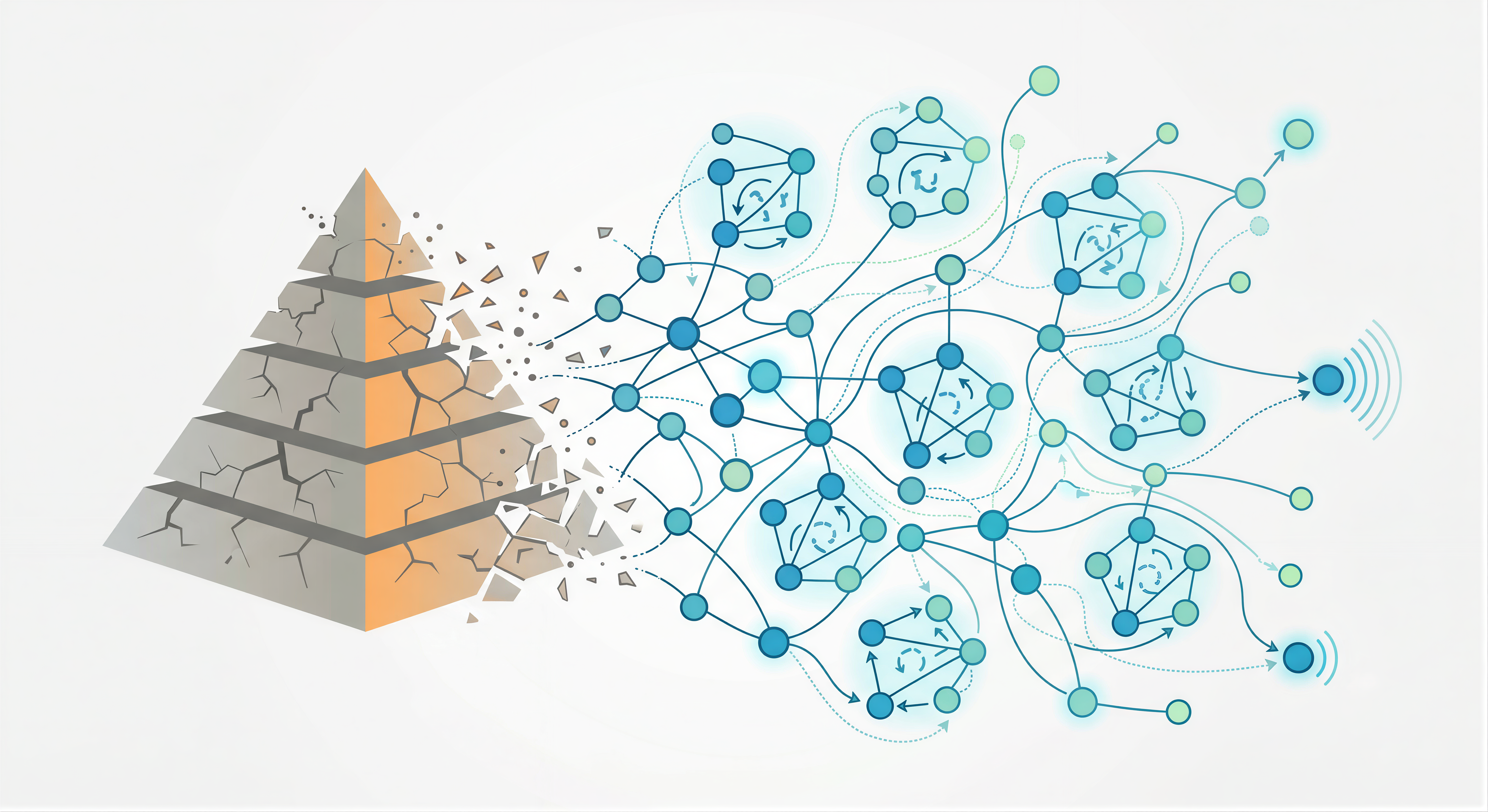
Decentralized Intelligence: Stigmergy, Simple Rules, and the Future of Organizational Coordination
The Global Council for Behavioral Science is a global community advancing behavioral science research, education, and ethical real-world application.
socialwg/meetings/2026/2026-03-06-WG-kickoff.md at main · w3c/socialwg
Social Web Working Group. Contribute to w3c/socialwg development by creating an account on GitHub.
CI 2026
ACM SIGCHI is the leading international community of students and professionals interested in research, education, and practical applications of Human Computer Interaction.
FediForum | Growing the Open Social Web un-workshop, 2026/03/02

Briefing_Building a New Social Web-20260218.pdf
Council Post: Communication: The Glue That Holds An Organization Together
Transparent and consistent communication makes a difference. It can increase understanding, trust and respect among the staff and leadership of a nonprofit.

American Indian Law Alliance
An NGO in consultative status with the United Nations Economic & Social Council (ECOSOC)
DAIR Institute
The Distributed AI Research Institute is a globally distributed organization of academics, activists, and engineers conducting community-rooted research.
@mackinac.social, built by @whiteside.io, is an open social web client that's thinking multi-protocol and bridging-first! John's added a *ton* of unique features we've never seen before, so we wanted to outline a few of them in a thread 👇🏼 1/🧵
