

I saw in a recent issue of the Times Literary Supplement that you have been critical of the “chambermaid” study which purported to show that people were losing weight without changing their diet or exercise. I agree that this study did not show what it claimed.
Why you shouldn’t exercise to lose weight, explained with 60+ studies
Vox is a general interest news site for the 21st century. Its mission: to help everyone understand our complicated world, so that we can all help shape it. In text, video and audio, our reporters explain politics, policy, world affairs, technology, culture, science, the climate crisis, money, health and everything else that matters. Our goal is to ensure that everyone, regardless of income or status, can access accurate information that empowers them.

A Statistical Interrogation of “The Case for Causality, Part 1” by Rausch and Haidt – Matthew B. Jané
I don’t know anything about the literature on social media and mental health so my focus on this post is to interrogate the statistical approach taken by the article written by Zach Rausch and Jonathon Haidt (link here) and to some extent the original meta-analysis by Ferguson.

The C-Word: Scientific Euphemisms Do Not Improve Causal Inference From Observational Data
Causal inference is a core task of science. However, authors and editors often refrain from explicitly acknowledging the causal goal of research projects; they refer to causal effect estimates as associational estimates. This commentary argues that using the term “causal” is necessary to improve the quality of observational research. Specifically, being explicit about the causal objective of a study reduces ambiguity in the scientific question, errors in the data analysis, and excesses in the interpretation of the results.

How the Sugar Industry Shifted Blame to Fat (Published 2016)
Newly discovered documents show that the sugar industry paid scientists in the 1960s to shape the debate around heart disease, sugar and fat.

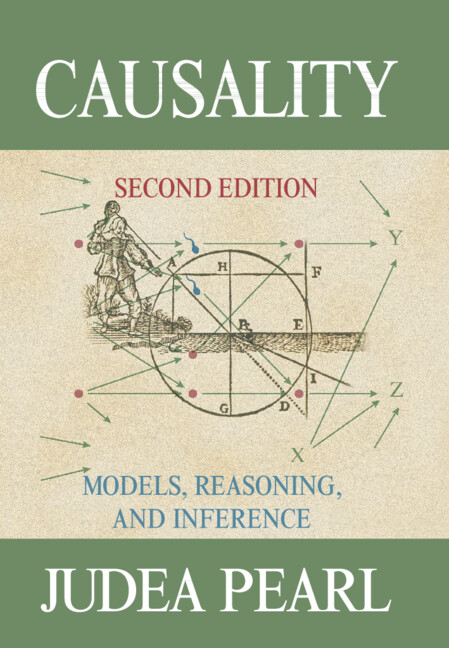
Causality
Written by one of the preeminent researchers in the field, this book provides a comprehensive exposition of modern analysis of causation. It shows how causality has grown from a nebulous concept into a mathematical theory with significant applications in the fields of statistics, artificial intelligence, economics, philosophy, cognitive science, and the health and social sciences. Judea Pearl presents and unifies the probabilistic, manipulative, counterfactual, and structural approaches to causation and devises simple mathematical tools for studying the relationships between causal connections and statistical associations. Cited in more than 2,100 scientific publications, it continues to liberate scientists from the traditional molds of statistical thinking. In this revised edition, Judea Pearl elucidates thorny issues, answers readers' questions, and offers a panoramic view of recent advances in this field of research. Causality will be of interest to students and professionals in a wide variety of fields. Dr Judea Pearl has received the 2011 Rumelhart Prize for his leading research in Artificial Intelligence (AI) and systems from The Cognitive Science Society.
Least resistance weight loss
The weight-loss industry preys on scientific naivete, often conflating good nutrition with the caloric deficit necessary to lose weight.
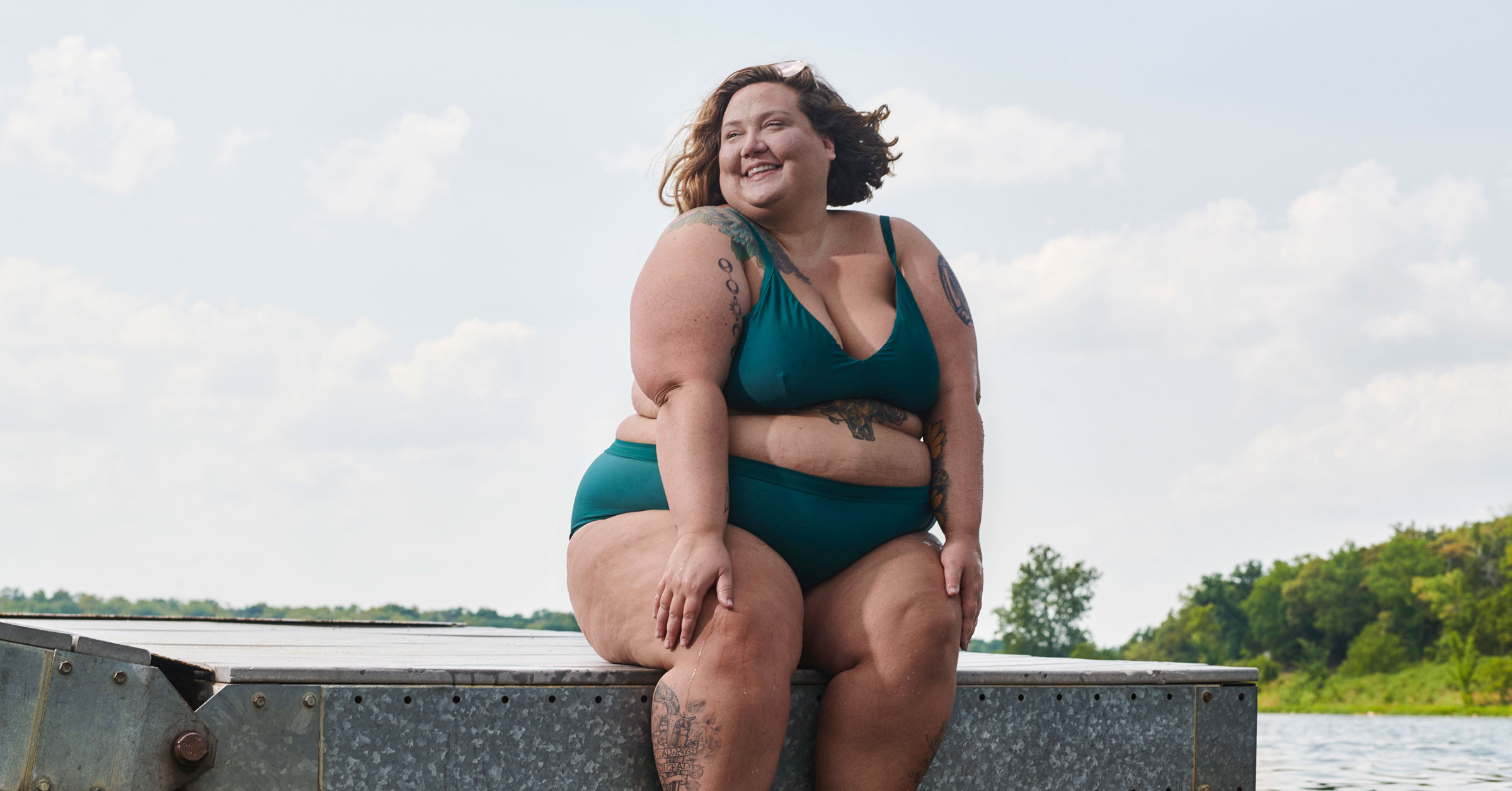
Everything You Know About Obesity Is Wrong
For decades, the medical community has ignored mountains of evidence to wage a cruel and futile war on fat people, poisoning public perception and ruining millions of lives. It's time for a new paradigm.
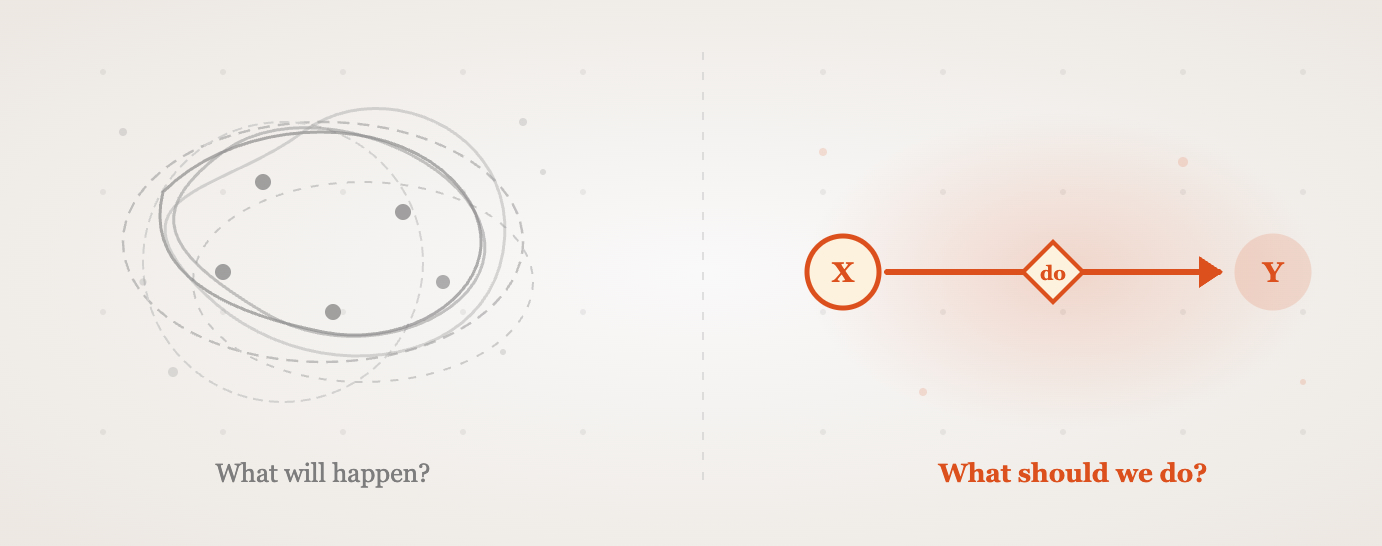
Causal Inference Is Eating Machine Learning
Your most accurate model might be your most dangerous one.
Nikhil Krishnan on Twitter / X
yeah there used to be a company called Eureka that powered these types of observational, more lifestyle style studies (here's an example looking at coffee's effect on different biomarkers/conditions)https://t.co/urQRvTVTb7I think it can work if you have enough people in…— Nikhil Krishnan (@nikillinit) September 14, 2025
Estimating Causal Effects of Treatments in Randomized and Nonrandomized Studies
Presents a discussion of matching, randomization, random sampling, and other methods of controlling extraneous variation. The objective was to specify the benefits of randomization in estimating causal effects of treatments. It is concluded that randomization should be employed whenever possible but that the use of carefully controlled nonrandomized data to estimate causal effects is a reasonable and necessary procedure in many cases.
Claims about scientific rigour require rigour
Nature Human Behaviour - Claims about scientific rigour require rigour
CausalSmith · AI Causal Scientist
Working papers from CausalSmith, an AI causal scientist: econometric theory in which every theorem, assumption, and lemma is machine-verified in Lean 4.
Death of the calorie
For more than a century we’ve counted on calories to tell us what will make us fat. Peter Wilson says it’s time to bury the world’s most misleading measure

Publication bias in the social sciences: Unlocking the file drawer
The file drawer is full. Should we worry? Experiments that produce null results face a higher barrier to publication than those that yield statistically significant differences. Whether this is a problem depends on how many null but otherwise valid results might be trapped in the file drawer. Franco et al. use a Time-sharing Experiments in the Social Sciences archive of nearly 250 peer-reviewed proposals of social science experiments conducted on nationally representative samples. They find that only 10 out of 48 null results were published, whereas 56 out of 91 studies with strongly significant results made it into a journal. Science , this issue p. 1502 , Fully half of peer-reviewed and implemented social science experiments are not published. , We studied publication bias in the social sciences by analyzing a known population of conducted studies—221 in total—in which there is a full accounting of what is published and unpublished. We leveraged Time-sharing Experiments in the Social Sciences (TESS), a National Science Foundation–sponsored program in which researchers propose survey-based experiments to be run on representative samples of American adults. Because TESS proposals undergo rigorous peer review, the studies in the sample all exceed a substantial quality threshold. Strong results are 40 percentage points more likely to be published than are null results and 60 percentage points more likely to be written up. We provide direct evidence of publication bias and identify the stage of research production at which publication bias occurs: Authors do not write up and submit null findings.

Inside the food industry: the surprising truth about what you eat
Think you eat only healthy, unprocessed foods? Think again. Joanna Blythman went undercover and discovered that even your fruit salad is not what it seems

Beacon Press: What We Don't Talk About When We Talk About Fat
From the creator of Your Fat Friend and co-host of the Maintenance Phase podcast, an explosive indictment of the systemic and cultural bias facing plus-size people.