Property-based testing is a rare example of academic research that has made it to the mainstream in less than 30 years. Under the slogan “don’t write tests, generate them” property-based testing has gained support from a diverse group of programming language communities. In fact, the Wikipedia page of the original property-basted testing Haskell library, QuickCheck, lists 57 reimplementations in other languages.
Hypothesis: A new approach to property-based testing
The property-based testing library for Python
Hypothesis, Antithesis, synthesis
Introducing Hegel, our new family of property-based testing libraries.

Hegel
A universal property-based testing protocol and family of libraries, built on Hypothesis
Structure and Interpretation of Test Cases • Kevlin Henney • GOTO 2022
The value of human, exploratory testing
Ann and Michael find things programmers never would have.Since unit testing and test-driven development burst onto the programming scene in the early 2000s, too many programmers have deluded themse…

Test-Driven Approaches to Software Engineering with Large Language...
Tests increasingly participate in the decisions made by large language models and software engineering agents. They specify intended behavior, guide program construction and repair, select...

Choosing properties for property-based testing
Or, I want to use PBT, but I can never think of any properties to use
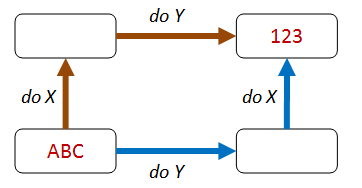
Testing can be fun, actually
Writing and maintaining tests is boring. But they're also some of the most valuable code we can write. With this blog post you'll learn a criminally underrated testing technique to add to your testing toolbox that can make tests a whole lot more pleasant.

Readable Robot Tests: Bridge the Tech Gap
A walkthrough of the Robot Testing pattern in Flutter, an end-to-end technique that keeps tests readable for non-technical stakeholders and reusable as code grows.
Property Testing with Agent Swarms
Using agents to build property-testing machinery, then turn the findings into small, reviewable fixes.
Tests Are The New Moat | Daniel Saewitz
As AI becomes better at cloning people's open source work, what ends up becoming most valuable are software contracts, tests, and API surface area. This clashes the incentives of clearly defining your commercialized open source software with protecting it.
Testing functional UIs - Hayleigh Thompson | Lambda Days 2025
Rethinking the Value of Agent-Generated Tests for LLM-Based Software Engineering Agents
Large Language Model (LLM) code agents increasingly resolve repository-level issues by iteratively editing code, invoking tools, and validating candidate patches. In these workflows, agents often write tests on the fly, a paradigm adopted by many high-ranking agents on the SWE-bench leaderboard. However, we observe that GPT-5.2, which writes almost no new tests, can even achieve performance comparable to top-ranking agents. This raises the critical question: whether such tests meaningfully improve issue resolution or merely mimic human testing practices while consuming a substantial interaction budget.
Ephemeral testing
We have many ways to ensure software quality. Unit testing. Fuzz testing. Integration testing. And so forth. I'd like to propose a method that was unthinkable before: ephemeral testing. (Ephemeral is a fancy word for 'throw away' or 'temporary'.) You write your code. You build your software component. Or the AI agent does … Continue reading Ephemeral testing
The Fuzzing Book
Welcome to "The Fuzzing Book"! Software has bugs, and catching bugs can involve lots of effort. This book addresses this problem by automating software testing, specifically by generating tests automatically. Recent years have seen the development of novel techniques that lead to dramatic improvements in test generation and software testing. They now are mature enough to be assembled in a book – even with executable code.