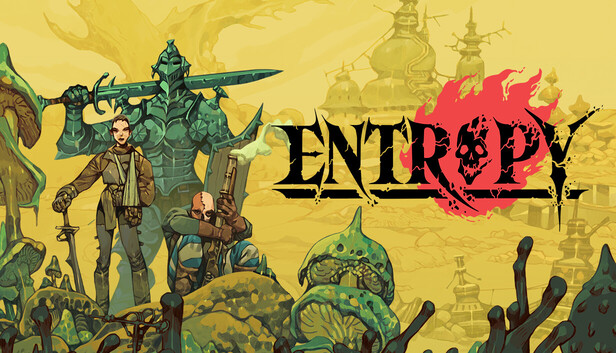
Entropy is a tactical turn-based RPG inspired by classic JRPGs. Assemble your party of mercenaries and forge your own path towards an expedition into hell to stop the demonic incursion. Choices you make along the way will determine the fate of your world.
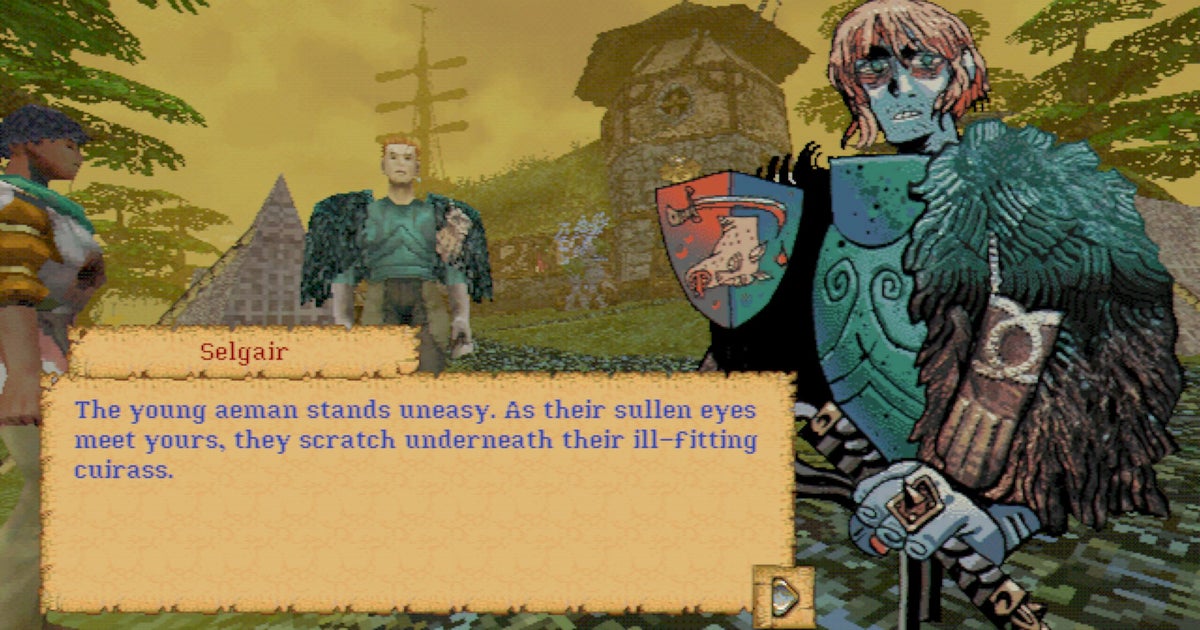
Turn-based RPG Entropy offers up a world abandoned by the gods that looks like a PS1 game fished from a toilet
Come wallow in the demo for Entropy, an absorbingly ugly take on the Final Fantasy RPG format from the creators of Dread Delusion.
Tom Leinster : The categorical origins of entropy
Cryptographic Nature
I consider the many ways in which evolved information-flows are restricted and metabolic resources protected and hidden -- the thesis of living phenomena as evolutionary cryptosystems. I present the information theory of secrecy systems and discuss mechanisms acquired by evolved lineages that encrypt sensitive heritable information with random keys. I explore the idea that complexity science is a cryptographic discipline as "frozen accidents", or various forms of regularized randomness, historically encrypt adaptive dynamics.

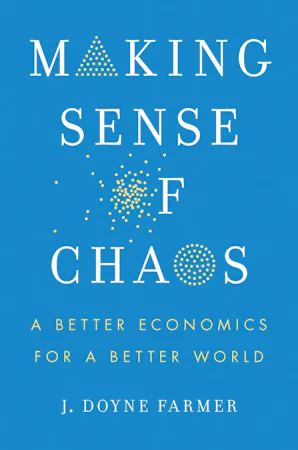
Making Sense of Chaos
From a pioneer in the field of complexity science and chaos theory, a plan for solving the world’s most pressing problems “Farmer convincingly argues t...
FireScape - an Old School RuneScape-themed FE8 hack [COMPLETE]
Fire Emblem x RuneScape Two of the most iconic role-playing games of all time collide in an epic campaign across Gielinor… Welcome to FireScape! This project is a complete, 25-chapter Fire Emblem-style experience featuring the nostalgic, charming world of RuneScape combined with the dramatic story and strategic, grid-based combat of Fire Emblem. Whether you’re a fan of one or both of these incredible franchises, prepare for the ultimate tactical challenge. DOWNLOAD FireScape_Ver1.0 Note:...

The hidden ‘rules of the game’ that dictate how we navigate the world | Psyche Videos
How free are we really, if human behaviour embodies the complex, intertwined webs of society and history?

Requisite variety and its implications for the control of complex systems
Recent work on the fundamental processes of regulation in biology (Ashby, 1956) has shown the importance of a certain quantitative relation called the law of requisite variety. After this relation had been found, we appreciated that it was related to a theorem in a world far removed from the biological—that of Shannon on the quantity of noise or error that could be removed through a correction-channel (Shannon and Weaver, 1949; theorem 10). In this paper I propose to show the relationship between the two theorems, and to indicate something of their implications for regulation, in the cybernetic sense, when the system to be regulated is extremely complex. Since the law of requisite variety uses concepts more primitive than those used by entropy, I will start by giving an account of that law.

Cognition all the way down 2.0: neuroscience beyond neurons in the diverse intelligence era
This paper formalizes biological intelligence as search efficiency in multi-scale problem spaces, aiming to resolve epistemic deadlocks in the basal “cognition wars” unfolding in the Diverse Intelligence research program. It extends classical work on symbolic problem-solving to define a novel problem space lexicon and search efficiency metric. Construed as an operationalization of intelligence, this metric is the decimal logarithm of the ratio between the cost of a random walk and that of a biological agent. Thus, the search efficiency measures how many orders of magnitude of dissipative work an agentic policy saves relative to a maximal-entropy search strategy. Empirical models for amoeboid chemotaxis and barium-induced planarian head regeneration show that, under conservative (i.e., intelligence-underestimating) assumptions, even ‘simple’ organisms are from two-hundred- to sextillion-fold more efficient in problem space exploration. In this sense, the deep insights of neuroscience are not about neurons per se, but about the policies and patterns of physics and mathematics that function as a kind of “cognitive glue” binding parts toward higher levels of collective intelligence in wholes of highly diverse composition and origin. Therefore, our synthesis argues that the “mark of the cognitive” is perhaps better sought in the measurable efficiency with which living systems, from single cells to complex organisms, traverse energy and information gradients to tame combinatorial explosions-one problem space at a time.
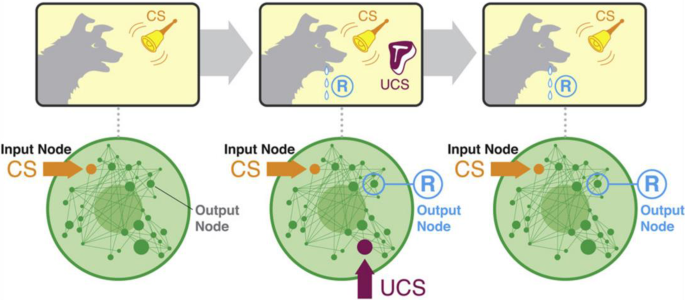
This Most Simple Sudoku Rule = Fog Magic
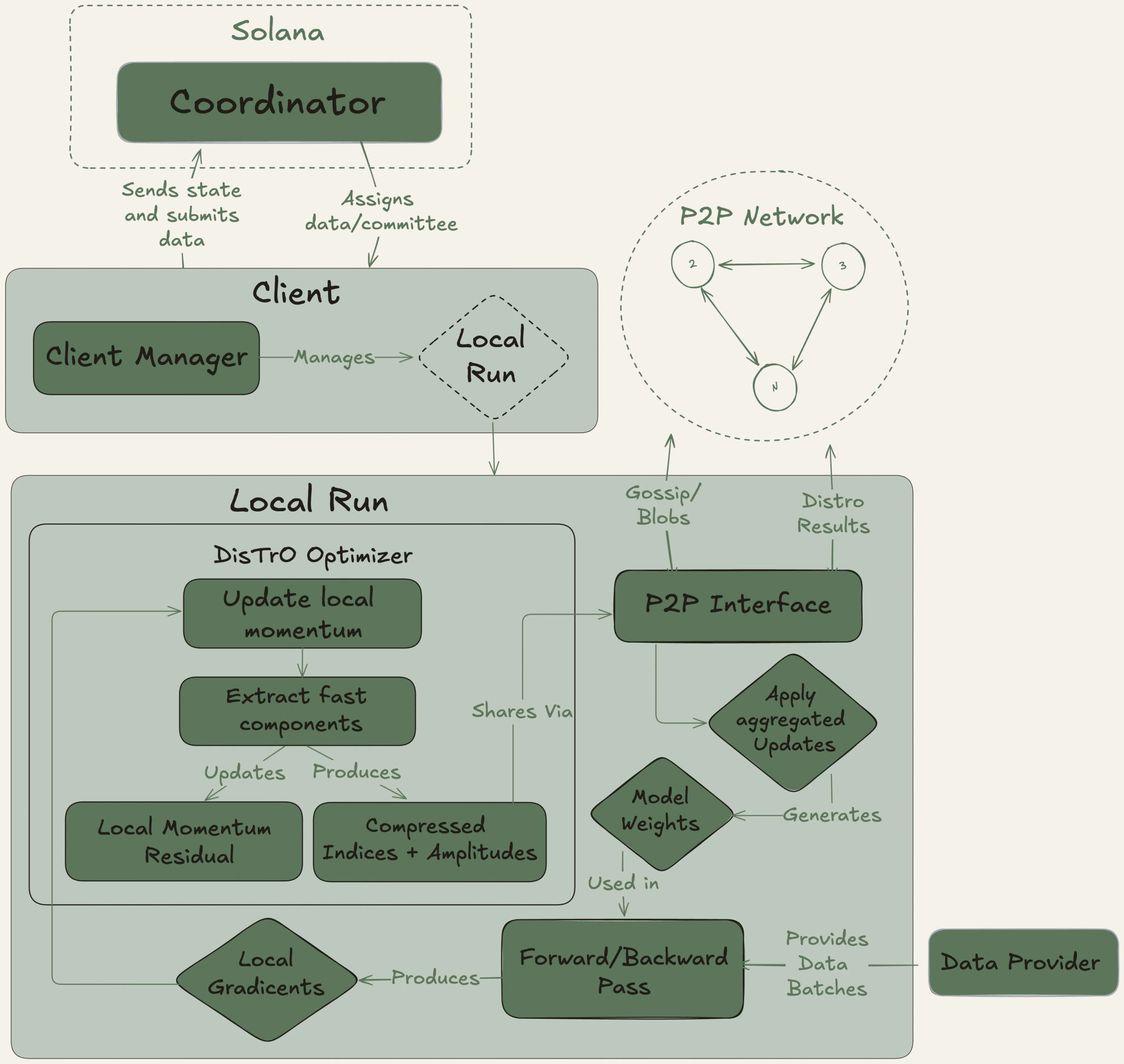
Democratizing AI: The Psyche Network Architecture - NOUS RESEARCH
Psyche is an open infrastructure that democratizes AI development by decentralizing training across underutilized hardware. Building on DisTrO and its predecessor DeMo, Psyche reduces data transfer by several orders of magnitude, making distributed training practical. Coordination happens on the Solana blockchain, ensuring a fault-tolerant and censorship-resistant network.
ATmosphere Games
Your games. Your data. Your control. Fun experiences that are yours to keep!
ASIAN GAMES: Teams slam Games organizers over ‘chaos’ - Taipei Times
Several teams yesterday rounded on the organization of the Asian Games in Japan, with Thailand likening it to a “chaotic” game of “musical chairs” and South Korea saying “they deserve a failing grade.”The biggest issue at the Aichi-Nagoya Games has been a shortage of rooms for the 17,000 participant