


Twitter’s blog is generally a cheery place, with one big exception from 2012: the innocuously named Changes Coming in Version 1.1 of the Twitter API, and in particular, the section called …
Twitter Thoughts For You
I previously have written back in March 2022 about how I use Twitter, and back in April 2023 about Twitter and its then-new algorithms, which have changed again.
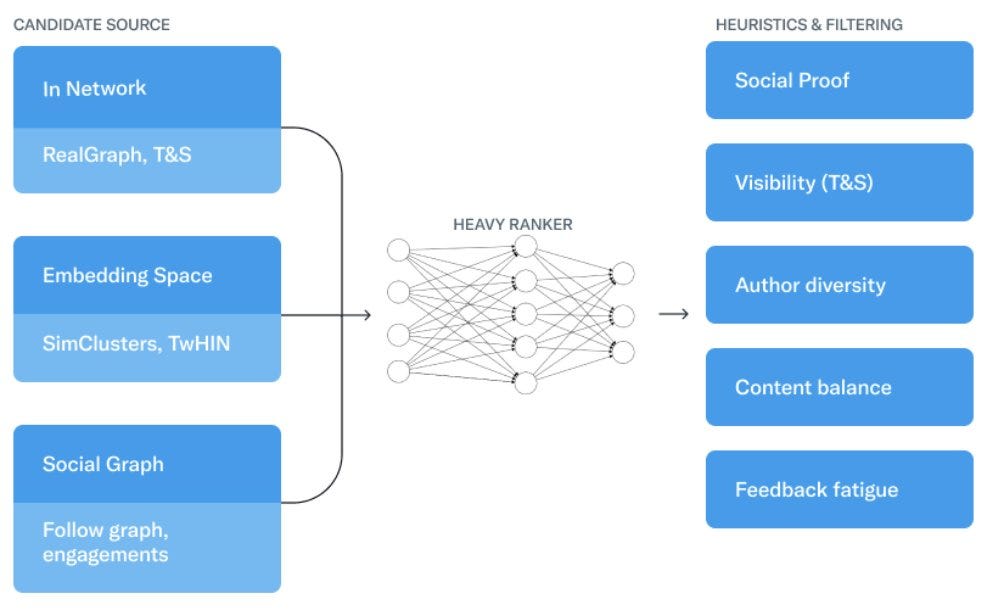
How Twitter’s Algorithm Works: A High-level Breakdown
On March 31st, 2023, Twitter made an unprecedented move by releasing the source code for their algorithm. The move is unprecedented because…
The Weird, Fragmented World of Social Media After Twitter - The Atlan…
archived 7 Aug 2023 02:41:57 UTC

The Pulse of The Planet, Flatlined: Why Twitter's Is Failing to Grow
No, it's not rampant abuse, weak leadership, or a product that intimidates new users. The roots of Twitter's stagnation go back to 2010.

The Weird, Fragmented World of Social Media After Twitter
The common forum that Elon Musk destroyed will never be replaced—and that’s okay.
Scientists no Longer Find Twitter Professionally Useful, and have Switched to Bluesky
Synopsis. Social media has become widely used by the scientific community for a variety of professional uses, including networking and public outreach. For
Scientists no Longer Find Twitter Professionally Useful, and have Switched to Bluesky
Synopsis. Social media has become widely used by the scientific community for a variety of professional uses, including networking and public outreach. For
Shifts in U.S. Social Media Use, 2020–2024: Decline, Fragmentation, and Enduring Polarization
The social media ecosystem appears to be in flux. Twitter’s rebranding to X has come to symbolize a broader reorganization of online publics – political reshuffling, user attrition, and uncertainty over the role of legacy platforms. Simultaneously, the shift from text-based, networked feeds toward algorithmically curated, short-form video has accelerated, with TikTok setting the pace for the wider ecosystem [18, 14, 16]. At the same time, everyday communication increasingly migrates from large, open networks to semi-private spaces such as group chats and messaging apps. Commentators describe a digital public sphere in transition: smaller, more fragmented, less dominated by traditional social networking sites, and rise of more broadcast-oriented forms of media – with some even suggesting that we are seeing the beginning of the end of the social media era.
How Elon Musk Is Changing the Twitter Experience (Published 2023)
Nearly six months after buying Twitter, Mr. Musk has made tweaks that have altered what people see on the platform and how they interact with it.

Nobody knows how the whole system works
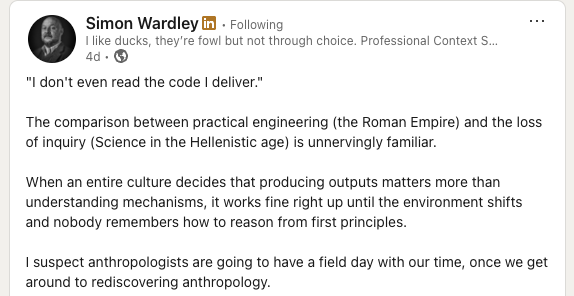
One of the surprising (at least to me) consequences of the fall of Twitter is the rise of LinkedIn as a social media site. I saw some interesting posts I wanted to call attention to: First, Simon W…
idiot's guide to standard.site - leafy
blogs are back! but why are they different now???
Note from 8 February 2024
There are now 68 Twitter archives mapped in `tweetback-canonical`, which means links to the original tweets in other tweetback archives are transformed…

blogs.social — Discover the open web
Discover and follow blogs across Bluesky, Mastodon, RSS, and the open social web.
Scientists no Longer Find Twitter Professionally Useful, and have Switched to Bluesky
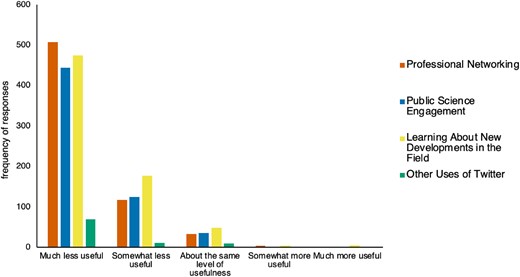
Synopsis Social media has become widely used by the scientific community for a variety of professional uses, including networking and public outreach. For the past decade, Twitter has been a primary home of scientists on social media. In recent years, new leadership at Twitter has made substantive changes that have resulted in increases in the prevalence of pseudoscience, conspiracy theory, and harassment on the platform, causing many scientists to seek alternatives. Bluesky has been suggested as a good alternative to Twitter, but the phenomenon of academics switching social media platforms has not previously been studied. Here we report on the results of a survey distributed to scientists on Twitter and Bluesky (n = 813). Results overwhelmingly confirm that changes to Twitter have made the social media platform no longer professionally useful or pleasant, and that many scientists have abandoned it in favor of Bluesky. Results show that for every reported professional benefit that scientists once gained from Twitter, scientists can now gain that benefit more effectively on Bluesky than on Twitter.
Rebuilding Social Media From Scratch!
Rebuilding Social Media From Scratch!