


WPP is dealing with not only a changing advertising industry but a changing world, thanks to the Internet. Antitrust needs to change as well.
Anti-trust
Technology markets, and others that share their strong economies of scale , naturally tend to evolve into oligopolies, if not outright monop...

Google’s Chrome Antitrust Paradox
This Article examines Google’s dominance of the browser market, highlighting how Google’s Chrome browser plays a critical role in reinforcing Google’s dominance in other markets. While Google portrays Chrome as a neutral platform built on open-source technologies, this Article shows that Chrome is, in fact, instrumental in Google’s strategy to reinforce its dominance in the online advertising, publishing, and browser markets. The examination of Google’s strategic acquisitions, anticompetitive practices, and the implementation of so-called “privacy controls” underlines that Chrome is far from a neutral gateway to the web. Rather, it serves as a key tool for Google to maintain and extend its market power, often to the detriment of competition and innovation in the digital economy.This Article illustrates how Chrome not only bolsters Google’s position in online advertising and publishing through practices such as coercion and self-preferencing, but also leverages its advertising clout to engage in a “pay-to-play” paradigm—the cornerstone of Google’s larger strategy of market control. It also outlines potential regulatory interventions and remedies by drawing on historical antitrust precedents. Lastly, this Article proposes a triad of solutions motivated by an analysis of Google’s abuse of Chrome, including behavioral remedies targeting specific anticompetitive practices, structural remedies involving an internal separation of Google’s divisions, and divestiture of Chrome from Google into an independent organization.Despite Chrome’s dominance and its critical role in Google’s ecosystem, as well as its recent legal troubles with the Department of Justice, it so far has avoided significant antitrust action. A key reason for this inaction lies in the long-standing precedent supporting the hegemony of technology firms and the uncertainty surrounding Chrome’s viability as a standalone entity. This Article attempts to address these issues to enable antitrust actions that are essential in remedying current market imbalances. Such actions are also critical to mitigate future threats to competition from an increasingly monopolistic technology landscape, thereby fostering a competitive digital environment that promotes innovation and protects consumer interests.
Google Faces New EU Antitrust Probe Over Search Ad Pricing Practices
Google, the target for billions of euros in European Union antitrust fines, has been hit by a fresh EU probe over concerns it’s illegally rigging the cost of advertising on its search engine.
On Politics and Proton - a message from Andy
1.1K votes, 1K comments. Hi all, last night, a post from end of last year from my personal X account about antitrust policy in the US suddenly became…
The implications of the end of net neutrality | TechCrunch
When Donald Trump pulled off a stunning victory to win the U.S. presidency, the entire world began to speculate about what a Trump administration will look like. As the chief executive of a native advertising network, I -- and many others that work in digital media -- am keeping a particularly close eye on how the president will handle net neutrality.

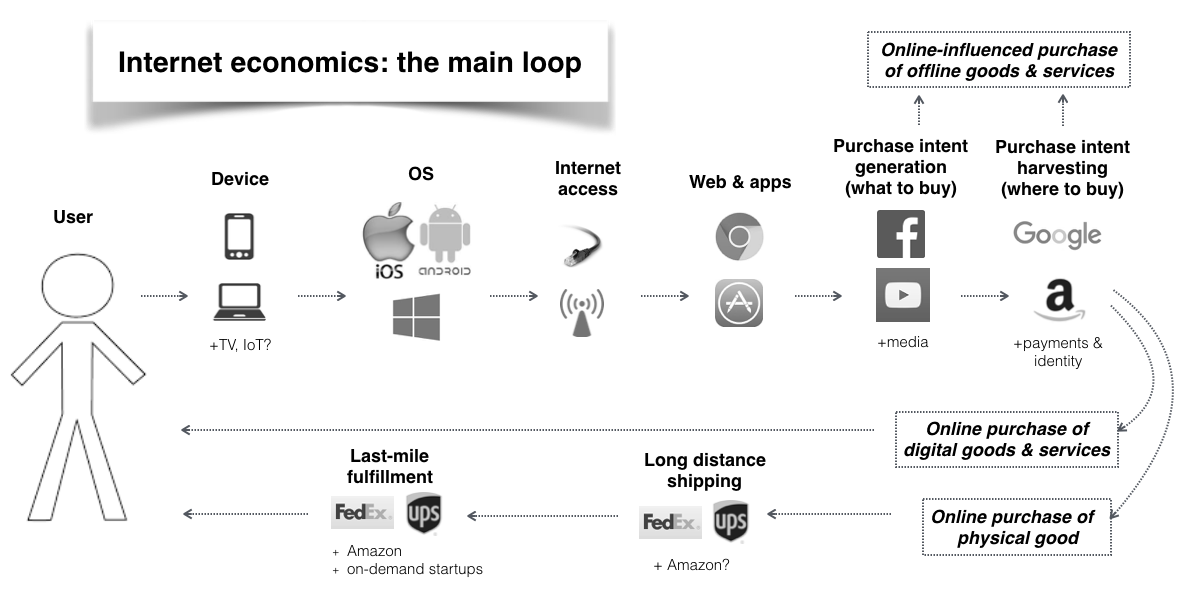
The Internet Economy
We are living in an era of bundling. The big five consumer tech companies — Google, Apple, Facebook, Amazon, and Microsoft — have moved far…
Antitrust, the App Store, and Apple
Apple’s case before the Supreme Court is about standing; Apple has a strong case. That, though, doesn’t mean the App Store isn’t a monopoly — and that Apple isn’t increasing…

Dare Obasanjo (@carnage4life@mas.to)
The decline of the advertising supported internet is inevitable yet sad. Tech has been unique in being an equalizer. A poor Nigerian kid, a techie in the US or Jeff Bezos all used the same apps and websites. Now many charge $5-$15 per month creating a huge financial divide. Online advertising is a progressive form of taxation as the rich, mostly US-based consumers who buy goods & services from ads subsidized the internet for everyone else. We now live in the flat tax version of the internet.
Google fends off news publishers' antitrust lawsuit over online search
Alphabet's Google won a ruling dismissing a lawsuit that accused the tech giant of monopolizing the U.S. online news market and exploiting its dominance in search to extract publishers' content without payment.

Pluralistic: The worst possible antitrust outcome (03 Sep 2025) – Pluralistic: Daily links from Cory Doctorow
Last year, Google lost an antitrust case to Biden's DoJ. The DoJ lawyers beat Google like a drum, proving beyond a shadow of a doubt that Google had deliberately sought to create and maintain a monopoly over search, and that they'd used that monopoly to make search materially worse, while locking competitors out of the market.
Elena Rossini 🌈 (@_elena@mastodon.social)
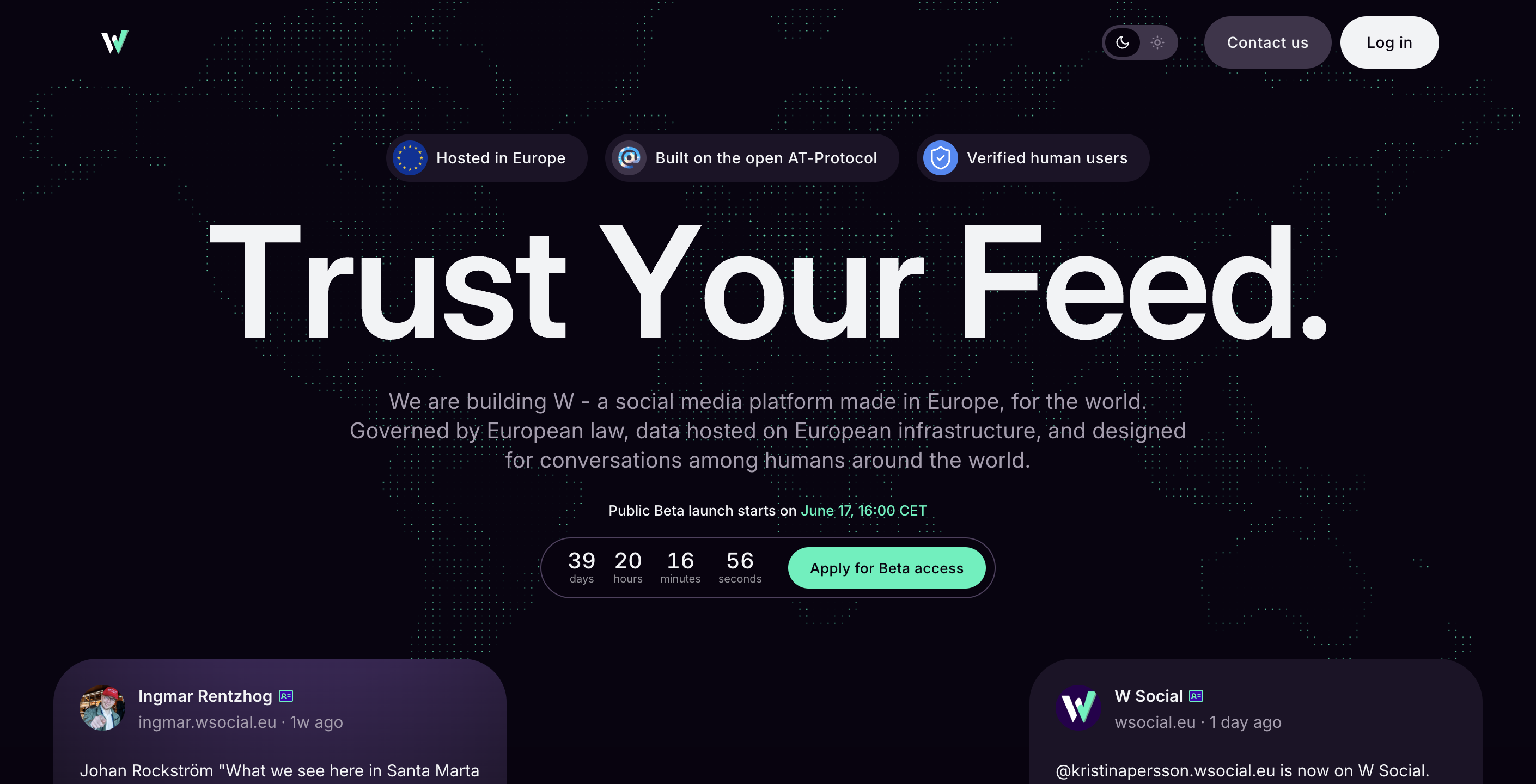
Attached: 2 images I just refreshed the #WSocial website and it's showing a MAJOR redesign... with a label at the top stating "built on the open AT-protocol." This is the first time ever they acknowledge this – I know, as I've been visiting their website for MONTHS and also never heard about this in any interviews. So the claims in my exposé stand (the Internet Archive's Wayback Machine would confirm this). Of note: they changed their URL from wsocial.eu to wsocial.news BTW thanks for all your feedback ❤️
Pluralistic: All (antitrust) politics are local (02 Sep 2025) – Pluralistic: Daily links from Cory Doctorow
The US government has abandoned antitrust. Today, companies facing antitrust jeopardy can just pay key Trumpland figures a million bucks, and they will make a discreet visit to the fifth floor of the DoJ building, have a little shoofty around the Antitrust Division and the whole thing will just…go away:
Lawsuit says Anthropic, OpenAI, Google and SpaceXAI of illegal agreement to slow AI
Anthropic CEO acknowledged potential antitrust hurdles, writing that it would assist if the US government were to mediate ‘or at least enable’ cross-lab discussions

Protocols, Not Platforms: A Technological Approach to Free Speech
So I finally finished reading this and while I agree with the recommendation, I’m a little wary of some of the context it’s rooted in ideologically and I’m wondering if others have thoughts on these things. Equality in the marketplace I think the main problem with the text is that it relies heavily on the idea of “marketplace of ideas,” leaning heavily on the idea that protocols are actually good for markets specifically because they make competition more perfect (because there’s better knowled...

Restoring Consumer Sovereignty: How Markets Manipulate Us and What the Law Can Do About It
Abstract. For decades, there has been broad consensus within antitrust, intellectual property, and consumer law scholarship that consumers make decisions i

Is the online advertising bubble finally starting to pop?
I started calling online advertising a bubble in 2008. I made “The Advertising Bubble” a chapter in The Intention Economy in 2012. I’ve been unpacking what I figure ought to be ob…
