The history of credit cards helps explain why Plaid is valuable to Visa, and how Visa can make it significantly better.
Visa Digital Issuer Solutions
Build cardholder primacy with standout digital experiences.

What do Visa and Mastercard do? An intro to card networks @ tautology.town
tautology.town is a blog that contains tautologies.
The Impact of Credit Cards on Spending: A Field Experiment
In a field experiment, we measure the impact of payment with credit card as compared with cash on insurance company employees' spending on lunch in a cafeteria.

Time to Cut Up Those Debit Cards? Effect of Payment Mode on Willingness to Spend
Financial industry data indicate that consumers increasingly prefer debit cards over credit cards, especially as a means of enforcing financial self-discipline. Given prior research suggesting that credit cards act as spending facilitating stimuli, this move toward reduced credit card use would appear to be in the right direction. Ironically, however, the same logos that were implicated in facilitating spending with credit cards are the logos that appear on debit cards. In what should serve as an eye-opener to consumers, it is found that exposure to debit card logos does result in an increased willingness to spend, similar to credit cards.
Rewards and Misperceived Spending: Experimental Evidence from Credit Cards
Using proprietary data, a survey, and an experiment with a major bank in China, this paper studies how credit card rewards affect perceived and actual consumer
Why do banks reward their customers to use their credit cards?
EconStor is a publication server for scholarly economic literature, provided as a non-commercial public service by the ZBW.
Visa Introduces AI Financial Assistant, Helping Banks Guide Customers from Insight to Action
AI Financial Assistant brings conversational financial guidance into the banking apps consumers already trust for spending and saving. The Visa Value ‑ Added Service applies benchmarking insights informed by one of the world’s largest payment networks to deliver personalized recommendations.
Consumer Rationality and Credit Cards
Borrowing on credit cards at high interest rates might appear irrational. However, even low transactions costs can make credit cards attractive relative to bank loans. Credit cards also provide liquidity services by allowing consumers to avoid some of the opportunity costs of holding money. The effect of alternative interest rates on the demand for card debits can explain why credit card interest rates only partially reflect changes in the cost of funds. Credit card interest rates that are inflexible relative to the cost of funds are not inconsistent with a competitive equilibrium that yields zero profits for the marginal entrant.
High Risk Merchant Accounts & Payment Solutions
Our high-risk merchant account service offers competitive rates for businesses in industries such as gaming, adult entertainment, and CBD.

Best High-Risk Merchant Account Providers
Top high-risk merchant account providers give businesses a place to store funds and help facilitate electronic payments in store, online or both.

Online Payment Services
Trusted for over 20 years, CCBill securely handles your transactions from any location in the world. Start accepting payments for your online business.

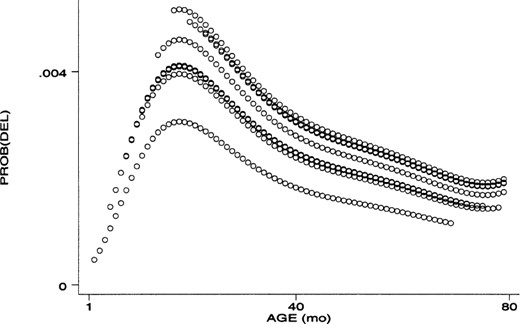
An Empirical Analysis of Personal Bankruptcy and Delinquency
Abstract. This article uses a new dataset of credit card accounts to analyze credit card delinquency, personal bankruptcy, and the stability of credit risk
A Model of Money and Credit, with Application to the Credit Card Debt Puzzle
Abstract. Many individuals simultaneously have significant credit card debt and money in the bank. The credit card debt puzzle is as follows: given high in
The Credit Card Debt Puzzle: The Role of Preferences, Credit Access Risk, and Financial Literacy
Abstract. We use the 1979 National Longitudinal Survey of Youth to revisit what is termed the credit card debt puzzle: why consumers simultaneously co-hold high-interest credit card debt and low-interest assets that could be used to pay down this debt. Relative to individuals with no credit card debt but positive liquid assets, borrower-savers have very different perceptions of future credit access risk and use credit cards for precautionary motives. Moreover, changing perceptions about credit access risk are essential for predicting transitions among the two groups. Preferences and the composition of financial portfolios also play a role in these transitions.
Credit Cards as Spending Facilitating Stimuli: A Conditioning Interpretation
Abstract. Four experiments and one study were conducted to test the hypothesis that stimuli associated with spending can elicit spending responses. In all