


Every content company is or should be moving to a model that incorporates both subscriptions and ads; creator platforms should help their publishers do the same.
The Open Source Distributor Business Model
Dirk Riehle, dirk@riehle.org, Published in Computer vol. 54, no. 12 (December 2021), pp. 99-103. Abstract This article defines and discusses one particular commercial open source business model, ca…

Early returns on creator journalism make clear – it's a poly-platform path forward
No single platform can carry a journalism business. These creators are building ecosystems instead.

Twitter Has a New CEO; What About a New Business Model?
Twitter is changing CEOs once again; what if the company changed its business model from ads to subscriptions?

What can news publishers learn from creators? Interview with Simon Owens
Don't leave money on the table and think outside the box about business models

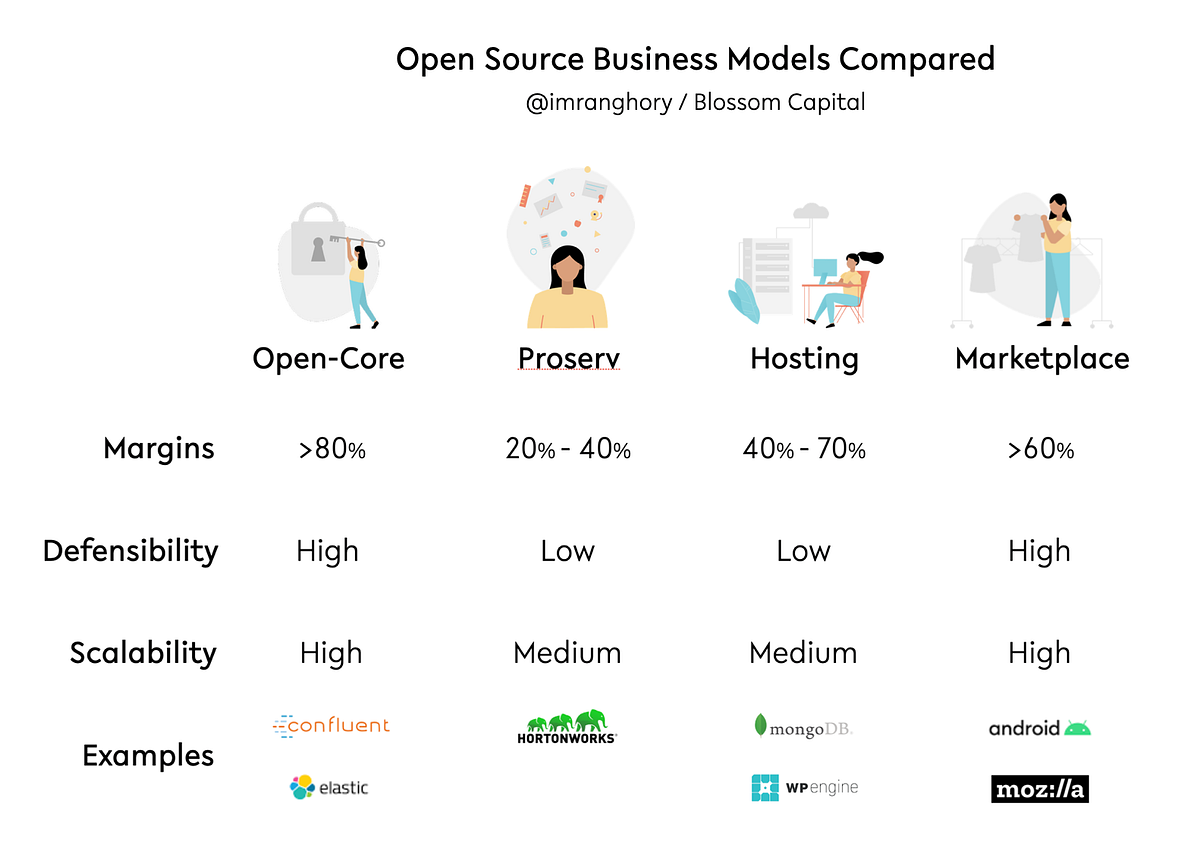
The Secrets of Successful Open Source Business Models
Finding the right model for your open-source startup
Content and Community
The old model for content sprung from geographic communities; the new model for content is to be the organizing principle for virtual communities.
Content Design, second edition - Paperback and eBook bundle
We work with organisations, big and small, to transform their content and help them succeed.

Licenses in a Subscription World
Most new startups default to a subscription model for their software. Should they consider selling licenses instead?

Evolving App Store Business Models - David Smith, Independent iOS Developer
I’ve been thinking this past week (as I often do) about the ever-changing landscape of the App Store. This year has seen some of the biggest changes in policy and structure that I can remember. We have new subscription pricing models, search ads, a substantial purge of older apps, new requirements for app names and a variety of little changes to the App Store app itself in iOS 10.
The Fediverse and Content Creation: Monetization
Sure, we have open source, federated replacements for Instagram, Tiktok, and YouTube. How do we get creators to use this stuff? One consideration involves the ability to pay for things.

Medium vs. Own Blog: What Actually Drives SaaS Traffic
Where to publish something has becoming a difficult decision for a lot of businesses. You read so many stories about using various channels to distribute content and grow traffic, it’s hard to know what does and doesn’t work. Medium, in particular, has become a major player in the world of startup content, but is it really that great?

Single-Vendor Open Source Firms (and Their Intellectual Property Strategies)
Dirk Riehle, dirk@riehle.org An edited version was published in Computer magazine, April 2020 Abstract This article present a particular business model for commercial open source firms, called the …

The Single-Vendor Commercial Open Source Business Model
Dirk Riehle Research, SAP Labs LLC Updated 2010-11-09: Renamed “commercial open source” to “single-vendor (commercial) open source” to be clear about the difference to distr…

Community by Design
Social media empower distributed content creation by algorithmically harnessing "the social fabric" (explicit and implicit signals of association) to serve this content. While this overcomes the bottlenecks and biases of traditional gatekeepers, many believe it has unsustainably eroded the very social fabric it depends on by maximizing engagement for advertising revenue. This paper participates in open and ongoing considerations to translate social and political values and conventions, specifically social cohesion, into platform design. We propose an alternative platform model that includes the social fabric an explicit output as well as input. Citizens are members of communities defined by explicit affiliation or clusters of shared attitudes. Both have internal divisions, as citizens are members of intersecting communities, which are themselves internally diverse. Each is understood to value content that bridge (viz. achieve consensus across) and balance (viz. represent fairly) this internal diversity, consistent with the principles of the Hutchins Commission (1947). Content is labeled with social provenance, indicating for which community or citizen it is bridging or balancing. Subscription payments allow citizens and communities to increase the algorithmic weight on the content they value in the content serving algorithm. Advertisers may, with consent of citizen or community counterparties, target them in exchange for payment or increase in that party's algorithmic weight. Underserved and emerging communities and citizens are optimally subsidized/supported to develop into paying participants. Content creators and communities that curate content are rewarded for their contributions with algorithmic weight and/or revenue. We discuss applications to productivity (e.g. LinkedIn), political (e.g. X), and cultural (e.g. TikTok) platforms.

Death by a thousand likes: How Facebook and Twitter are killing the open web
Here’s one way to understand the symbiotic relationship between publications and platforms in the digital age. Publications depend on advertising dollars to keep producing content, so they need to hold readers’ attention. Big platforms like Facebook and Twitter already have plenty of attention, but they need vast quantities of content to fill up their newsfeeds. It seems natural, then, that publications have started relying on platforms to drive readership.

Agreed, but adoption is the missing piece. Once we get more publishers on @standard.site, it'll be an easy decision to move fully over.
