Intel under Pat Gelsinger is reaping the disaster that came from a lack of investment and execution a decade ago; the company, though, appears to be headed in the right direction, as evidenced by i…
U.S. Intel
The U.S. taking an equity stake in Intel is a terrible idea; it also happens to be the least bad idea to make Intel Foundry viable.

Intel’s Death and Potential Revival
Intel died when mobile cost it its software differentiation; if the U.S. wants a domestic foundry, then it ought to leverage the need for AI chips to make an independent Intel foundry viable.
Intel details everything that could go wrong with US taking a 10% stake
Intel warns investors to brace for losses and uncertainties.
The state of the tech industry in 2026 - LDX3 New York
AI Promise and Chip Precariousness
The AI industry is more exciting than ever, but the chip situation is very precarious and requires drastic action.
The chips are down for Moore’s law
The semiconductor industry will soon abandon its pursuit of Moore's law. Now things could get a lot more interesting.

AI Promised Less Work. I Have Never Worked More. - Orestis Ioannou
Agents made implementation cheap, so I started doing far more of it in parallel. My GitHub history since 2019 shows what that did: as VP of Technology I am back at my full-stack engineer pace, with bursts, burnout and a low season that is no longer low.

Would You Just Look At This Shit
Even if you put AI ethics and tech's support of fascism aside (which you shouldn't), the quality control at major tech companies has become an embarrassing and dangerous mess as they try to justify years of hype.
@it_unprofession This is the Cloud era all over again. We rebranded hosting as Cloud to pump the stock. Now we rebrand scripts as AI. The crisis is vocabulary not code.
This is the Cloud era all over again. We rebranded hosting as Cloud to pump the stock. Now we rebrand scripts as AI. The crisis is vocabulary not code.— Youssef El Manssouri (@yoemsri) February 4, 2026
Premium: What If...We're In An AI Bubble? (Part 1)
Every day I read some sort of wrongheaded extrapolation about the future of AI — that today’s models are somehow indicative of AGI creating a “permanent underclass” of people that stops people from building software companies, or really doing any kind of job on the computer: Hyperbolic? Perhaps. But even

Prime Intellect on Twitter / X
Announcing our $130M Series A to build the Open Superintelligence StackLed by Radical Ventures, with NVIDIA, Intel Capital, Dell Capital, and existing investorsTrain, deploy, and continuously improve your own models using our stack.Own your intelligence. pic.twitter.com/BM31LfVUNQ— Prime Intellect (@PrimeIntellect) July 8, 2026

Books — Sharon Weinberger
Drawing on deep, exclusive reporting, a veteran national security correspondent reveals how a new military-industrial complex is arising from the cradle of Silicon Valley, with vast implications for American democracy and the global balance of power.Elon Musk, Peter Thiel, and Alexander Karp. These tech titans are fast becoming some of the most powerful figures in the realm of national security, with enormous implications for us all. As Sharon Weinberger reveals in this gripping account, the American military and spy agencies helped to create Silicon Valley as we now know it, and some of its biggest and most valuable companies today owe much of their success to the Pentagon and CIA. Beginning with the War on Terror and accelerating under Donald Trump, however, the old alliance between elected leaders in Washington and the unelected CEOs of Silicon Valley has grown increasingly uneasy as power has shifted to the private sector and Big Tech exerts greater and greater influence over its old patrons. Companies such as SpaceX and Palantir, along with newer entrants to the field such as Anduril, are proudly supporting—and quietly shaping—US national defense, whether by providing spies and soldiers with AI and cloud-computing tools or actual military hardware such as microwave weapons, hypersonic missiles, and advanced drones. The implications of this historic shift are poorly understood and fraught with peril. What happens when mercurial billionaires like Elon Musk control weapons and technologies that were once the preserve of the US government? How will this new military-industrial complex affect the way wars are fought, or even which wars are fought? That is the urgent question before us today, at the dawn of this new era—and as Weinberger reveals, it is one on which our collective future might well hinge.
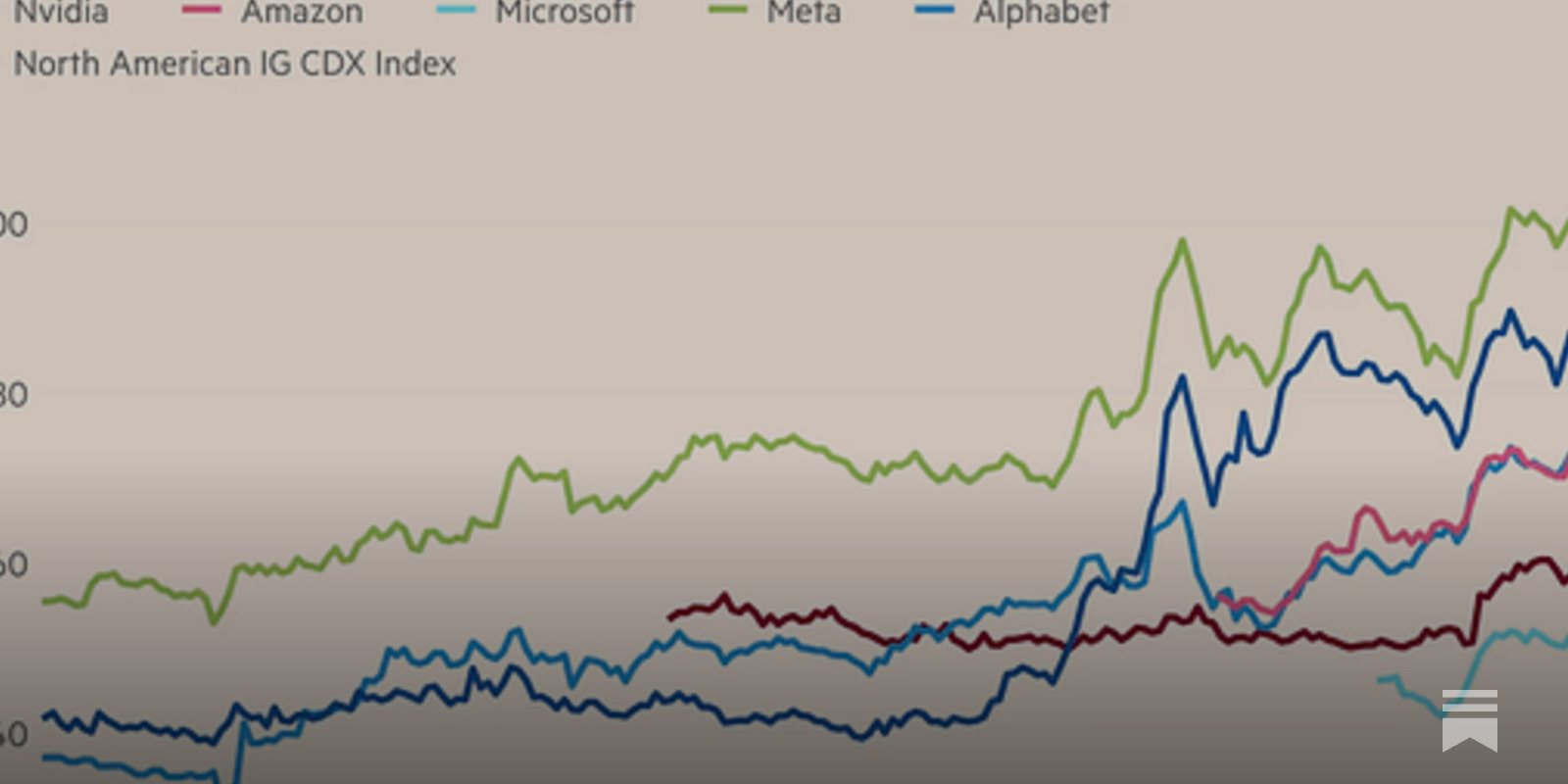
The Big Short, AI edition
Investors are buying protection against an AI bust, just like they did with mortgage-backed securities before 2008...
Spectre/Meltdown Pits Transparency Against Liability: Which is More Important to You? « bunnie's blog
There is a lot of righteous anger directed toward Intel over CPU bugs that were revealed by Spectre/Meltdown. I agree that things could have been handled better, particularly with regards to transparency and the sharing of information among the relevant user communities that could have worked together to deploy effective patches in a timely fashion. People also aren’t wrong that consumer protection laws obligate manufacturers to honor warranties, particularly when a product is not fit for use as represented, if it contains defective material or workmanship, or fails to meet regulatory compliance.
Companies That Tried to Save Money With AI Are Now Spending a Fortune Hiring People to Fix Its Mistakes
Companies that rushed to replace human labor with AI are now shelling out to have IRL workers to fix the technology's screwups.