zeroserve is a small, fast, zero-config HTTPS server. You hand it a tarball of a website and it serves it - over HTTP/2 and TLS 1.3, with hot reload and a tiny resident footprint. The twist is that you can drop eBPF programs into the tarball and they run on every request, in userspace, as sandboxed middleware - rewriting, authenticating, and rate-limiting requests, or reverse-proxying them to a backend when you want it to act as a gateway in front of your app.
mitmproxy - an interactive HTTPS proxy
mitmproxy is your swiss-army knife for debugging, testing, privacy measurements, and penetration testing. It can be used to intercept, inspect, modify and replay web traffic such as HTTP/1, HTTP/2, HTTP/3, WebSockets, or any other SSL/TLS-protected protocols. You can prettify and decode a variety of message types ranging from HTML to Protobuf, intercept specific messages on-the-fly, modify them before they reach their destination, and replay them to a client or server later on.
Caddy - The Ultimate Server with Automatic HTTPS
Caddy is a powerful, enterprise-ready, open source web server with automatic HTTPS written in Go

CertSimple | An nginx config for 2017
With HTTP/2 in every browser, load balancing with automatic failover, IPv6, a sorry page, separate blog server, HTML5 SSE and A+ HTTPS.
tholian-network/stealth
:rocket: Stealth - Secure, Peer-to-Peer, Private and Automateable Web Browser/Scraper/Proxy
Designing Offline-First Web Apps
We assume our users are like us—with the latest devices, the most recent software, and the fastest connections. And while we may maintain a veritable zoo of older devices and browsers for testing, …

Easypanel — Deploy anything on your server
Deploy applications and open-source services on your own server with a modern, self-hosted platform as a service.
Self-host and scale web apps without Kubernetes complexity | Uncloud
Take your Docker Compose apps to production with zero-downtime deployments, automatic HTTPS, and cross-machine scaling. Self-hosting made reliable without the complexity.

awesome-selfhosted/awesome-selfhosted
A list of Free Software network services and web applications which can be hosted on your own servers
Composio
Just-in-time tool calls, secure delegated auth, sandboxed environments, and parallel execution across 1,000+ apps.
HOW TO: Self-hosting and securing web services out of your home with Argo Tunnel, nginx reverse proxy, Let's Encrypt, Fail2ban (H/T Linuxserver SWAG)
215 votes, 102 comments. Changelog V1.3a - 1 July 2023 DEPRECATED - Legacy tunnels as detailed in this how-to are technically no longer supported…
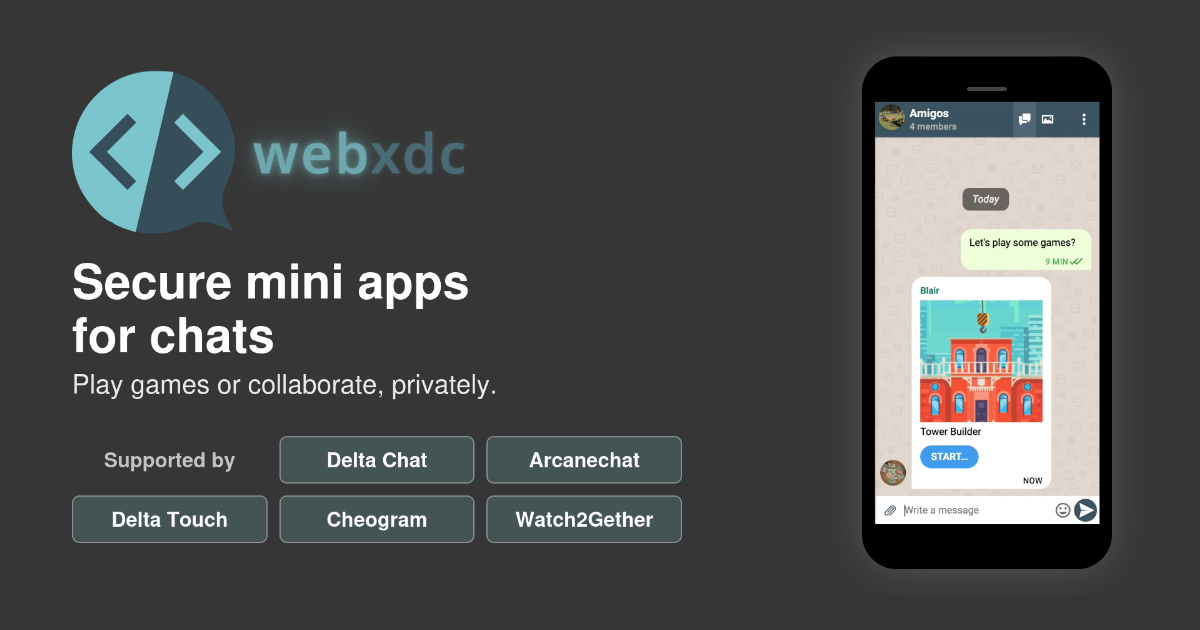
Webxdc: mini apps shared in a chat
Secure mini apps for chats. No internet access, no tracking, no servers.
Stop Ignoring the Browser: The Biggest Frontend Shift in a Decade
Native browser APIs now provide powerful alternatives for routing, state management, and components. Never mind the frameworks, use the browser.

Blooym/porxie
[Mirror] A correct and efficient ATProto blob proxy for secure content delivery.
NetFoundry Documentation
Cloud-managed zero-trust networking platform. Manage identities, policies, services, and routers from the console, or automate through the API.
The Core Tech Behind Datum's Desktop App
We built an app to expose your localhost to a public HTTPS URL, here's how it's built and what we learned along the way.