


What makes software decentralizable? Immutable data, universal IDs, user-controlled keys.
Centralization vs Decentralization - AVC
Decentralization is one of, if not the most, discussed features of the crypto tech stack. In a decentralized system, no single body controls the system. We have most certainly not reached the era fully decentralized systems, but that is what most of the world-class technologists working in the crypto sector are focused on getting us […]
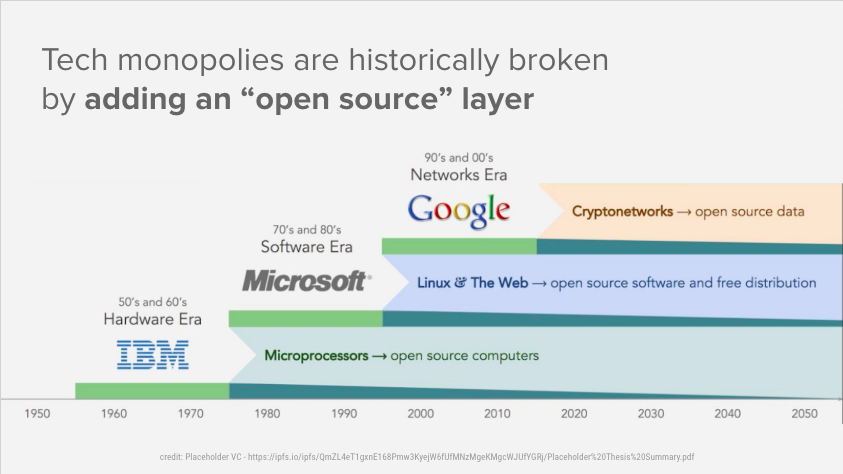
The ecosystem is moving
Considerations for distributed and decentralized technologies from the perspective of a product that many would like to see decentralize....
Understanding the Cryptographic Autonomy License
Why crypto software licenses need to protect user’s control of their keys.

Paradigm shifts for the decentralized Web
The answer to these questions varies with different degrees of decentralization:
Practical Decentralization
The point of decentralization is to guarantee the rights of individuals and communities on the Internet. Pulling that off is a balancing act between practicality and ideology.
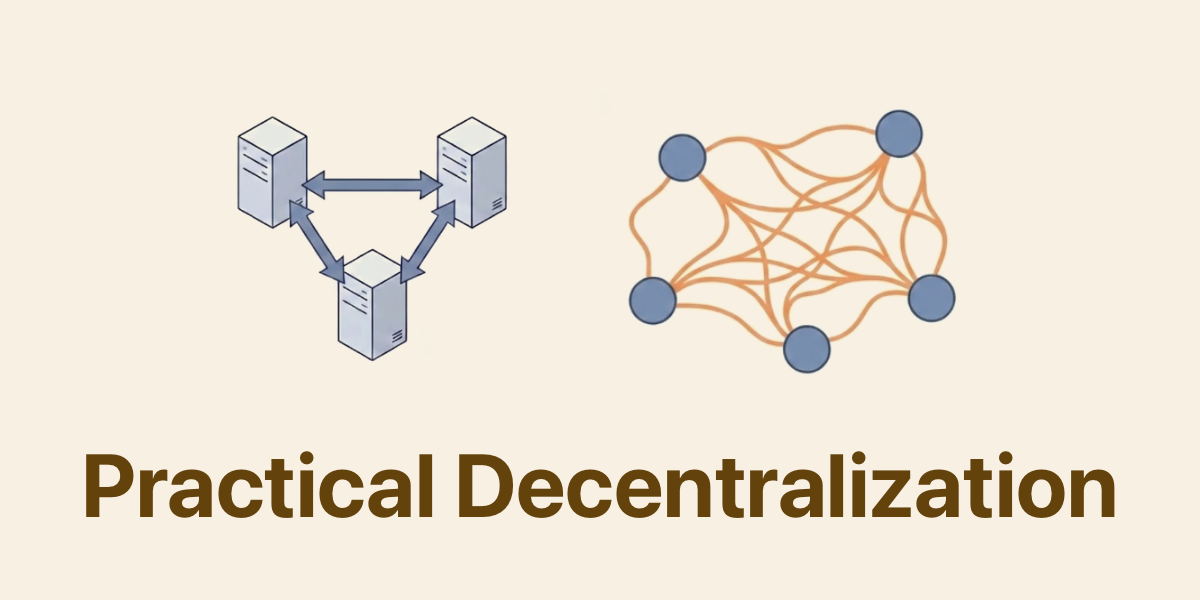
Practical Decentralization
The point of decentralization is to guarantee the rights of individuals and communities on the Internet. Pulling that off is a balancing act between practicality and ideology.
Properties of the Tech We Really Need - Draft
There are some crucial areas where computer technology needs major improvement to genuinely benefit users. Unfortunately, most are not feasible to pursue using current generation software technologies. No mere collection of apps would suffice. An architectural solution is needed to move forward. This has been the goal of my research into infocentric data and software architecture, a superset of "decentralized" and cryptography-oriented designs.
Protocol: How Control Exists after Decentralization
How Control Exists after DecentralizationIs the Internet a vast arena of unrestricted communication and freely exchanged information or a regulated, highly
a practical guide to decentralization (for my friends) - tim's tinkerings
Peter van Hardenberg - Ink and Switch, Automerge
Decentralization: Worth The Wait — Open Tech Strategies | Blog
Ethan Zuckerman has a piece in Wired that says building decentralization tools is a sucker's bet. He and his coauthors, Chelsea Barabas and Neha Narula, mention the FreedomBox, which I helped lead, as an example of how difficult this stuff is. They point to a list of things that make decentralized efforts prone to failure and conclude:
Web3 is not decentralization
It's just not. Here's a deep dive into why, exactly, I think that.
Research | Tiles Book
Progressive experiments exploring decentralized software technologies for privacy adoption at scale.
Decentralized Data Compliance Working Group
Working on clarifying decentralized storage compliance, shared ToS, code of conduct, and other public good outcomes - Decentralized Data Compliance Working Group

Why We Can't Have Nice Software - Andrew Kelley
The problem with software is that it's too powerful. It creates so much wealth so fast that it's virtually impossible to not distribute it.
Decentralization is more than just a buzzword. Looking at the AT Protocol, it’s clear: the future belongs to systems that decouple identity and data from the provider. For sweep-it and my other tools, this means focusing on interoperability rather than closed silos. #atproto #decentralization
