
I can count on one hand the number of times I’ve achieved something and genuinely felt lasting satisfaction.
The Case for Lowering Your Expectations
It may be the key to happiness and sustainable performance

Works in Progress: The Long Journey to Doing Good Better
The more I learn, the more I realize how much I don’t know. — Albert Einstein

Logarithmic Scales of Pleasure and Pain
Rating, ranking, and comparing peak experiences suggest the existence of long tails for bliss and suffering.

On Making
TLDR: I gain a lot of fulfillment by making things. I don't consider things built by others at my request to be made by me, and are therefore much less fulfilling. And then I feel sad. This article starts strong and then heads off into the weeds.
Feeling unproductive? Maybe you should stop overthinking.
In order to get something done, maybe we need to think less.

Why older people are happier and what we can learn from them | Psyche Ideas
Around the world, happiness tends to peak later in life. It has more to do with balancing priorities than elderly wisdom


Chasing life goals is a recipe for disaster – so try these tiny experiments instead
Whether its our careers, health or relationships, we often set the bar too high and end up feeling disappointed when it doesn’t work out. Try this new way of thinking … and you may just see some real results

If you don’t finish then you’re just busy, not productive – Jack Simpson
One of the biggest realisations I’ve come to as part of my PhD, is how little people care about how I spend my time, they only care about what I am able to deliver. Yet in order to deliver, you need to finish. I was recently reading an article on this topic, and I think the advice can be best summed up as:

Why I Strive to be a 0.1x Engineer
There has been more discussion recently on the concept of a “10x engineer”. 10x engineers are, (from Quora) “the top tier of engineers that are 10x more productive than the average” Productivity I have observed that some people are able to get 10 times more done than me. However, I’d argue that individual productivity is... Read more »
What makes people flourish? A new survey of more than 200,000 people across 22 countries looks for global patterns and local differences
A global study seeks insights into what helps people feel happy, healthy and satisfied – and what holds them back.

Why efficiency is dangerous and slowing down makes life better | Psyche Ideas
The urge to do everything faster and better is risky. Far wiser to do what’s good enough for the range of possible futures

A revolution in our sense of self | Nick Chater
Psychologists have tried to plumb the depths of human motivation to make sense of our behaviour. But our inner mental world is a fiction, sustained by constant improvisation

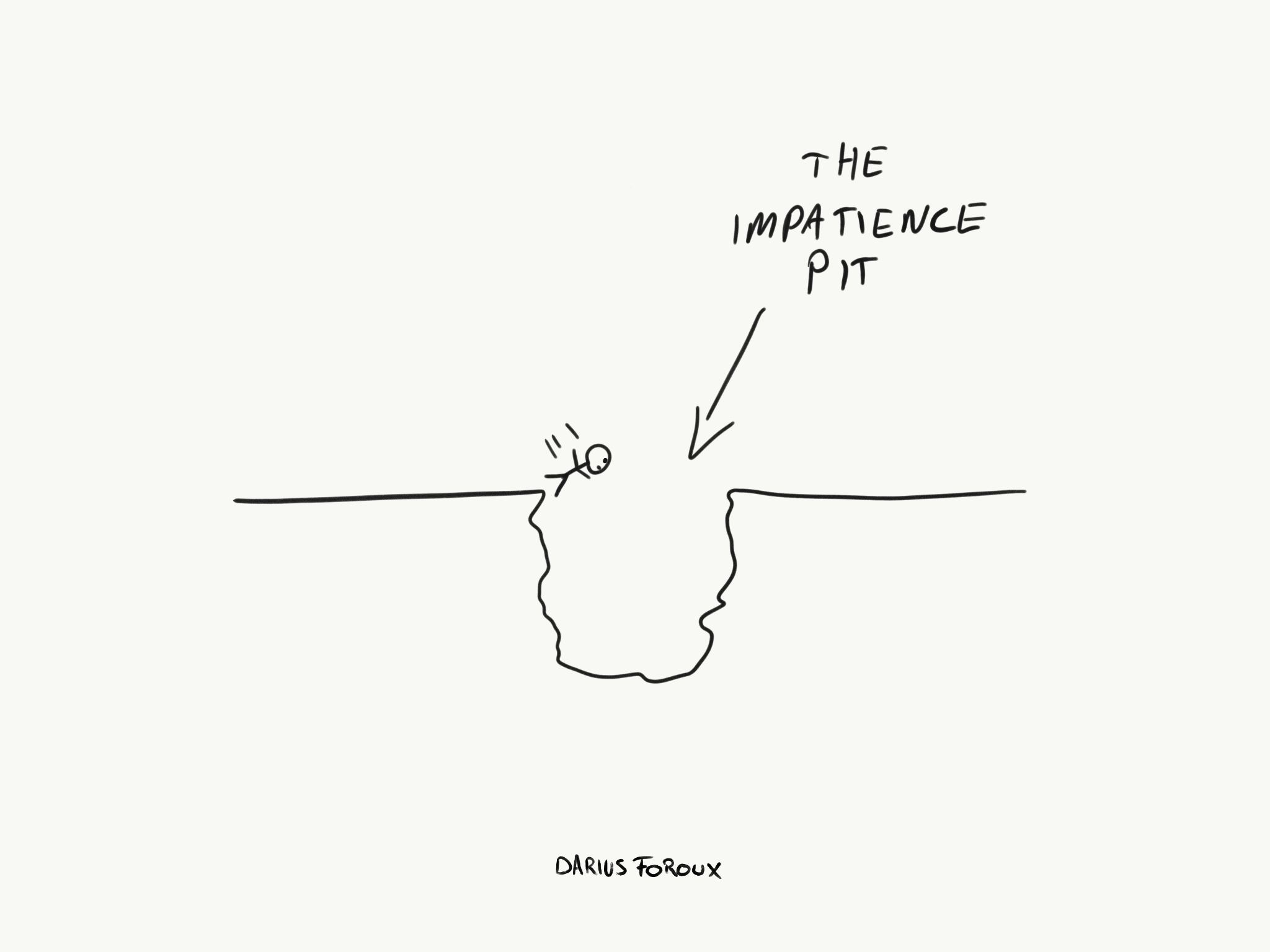
Impatience: The Pitfall of Every Ambitious Person
Big splashes don’t happen. Overnight success doesn’t exist. We have to remind ourselves of that whenever we show impatience.
It’s the Effort That Counts: The Effect of Self-Control on Goal Progress Perceptions
Does the amount of self-control consumers must exert to choose a goal-consistent action influence their perceptions of goal progress? For example, if you choose to go to the gym when one of your favorite TV shows is on (vs. when nothing interesting is on TV), do you perceive that you have made a differential amount of progress toward your goal, despite completing the exact same workout? In eight studies (N = 7,515), the authors demonstrate that consumers perceive that they have made more progress on their goals when more (vs. less) self-control is required to choose to complete an identical goal-consistent task. This is because when consumers exert more (vs. less) self-control to choose a goal-consistent task over the goal-inconsistent alternatives, they infer higher commitment to the goal. The higher inferred commitment, in turn, leads consumers to perceive that future goal pursuit will be easier. The authors demonstrate this effect across a variety of tasks and means of exerting self-control, as well as with both hypothetical scenarios and real-behavior studies.

Almost anything you give sustained attention to will begin to loop on itself and bloom
When people talk about the value of paying attention and slowing down, they often make it sound prudish and monk-like. But we shouldn’t forget how interesting and overpoweringly pleasurable sustained attention can be.