


what happens when AI automates "normal science"?

70 years of AI hype
Quoting from Olivia Guest et al. (2025) "Against the Uncritical Adoption of AI Technologies in Academia."
Konrad Hinsen's blog
The advent of AI agents based on large language models (LLMs) has put the idea of automating the intellectual and cognitive work of researchers on the table. A lively, sometimes even heated discussion is already going on. A frequently missing piece in this debate is the question why we, individually and as a society, actually do science. I will examine this question first, and then consider what it implies for introducing automation into science.
AI is doing something weird to Science
In both good and bad ways, and it won't go away.
On the Value of Doing a PhD in the Age of AI
Many students who are just now embarking on a PhD in AI are understandably anxious. It feels like our field is zooming forward ever faster. Our clever methods are often surpassed before they are published. Our deep insights seem less critical to frontier lab progress. AI is automating aspects of the research process that used to require years of specialized training.
Will AI ruin the social sciences — or revolutionize them?
The technology can whip up spurious findings and pollute survey responses, but it could also make research more rigorous.
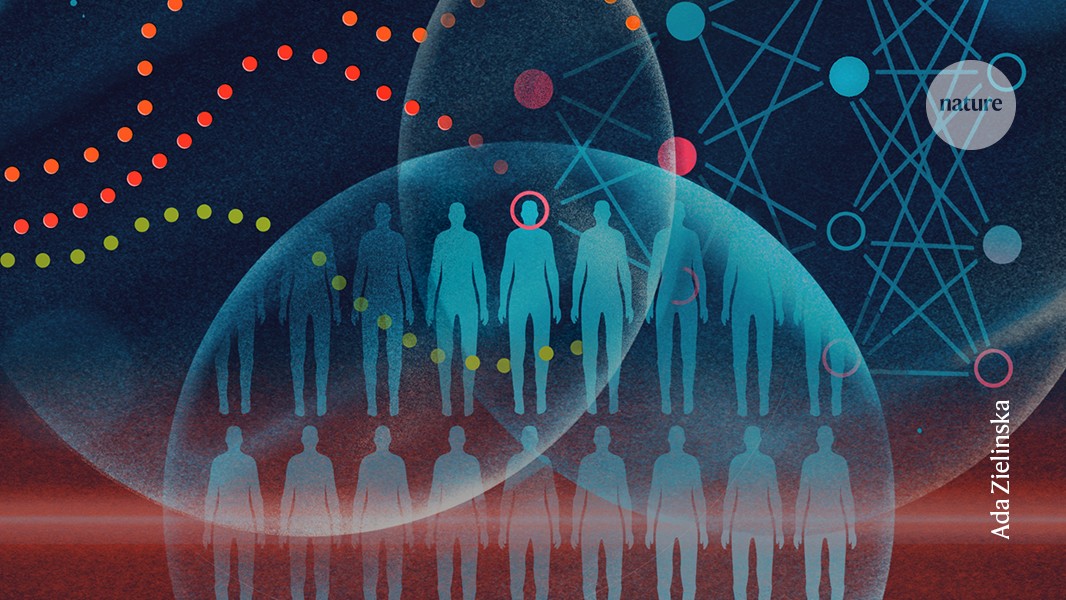
Will AI spark a scientific renaissance — or a diffuse monoculture?
Artificial intelligence’s ability to enrich science will depend not only on model capability, but also on whether researchers, reviewers and funders reward originality over speed.

Deep Research, information vs. insight, and the nature of science
What AI will accelerate in the scientific process, what it cannot do, and how we can prepare for new manners of scientific investigation.
No. 008: AI co-mathematician, compiler-verified protocols, open infrastructure bets - The Hallway Track
The Hallway Track No. 008 - How AI is affecting the practice of science
Science that Compounds: The Need for A New Substrate for Research in the Age of AI
This paper is a perspective from Lightcone Research, an open-source initiative building tooling for scientific research in the age of agentic AI.
From Genius Science to Scenius Science - Cosmik Labs
Why personal AI tools might not be all we need to revolutionize science
AI co-scientists are revolutionizing how research is done
Artificial-intelligence systems can generate hypotheses, design experiments and analyse data — but humans still need to decide what makes sense.
AI for science needs reasoning, not just data
AI agents that can model the human process of research will accelerate discoveries in science.

No. 010: AutoScientists governance, AI-agent monoculture, nonsense-term retractions - The Hallway Track
The Hallway Track No. 010 - How AI is affecting the practice of science
science in the age of AI

What does it mean to be a human researcher in the age of powerful AI?
Claude-shaped science

Agentic Laboratories of the Future: Towards World Models for Scientific Discovery
On the Value of Doing a PhD in the Age of AI

Applied Pure Mathematics

What Next for Academia?

The Age of Wonders and Terrors