

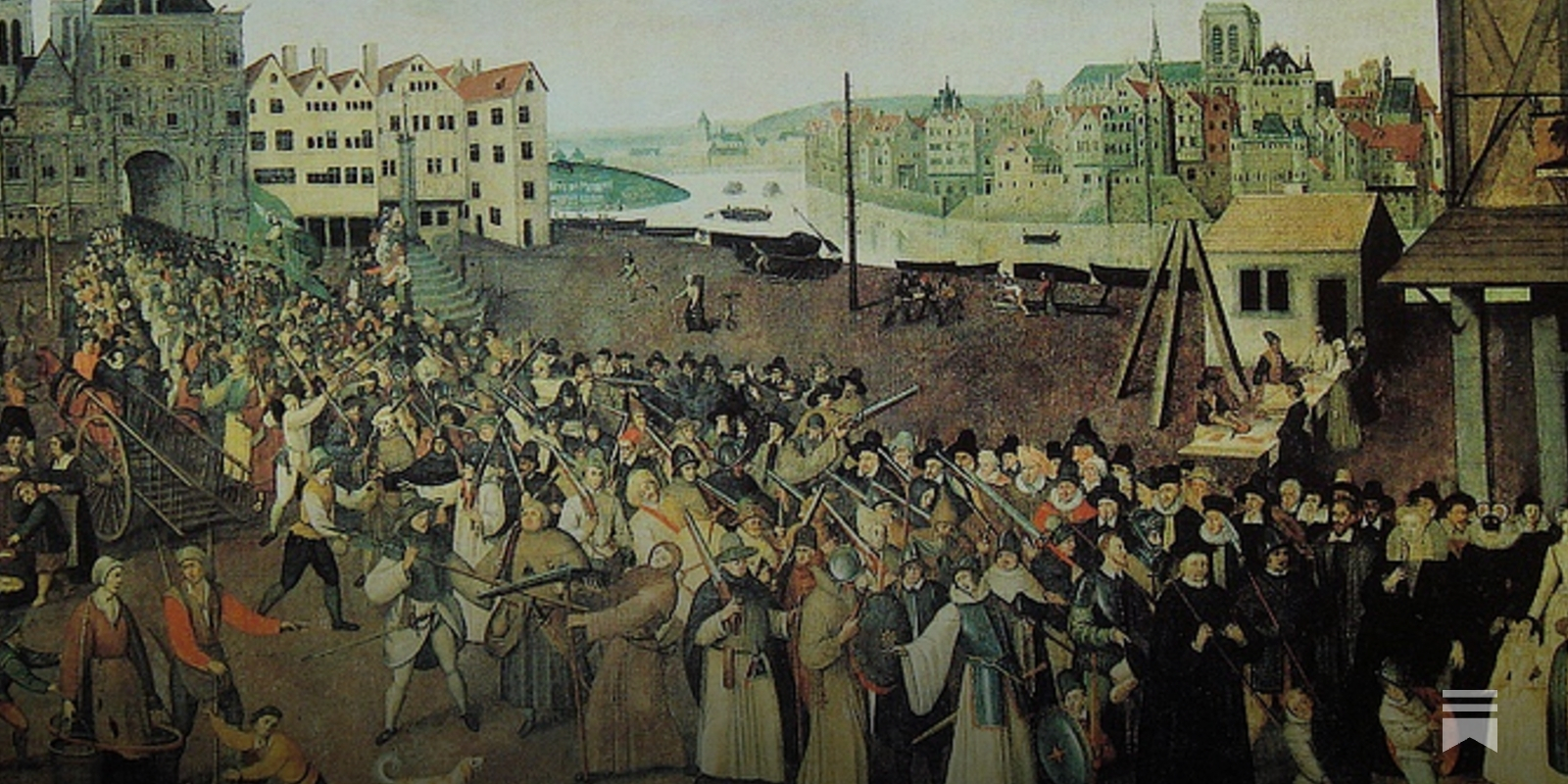
Whenever France erupts in protests, the question arises: how does French history help explain what is going on?
French protests: the post-insurrection 'hangover' in Paris
There were unprecedented scenes of violence and rioting surrounding nationwide protests in France on Saturday, when up to 800,000 demonstrators voiced a variety of grievances, from students denounci…
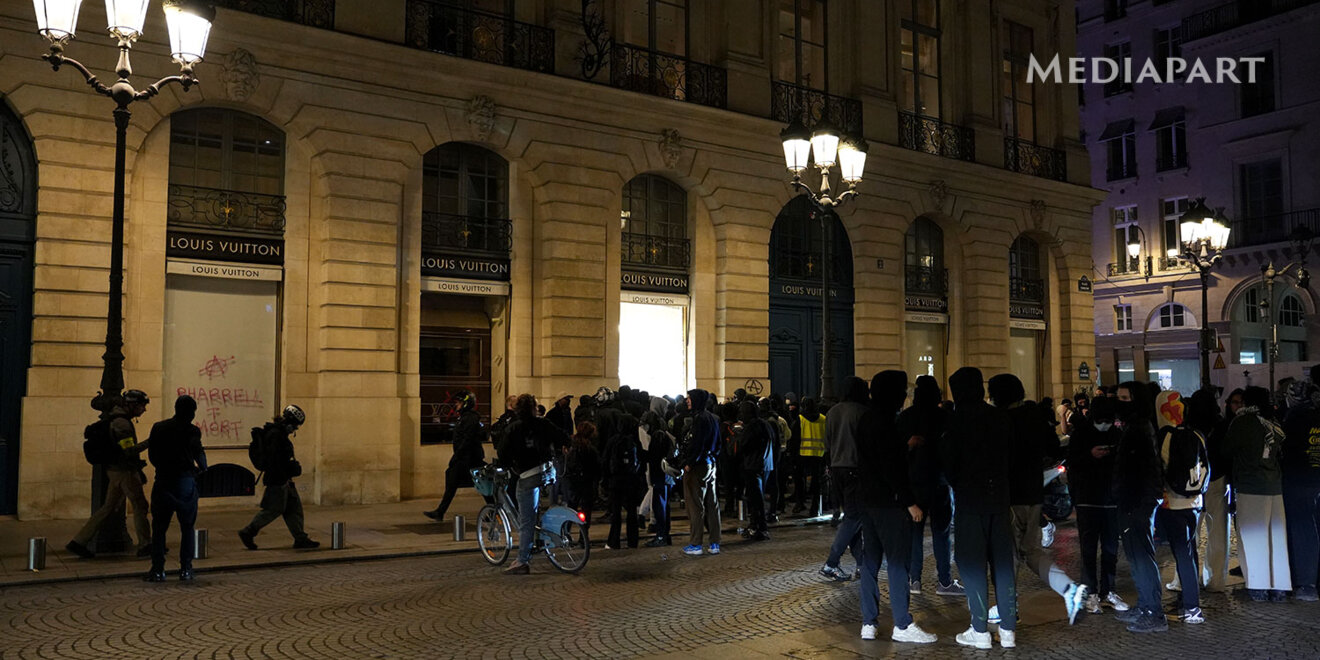
France: Police and protesters clash in nationwide protests
Unrest broke out in parts of France as students, trade unionists and Yellow Vest activists took to the streets to protest high prices and inequality. Police arrested over 1,000 people amid chaotic scenes.
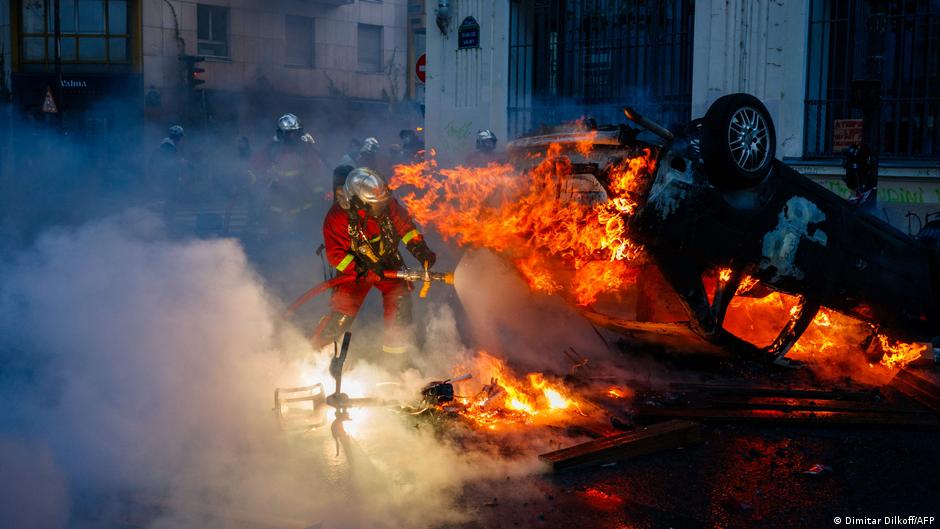
French ministers send mixed messages as school student anger rises and new protests loom
Hundreds of secondary schools across France have been hit by protests and blockades as students protest against crumbling buildings, poorly equipped classrooms, overcrowded classes and a lack of tea…
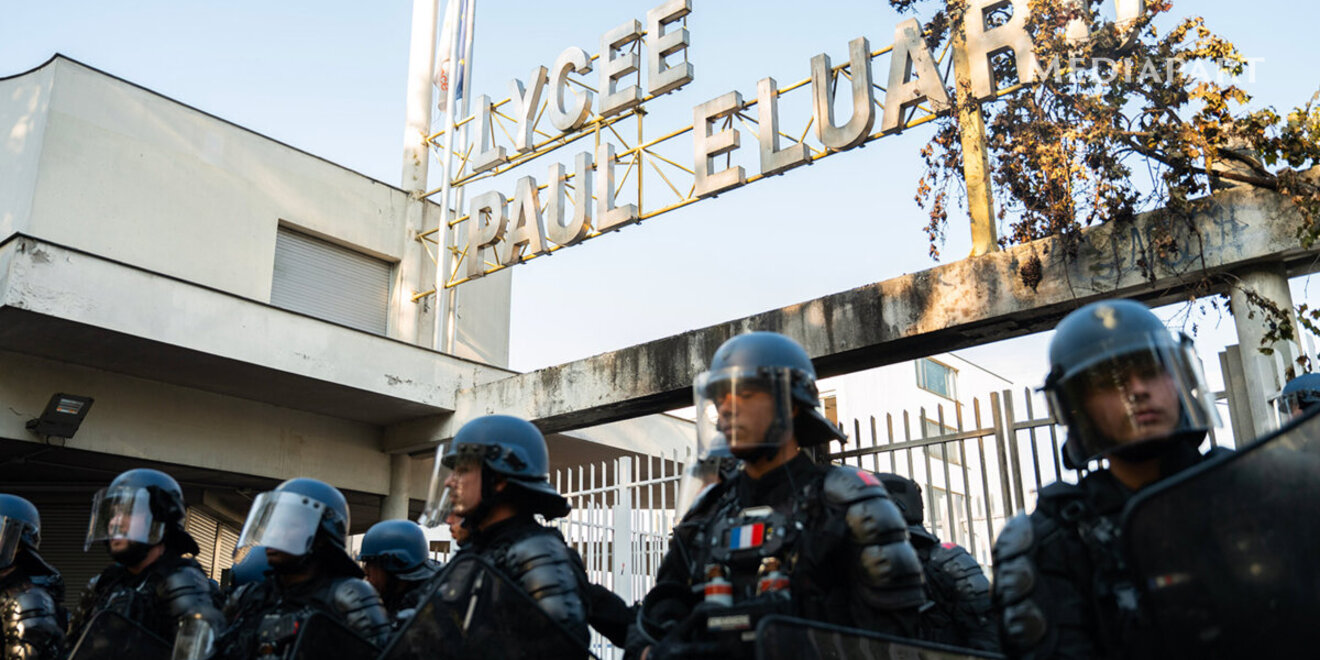
France: Thousands of protesters wrongly punished under draconian laws in pre and post COVID-19 crackdown
Three years after Emmanuel Macron made an election pledge to protect the right to peaceful assembly, peaceful protest faces an unprecedented attack
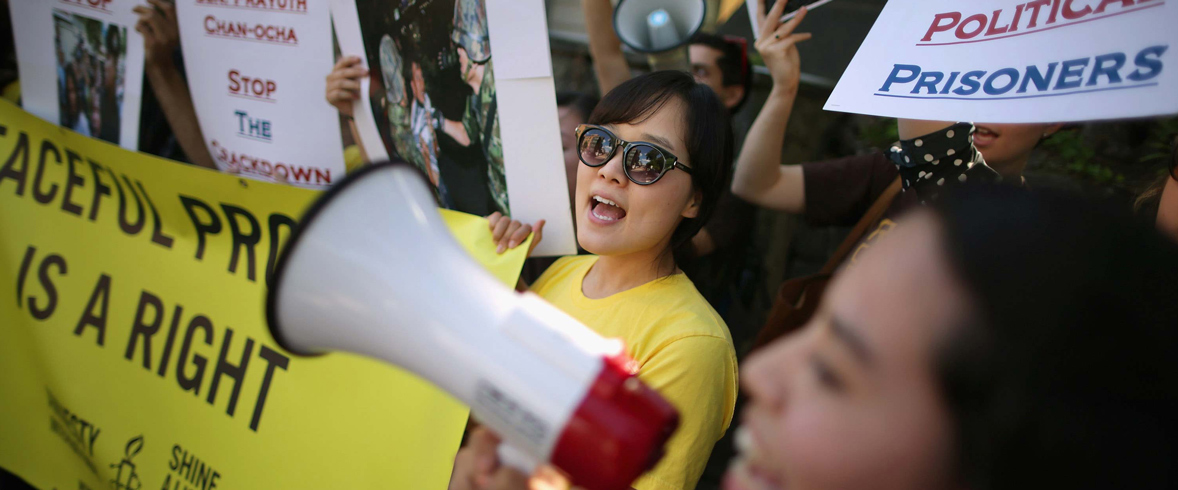
2026 French student protests
Since 18 September 2026, a series of demonstrations and blockades by lycée students has been taking place in France and later, to a lesser degree, in Belgium, Albania, Greece, and Italy, having originated in Créteil, a commune in the suburbs of Paris.

2026 French fuel protests
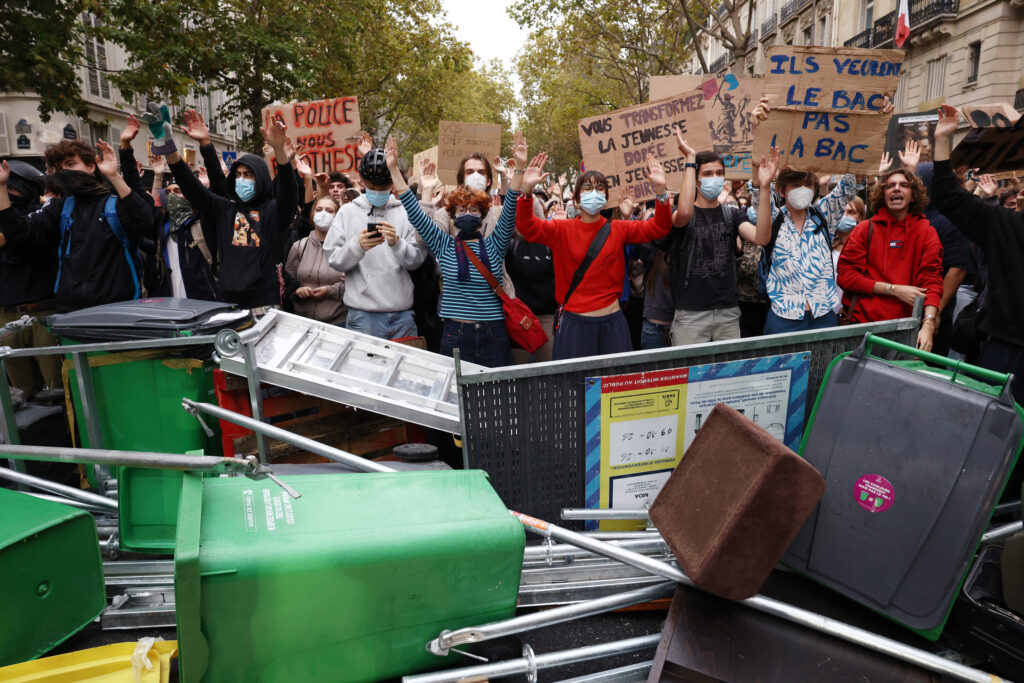
On 15 September 2026, protests driven by rising fuel prices erupted in France. On 17 October, the fuel protesters joined student protesters in nationwide demonstrations, which descended into the 17 October riots in Paris and other cities.

How the Global Climate Fiasco Fueled France’s Student Revolt
Sweltering school conditions—and government's failure to adapt—helped spawn a political crisis.

How the Climate Crisis Fueled the Youth Protests Roiling France - Inside Climate News
Youth protests for better school conditions have prompted a national political crisis. Lack of adaptation to a hotter world is part of the story.
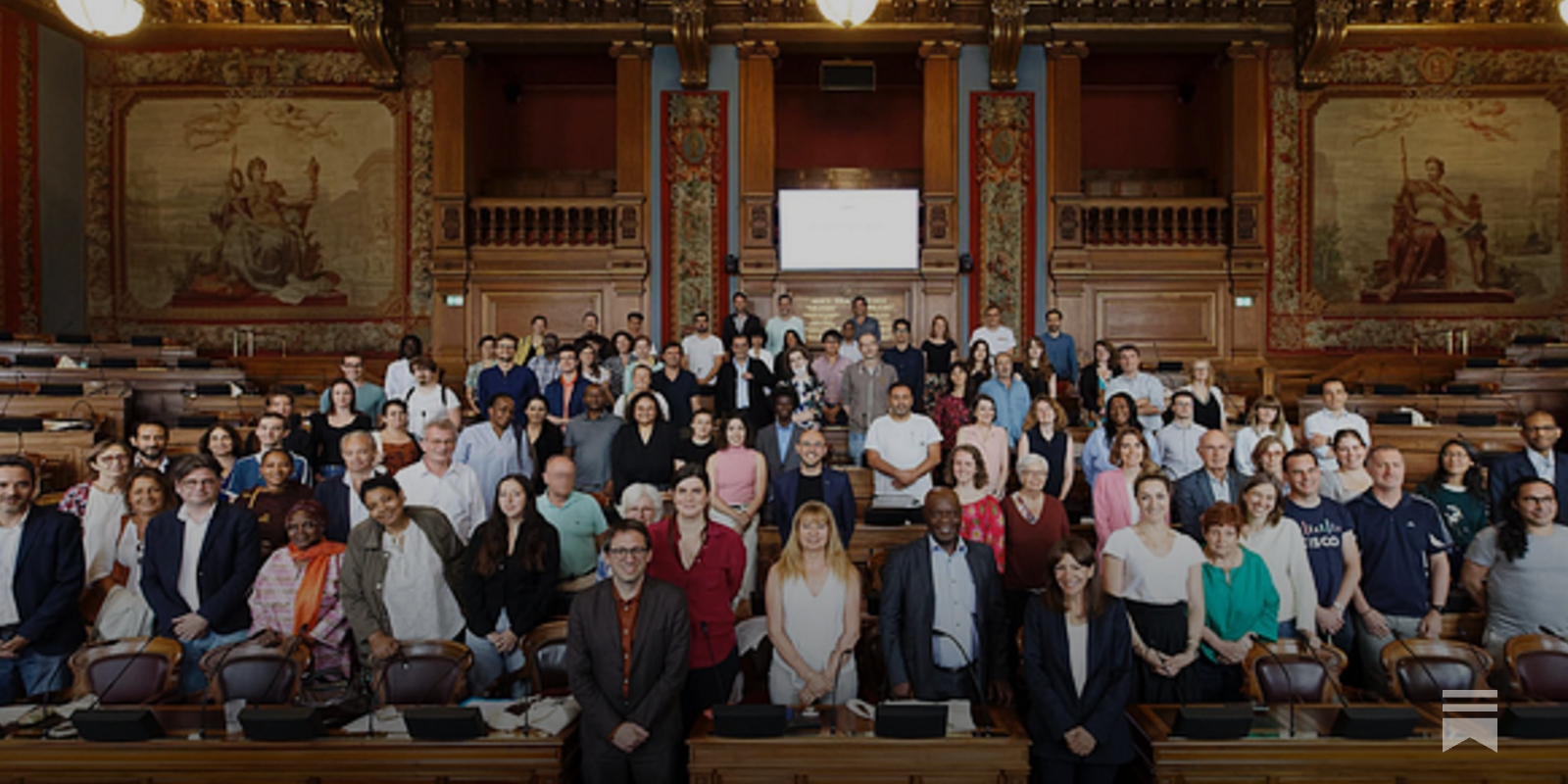
How a permanent Citizens' Assembly in Paris passed a bill into law
A French civil servant who facilitated the historic process explains what happened, from start to finish
Individuals, institutions, and innovation in the debates of the French Revolution
Significance How do democracies make decisions? We can read transcripts from parliament houses and legislative halls to see how particular ideas are introduced and debated, but we understand very little about the general principles of how these systems deal with information, or the origins of those principles. Here we study the parliamentary assembly of the first 2 years of the French Revolution, a model for democracies and revolutions across the globe, and show how patterns of speaking are created, picked up, and ignored or propagated. Political ideology, top–down rules, and individual charisma all affect how word patterns survive and thrive or, conversely, disappear and drop away. , The French Revolution brought principles of “liberty, equality, fraternity” to bear on the day-to-day challenges of governing what was then the largest country in Europe. Its experiments provided a model for future revolutions and democracies across the globe, but this first modern revolution had no model to follow. Using reconstructed transcripts of debates held in the Revolution’s first parliament, we present a quantitative analysis of how this body managed innovation. We use information theory to track the creation, transmission, and destruction of word-use patterns across over 40,000 speeches and a thousand speakers. The parliament as a whole was biased toward the adoption of new patterns, but speakers’ individual qualities could break these overall trends. Speakers on the left innovated at higher rates, while speakers on the right acted to preserve prior patterns. Key players such as Robespierre (on the left) and Abbé Maury (on the right) played information-processing roles emblematic of their politics. Newly created organizational functions—such as the Assembly president and committee chairs—had significant effects on debate outcomes, and a distinct transition appears midway through the parliament when committees, external to the debate process, gained new powers to “propose and dispose.” Taken together, these quantitative results align with existing qualitative interpretations, but also reveal crucial information-processing dynamics that have hitherto been overlooked. Great orators had the public’s attention, but deputies (mostly on the political left) who mastered the committee system gained new powers to shape revolutionary legislation.

How a Papal Ban Reshaped the French Right – The Journal of Politics Blog
Political extremism is often attributed to voter anger and broader structural socioeconomic conditions. From this perspective, efforts to counter extremist movements may appear futile, since such groups are seen as deeply embedded in the contexts from which they arise. But is this necessarily the case? To address this question, we examine the Papal condemnation of an influential far-right movement in interwar France.
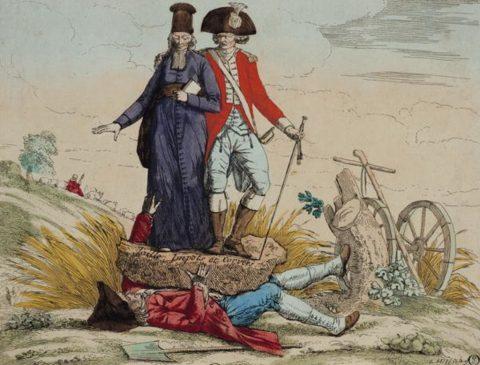
Extractive taxation and the French Revolution
Extractive taxation is considered one of the main causes of the French Revolution. This column exploits regional variations in the French salt tax, which accounted for 22% of royal revenues in 1780, to document that areas of France burdened by a higher tax rate experienced more revolts in the years leading up to the Revolution. These effects were amplified by droughts that increased food prices and activated latent discontent. It suggests that when taxation is imposed without representation, it can become a catalyst for popular unrest, especially after negative economic shocks.
France mounts major security operation for fresh wave of protests
France will deploy 70,000 police backed by specialist units for protests on Saturday, Interior Minister Laurent Nunez said, accusing ultra-left groups of encouraging violence and looting after unrest shocked the country last weekend.

Le cycle d’affaires et l’incertitude autour de la politique économique en France
Blog de sciences économiques et sociales de Martin Anota. Traductions, revues de presse.

French Government Calls Emergency Meetings With Platforms Over Protests
TikTok and other sites were told to curb protest footage and AI-altered images, while online retailers like Vinted and eBay reportedly signed an agreement stop looted goods from flooding resale sites.

Alex Colston on Twitter / X
People are complaining about no good leftist analysis on the riots in France. Don’t do that. Read these instead.https://t.co/fkdOrmiygOhttps://t.co/QQZHYl0Fcahttps://t.co/H9atg8mrNA— Alex Colston (@re_colston) October 18, 2026