


From the united conspiracy of his enemies, God crafted his victory.
CFP: Religion, Politics, and Cognitive Warfare | The Journal for Cultural and Religious Theory | JCRT
This call for papers invites work on religion, politics, and cognitive warfare, exploring how belief, media, conspiracy, identity, and power shape struggles over reality, interpretation, and life in an age of disinformat

Meet the Gods of AI Warfare
In its early days, the AI initiative known as Project Maven had its fair share of skeptics at the Pentagon. Today, many of them are true believers.


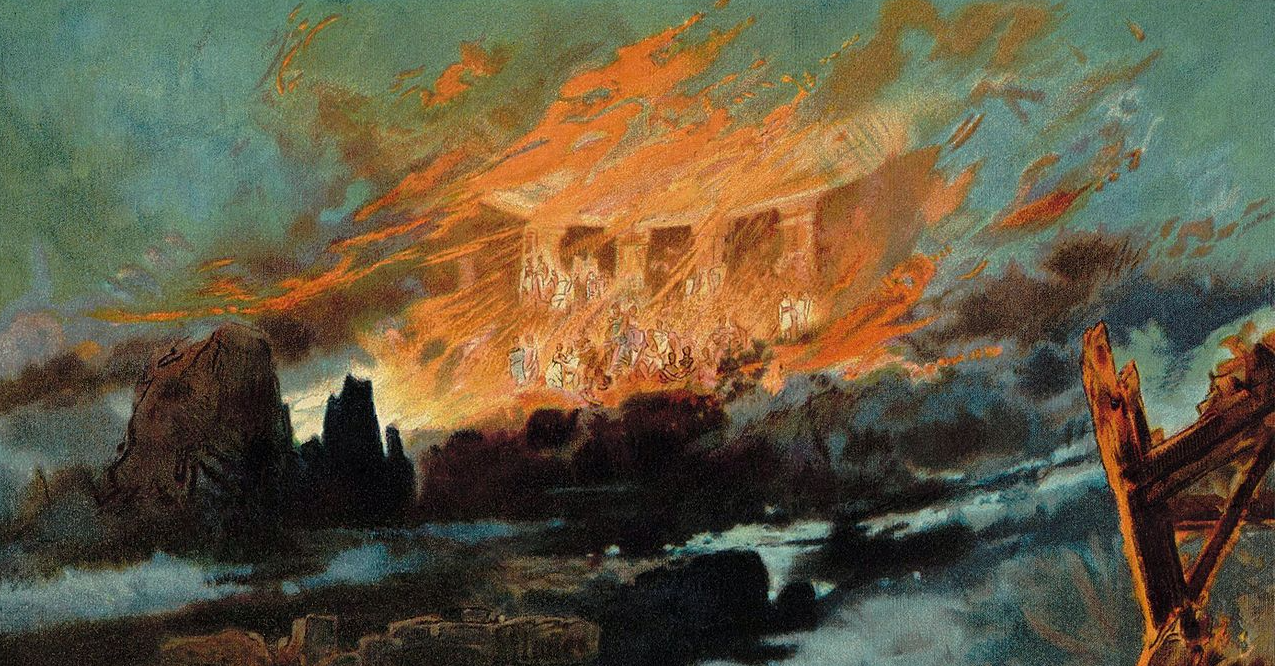
When Malcolm X Met the Nazis
A look at the strange alliance between the Nation of Islam and the American Nazi Party.

CFP: Religion, Politics, and Cognitive Warfare: Information, Interpretation, Conspiracy, and the Struggle for Reality
The Journal for Cultural and Religious Theory (JCRT) invites proposals for an online conference entitled Religion, Politics, and Cognitive Warfare: Information, Interpretation, Conspiracy, and the Struggle for Reality. The proceedings will be considered for publication in a special issue of the JCRT. This conference investigates how beliefs, paranoia, and conspiratorial modes of knowing shape a contemporary cognitive battlespace in which actors struggle to define truth, authority, and reality itself. Drawing on Michel Foucault's Lectures on the Will to Know and Julia Kristeva's This Incredible Need to Believe (2024), we focus on practices of selective fact use and "truth-selecting" that construct alternative epistemic orders while claiming privileged access to what is "really" going on. Rather than treating conspiracy thinking as merely political or psychological, the conference foregrounds its religious dimensions: faith in hidden powers, moral dualism, apocalyptic expectation, and hermeneutical struggle over revelatory access to the real. Conspiracy cultures routinely reproduce theological structures of knowing—visions of salvation and corruption, truth and deception, initiation and blindness. At the same time, new forms of "cognitive warfare" reframe these religious energies within state and platform attempts to govern perception, attention, and trust. Artificial intelligence, algorithmic media, and strategic information campaigns do not only deliver messages; they create digital ecologies in which suspicion becomes faith-like and revelation is continual. The conference organizers are seeking proposals of high academic quality that take a reflective and analytical approach to both general and specific topics with international appeal or focus. We encourage contributions from scholars of religious studies, philosophy, communication, sociology, security studies, psychology, media, and related fields. Submissions should engage religion as a dynamic force—conceptually, historically, or materially—within the cognitive battlespaces of our time. We encourage contributions from a spectrum of perspectives, approaches, and methodologies. We are not interested in papers that simply rehearse or promote particular conspiracies, or that use the conference as a platform for calling out disliked groups. We are not interested in polemics, jeremiad, or de facto advocacy pieces. Instead, we welcome theoretically informed and methodologically rigorous work that takes the religious and epistemic dimensions of cognitive conflict seriously as objects of critical inquiry.
Sacralizing Dominion: The Doctrine of Christian Discovery and the Religious Nationalist Imagination
White Christian nationalism presents itself as restoration—of a Christian nation, a moral order, a rightful hierarchy. This article argues that what it restores is the world-making rhetoric of the Doctrine of Christian Discovery (DoCD). Reading the fifteenth-century papal bulls, their sedimentation into United States law, culture, religion, and contemporary dominionist discourse as a single rhetorical formation, we show that the bulls’ vocabulary of discovery, vacancy, and civilization did not describe a world but constituted one: a moral-legal order in which Christian identity conferred sovereignty and racialized peoples appeared as obstacles to salvation and property. That order persists as hegemonic common sense, carried by legal precedent, curricula, and popular culture, and it is re-performed today in the territorial rhetoric of the New Apostolic Reformation and white Christian nationalism. Following Steven T. Newcomb (Shawnee/Lenape), repudiating the doctrine’s documents without dismantling its embeddedness within language and cognition leaves religious nationalism’s deepest resource intact. Against the discovery template, we set three counter-rhetorics—Indigenous theologies, Black theology, and womanism—and argue that desanctifying dominion requires conciliation, not reconciliation.

AI as Christian Heresy
A pocket history of the rise of artificial intelligence, and some strategies for resistance.

Our Great War is a Spiritual War
I often come back to the question of why this is happening. Why do people want the centralized world? Why do people want the administered reality? Why do people want to be managed? Why do people not want root?
Peter Thiel's "Palantir," The Company That Owns The Trump Regime, Just Published Their 22 Point Manifesto For America And It's Terrifying.
22 Points · A Tolkien-Themed Surveillance Empire · A Chairman Who Loved Epstein · A Philosopher-King Blogger On Speed-Dial · And The IBM-Nazi Template Nobody Wants To Name

New Formations - Lawrence Wishart
New Formations: A Journal of Culture / Theory / Politics

“We need to reinvent the co-op” – Writings and rehearsals by Nathan Schneider
Originally published by Vanderbilt Divinity School’s Wendland-Cook Program in Religion and Justice in a series on “Cooperatives and Religious Communities.”
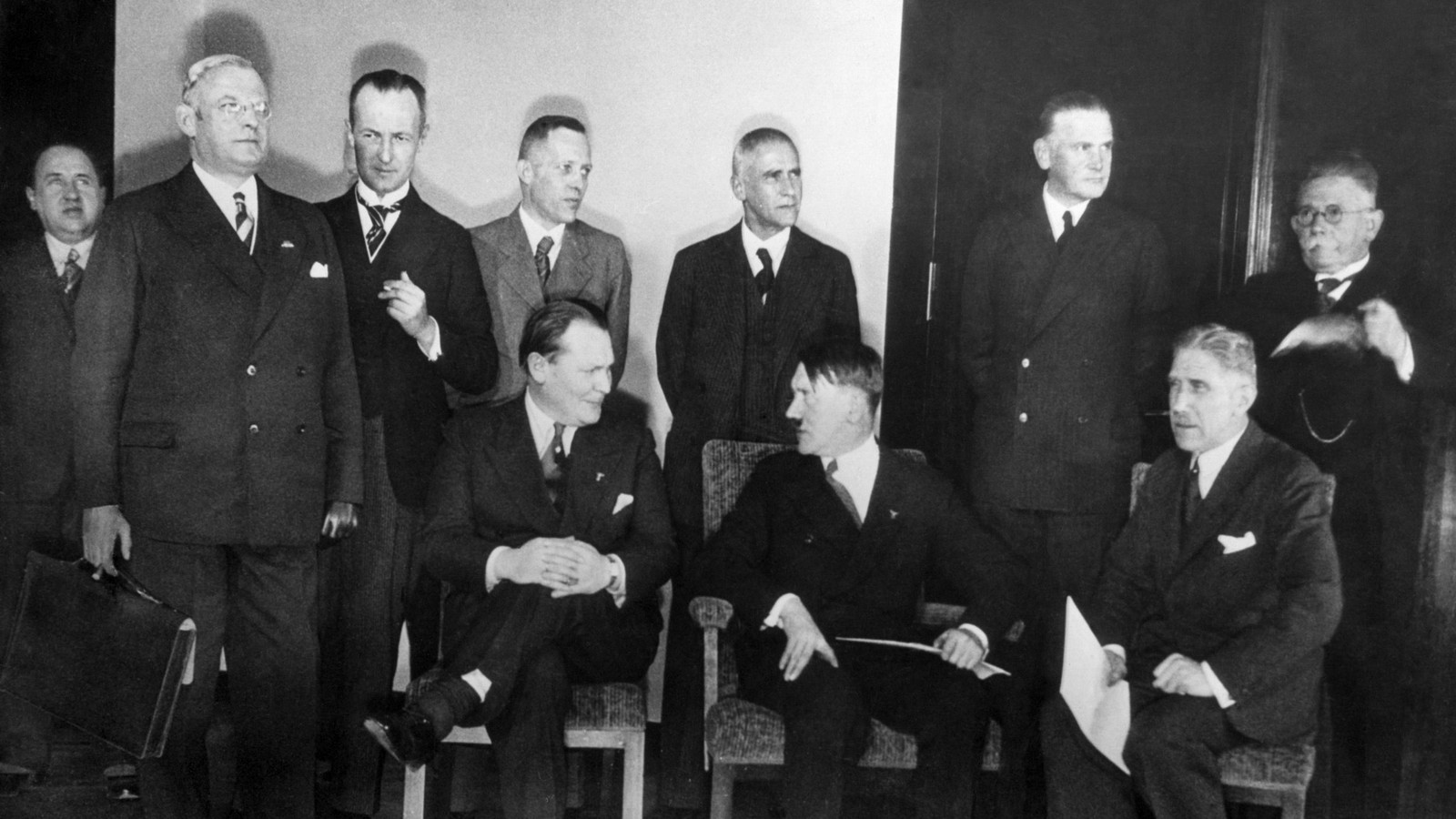
How Hitler Dismantled a Democracy in 53 Days
He used the constitution to shatter the constitution.
How the U.S. Military Learned to Embrace AI Warfare
A review of Katrina Manson, “Project Maven: A Marine Colonel, His Team, and the Dawn of AI Warfare” (Norton, 2026).

Pluralistic: Making sense of Trump’s unscheduled sudden midair disassembly of the American empire (16 May 2026) – Pluralistic: Daily links from Cory Doctorow
For generations, the American empire was the most powerful force on earth, and so we tended to assume that it was the most durable force on earth – surely anything so powerful must also be eternal?
The Fifth Cycle of Humanity