
Evolutionary Morality, the Judgment of Law, and the Necessity of God
Do not conquer what you cannot defend — LessWrong
Once upon a time there was a great king. He ruled his kingdom with wisdom and economically literate policies, and prosperity followed. Seeing this, t…


Rethinking Norm Psychology
Norms permeate human life. Most of people’s activities can be characterized by rules about what is appropriate, allowed, required, or forbidden—rules that are crucial in making people hyper-cooperative animals. In this article, I examine the current cognitive-evolutionary account of “norm psychology” and propose an alternative that is better supported by evidence and better placed to promote interdisciplinary dialogue. The incumbent theory focuses on rules and claims that humans genetically inherit cognitive and motivational mechanisms specialized for processing these rules. The cultural-evolutionary alternative defines normativity in relation to behavior—compliance, enforcement, and commentary—and suggests that it depends on implicit and explicit processes. The implicit processes are genetically inherited and domain-general; rather than being specialized for normativity, they do many jobs in many species. The explicit processes are culturally inherited and domain-specific; they are constructed from mentalizing and reasoning by social interaction in childhood. The cultural-evolutionary, or “cognitive gadget,” perspective suggests that people alive today—parents, educators, elders, politicians, lawyers—have more responsibility for sustaining normativity than the nativist view implies. People’s actions not only shape and transmit the rules, but they also create in each new generation mental processes that can grasp the rules and put them into action.

Vermin Trials
AbstractFor 250 years insects and rodents accused of committing property crimes were tried as legal persons in French, Italian, and Swiss ecclesiastic courts under the same laws and according to the same procedures used to try actual persons. I argue that the Catholic Church used vermin trials to increase tithe revenues where tithe evasion threatened to erode them. Vermin trials achieved this by bolstering citizens’ belief in the validity of Church punishments for tithe evasion: estrangement from God through sin, excommunication, and anathema. Vermin trials permitted ecclesiastics to evidence their supernatural sanctions’ legitimacy by producing outcomes that supported those sanctions’ validity. These outcomes strengthened citizens’ belief that the Church’s imprecations were real, which allowed ecclesiastics to reclaim jeopardized tithe revenue.

Anthropomorphism in AI: hype and fallacy
This essay focuses on anthropomorphism as both a form of hype and fallacy. As a form of hype, anthropomorphism is shown to exaggerate AI capabilities and performance by attributing human-like traits to systems that do not possess them. As a fallacy, anthropomorphism is shown to distort moral judgments about AI, such as those concerning its moral character and status, as well as judgments of responsibility and trust. By focusing on these two dimensions of anthropomorphism in AI, the essay highlights negative ethical consequences of the phenomenon in this field.

Anthropomorphism in AI: hype and fallacy
This essay focuses on anthropomorphism as both a form of hype and fallacy. As a form of hype, anthropomorphism is shown to exaggerate AI capabilities and performance by attributing human-like traits to systems that do not possess them. As a fallacy, anthropomorphism is shown to distort moral judgments about AI, such as those concerning its moral character and status, as well as judgments of responsibility and trust. By focusing on these two dimensions of anthropomorphism in AI, the essay highlights negative ethical consequences of the phenomenon in this field.
The Tragedy of the Commons
The population problem has no technical solution; it requires a fundamental extension in morality.

Religion matters for economic growth through various channels
Standard models of economic growth depict physical capital, human capital, population/labour, and total factor productivity as proximate determinants of economic growth. But their deeper determinants are poorly understood. This column argues that religion – as one of the most ubiquitous social phenomena – can spur or impair economic growth by affecting each of these four elements of the macroeconomic production function.

JBS Haldane-A Dialectical Account of Evolution
THIS paper requires a preliminary apology. It is written in Spain, and as the writer is taking a very minor part in the defence of Madrid he is unable to consult many works of reference. Readers to whom practice is as important as theory will excuse any inadequacy in citations.
The Future of AI
The Parents’ Paradox: AI, Ethics, and the Limits of Machine Morality This post is based on a talk I gave at The AI & Automation Conference in London on February 25, 2026, and my slides. A…
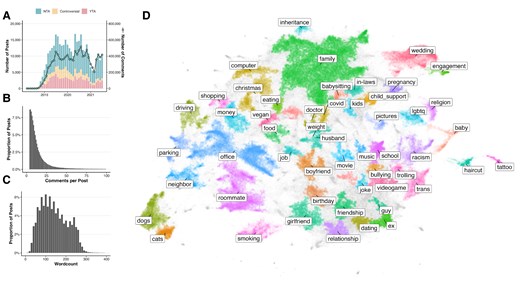
A large-scale investigation of everyday moral dilemmas
Abstract. Questions of right and wrong are central to daily life, yet scientific understanding of everyday moral dilemmas is limited. We conducted a data-d
The Irrational Decision
How the computer revolution shaped our conception of rationality—and why human problems require solutions rooted in human intuition, morality, and judgment

Evolutionary Political Economy: Content and Methods
In this paper we present the major theoretical and methodological pillars of evolutionary political economy. We proceed in four steps. Aesthetics: In chapter 1 the immediate appeal of evolutionary ...

A quote by Anatole France
The law, in its majestic equality, forbids rich and poor alike to sleep under bridges, to beg in the streets, and to steal their bread.

What people learn from punishment: A cognitive model
Authorities, from parents of toddlers to leaders of formal institutions, use punishment to communicate disapproval and enforce social norms. Ideally, from whether and how severely a transgression is punished, targets and observers infer shared social norms. Yet in light of every punitive choice, observers also evaluate the motives and legitimacy of the authority. Here, we show that the effects of punishment can only be understood by considering these inferences simultaneously. We measured human observers’ joint inferences empirically in three preregistered experiments ( N = 1 , 254 ) and developed a rational Bayesian model using an inverse planning framework that captures and explains these inferences and their interactions quantitatively and parsimoniously. When people have different priors about norms or authorities, the model predicted and we experimentally confirmed that observing punishment by the authority can sustain polarization. This work reveals the rational logic behind how people learn from punishment and a key constraint on the function of punishment in establishing shared social norms.

Metanorms generate stable yet adaptable normative social order in a politically decentralized society
Abstract Norms are essential for social stability but can hinder adaptability in changing environments. Yet human societies have found ways to modify existing norms or create new ones in response to novel challenges. This paper proposes a framework for understanding adaptive norm evolution. First, drawing on a theory of legal order, we posit that societies balance normative stability and adaptability through metanorms—rules that govern the process by which norms are interpreted, changed and enforced. Second, we test this idea in the context of customary dispute resolution by elders among the Turkana, a pastoralist society in Kenya. Based on vignette experiments with 369 participants, we found that community members were significantly more willing to enforce decisions when elders aligned their conduct with metanorms. Elders are constrained in their ability to alter long-standing customs, but by following metanorms, they can create new rules for novel situations. These findings support our proposed mechanism: in the absence of centralized authority, metanorms governing normative institutions allow for adaptive norm change while preserving cultural continuity. We conclude by suggesting that group-level selection acts on cultural variation in metanorms, shaping the evolvability of normative systems and enabling societies to sustain adaptive legal order without coercive centralized power. This article is part of the theme issue ‘Transforming cultural evolution research and its application to global futures’.