

Imagine the most extreme possible factory that drives itself, determines its own objectives and optimizes itself to accomplish them. What would it mean to steer or govern such a thing?
Dark Factories: Rise of the Trycycle – Dan Shapiro's Blog
Companies are now producing Dark Factories – engines that turn specs into shipping software. The implementations can be complex and sometimes involve Mad Max metaphors. But they don’t have to be like…
ver.ooo
Curious about systems — how they behave, how they fail, and what they get up to when nobody is steering.
Antikythera | Antikythera
As computation becomes planetary infrastructure, how does its acceleration of hybrid intelligences pose new challenges to fundamental philosophical questions.

Extreme Harness Engineering for Token Billionaires: 1M LOC, 1B toks/day, 0% human code, 0% human review — Ryan Lopopolo, OpenAI Frontier & Symphony
We shed light on OpenAI's first Dark Factory for the first time.
Supermodular — The Collective Intelligence Project
There are many situations where it is cheaper to provide a benefit to many people all at once, rather than providing them to one person at a time. Examples range from shipping networks to public health to digital infrastructure to scientific research. As technological development accelerates, more and more goods fall into this category, incentivizing economic actors to provide goods in a massively “wholesale”, rather than retail way. This points toward greater efficiency, but also deeper economic and social vulnerabilities. It results in more and more vital infrastructure that is open to private capture and monopoly. And AI accelerates these dynamics to an unprecedented degree.
Exocapitalism: economies with absolutely no limits
There is a touch of destiny with this one. We have real…

Superintelligence: Paths, Dangers, Strategies
Superintelligence: Paths, Dangers, Strategies is a 2014 book by the philosopher Nick Bostrom. It explores how superintelligence could be created and what its features and motivations might be. It argues that superintelligence, if created, would be difficult to control, and that it could take over the world in order to accomplish its goals. The book also presents strategies to help make superintelligences whose goals benefit humanity. It was particularly influential for raising concerns about existential risk from artificial intelligence.

Ideology and Ideological State Apparatuses by Louis Althusser 1969-70
I must now expose more fully something which was briefly glimpsed in my analysis when I spoke of the necessity to renew the means of production if production is to be possible. That was a passing hint. Now I shall consider it for itself.
At least it's an ethos?
The limits of optimal control, from the maximalist and minimalist perspectives


On Thickets, Enclosure, and Leaving
Every platform I left, I left for the same pattern: enclosure by othering — systems that define what is shameful, create targets, and point an aggressive majority at them. Substack's AI-detection turn is the latest, and it is Dark Forestry in action. The escape is spatial: go where the platforms ar…
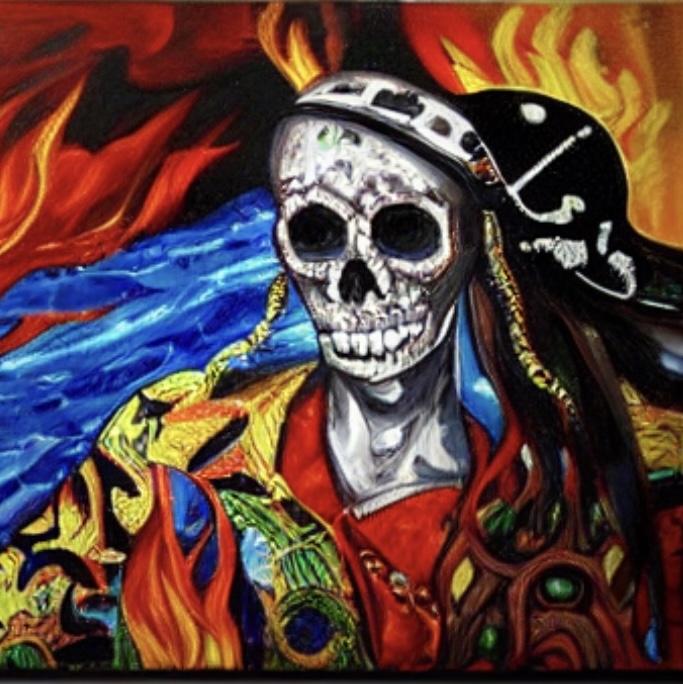
Building Political Superintelligence
Amidst fears of dystopia, a blueprint for how we use AI to reinvent the way we govern ourselves
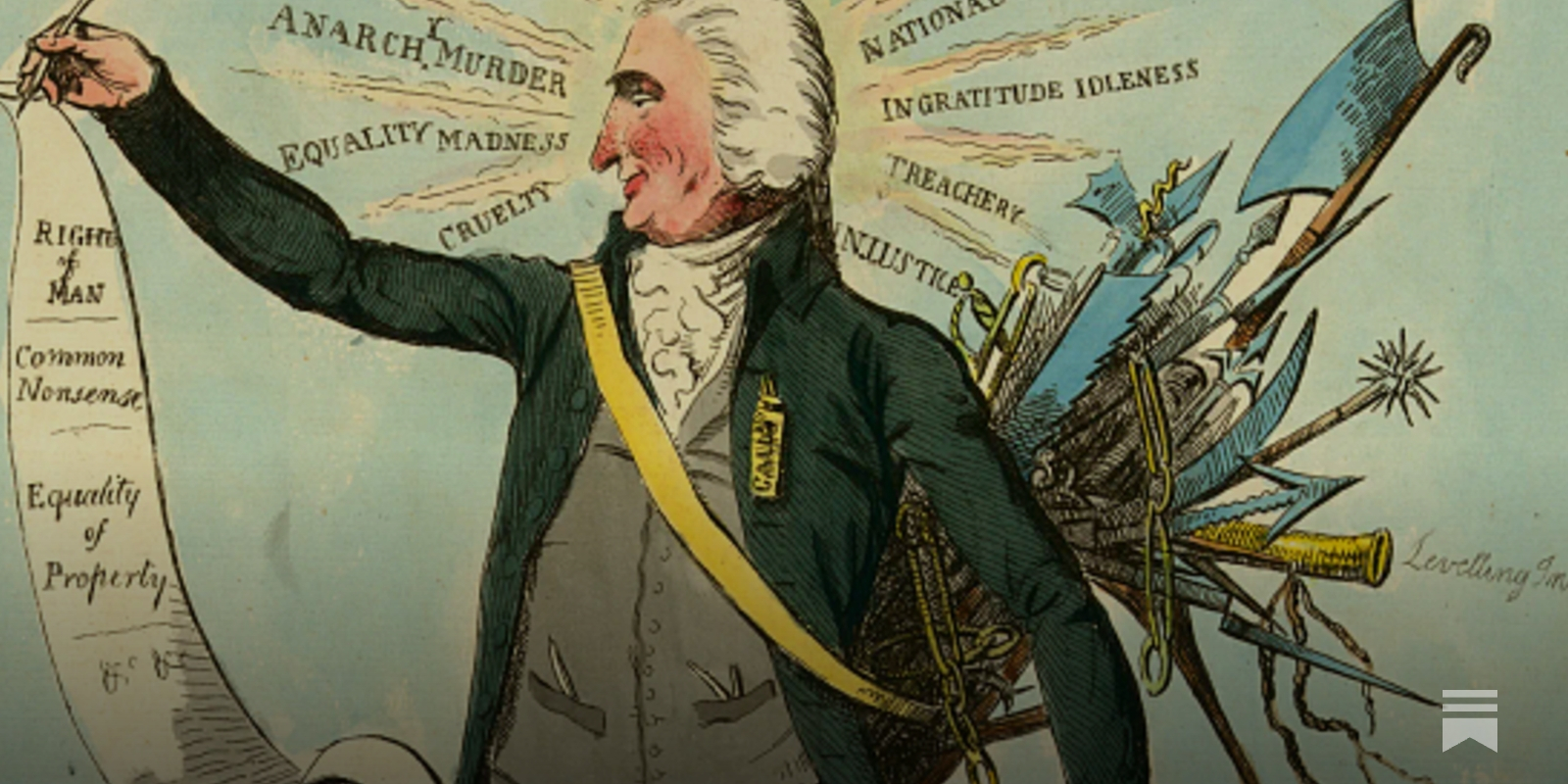
1% for the People
Capitalism is the undisputed powerplant of global prosperity. Since Adam Smith first described the “invisible hand” that allows economies to be efficiently self-organizing and self-renewing, every attempt to supplant it with a competing system has failed spectacularly.

The Authoritarian Stack: Mapping Big Tech’s Capture of State Power - Rosa-Luxemburg-Stiftung
A new project exposes the infrastructure of techno-oligarchic control — and why Europe must act

one of the clearest gaps in the ecosystem - working against the lofty decentralisation goals - is how power concentrates in tools: lists/feeds/labellers the implicit decision by bsky rn is "don't let these things become powerful", which also means "don't let these things become *too* useful"

Baldemoto🇵🇸
Moderating @furryli.st always made me feel that something was missing from atproto. If we disappeared, so too would the community we built This feeling’s finally crystallized into this proposal: Composable Trust We created identities that survive platform failure. Lets do the same for communities!
This, and even more - to get super-rich almost requires *suppressing* the cultivation of a self or interiority. “Our system produces, elevates, and rewards psychopaths.” x.com/uTobian/status/20412132683884…

Levi Stahl
The empty boredom of the super-rich who never had to cultivate a self or interiority is the root cause of so many of our problems.

