Lightweight AI-friendly Docker Swarm management

Docker Sandboxes: Run Agents in YOLO Mode, Safely | Docker
Learn from Docker experts to simplify and advance your app development and management with Docker. Stay up to date on Docker events and new version

Docker Brings Compose to the AI Agent Era | Docker
Define, run, and scale AI agents using Docker Compose and Docker Offload. Streamline agentic development across your stack.

Coasts — Containerized Hosts for AI Agents
Free, open source parallel runtimes for AI agents. Run multiple isolated environments on your machine — no cloud, no conflicts.
Watchtower
A container-based solution for automating Docker container base image updates.
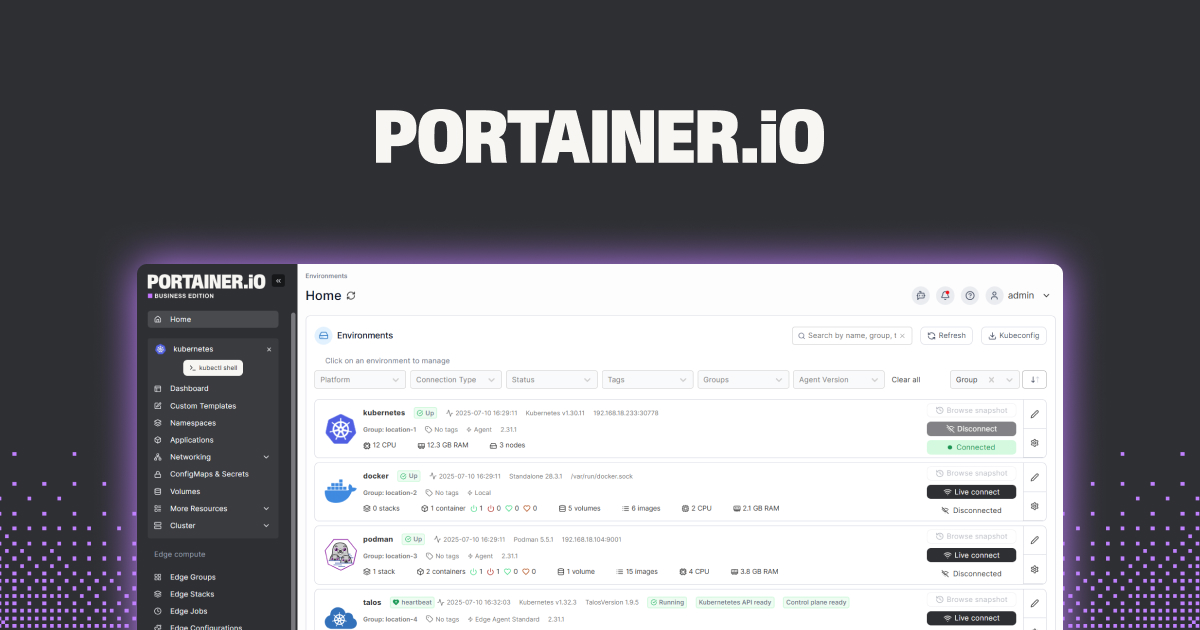
Portainer.io - Enterprise Kubernetes & Docker Container Management Platform
Operational control for Kubernetes and Docker without specialist overhead. Govern multi-cluster infrastructure or deploy OT software at scale.
Post: Docker Not Ready for Prime Time
I love Docker. It's so freakin' useful for distributing predictable runtime environments.
Docker: Accelerated Container Application Development
Docker is a platform designed to help developers build, share, and run container applications. We handle the tedious setup, so you can focus on the code.
What is Podman? How is it Different Than Docker?

Dicklesworthstone/frankenterm
Terminal hypervisor for AI agent swarms: real-time pane capture, state-machine pattern detection, and a JSON API for coordinating fleets of coding agents across WezTerm
Dagger.io
Build powerful software environments and containerized operations from modular components and simple functions. Perfect for complex software delivery and AI agents. Built by the creators of Docker.
WTF is a container? | TechCrunch
You can't go to a developer conference today and not hear about software containers: Docker, Kubernetes, Mesos and a bunch of other names with a nautical

The Industry-Leading Container Runtime | Docker
Read about our industry-leading Docker container runtimes. Docker Engine allows containerized apps to run consistently on any infrastructure — from anywhere.