Tactical Tech is a creative international non-profit with over two decades of experience dedicated to exploring the socio-political and environmental impacts of technology on society. We work to empower individuals and communities to navigate and mitigate the ways digital technologies change their lives and transform societies.
Adventures in Mapping Digital Empires
For years, Tactical Tech has worked to understand and visualise Big Tech's impact on society. In this piece, you will be taken on a journey through the different formats, narratives and visual representations Tactical Tech has used to tell the story behind the acquisitions, mergers and investments of the Big Tech Google, Amazon, Facebook, Apple and Microsoft. Read to learn about our provocation design approach to promote digital thinking.

The shifting battlefield: technology, tactics, and the risk of blurring lines in warfare - Humanitarian Law & Policy Blog
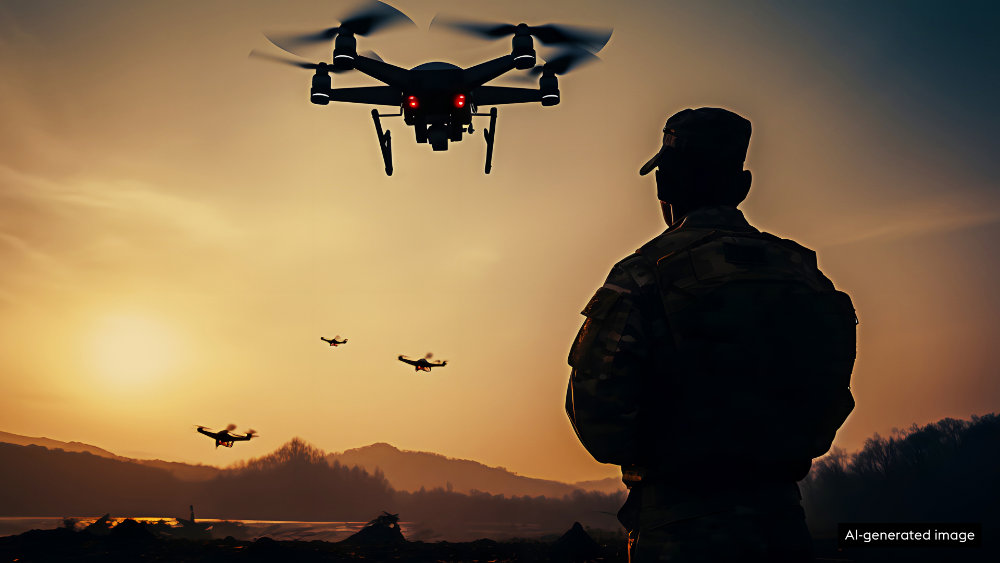
The accelerating integration of emerging technologies into armed conflict is transforming not only the tools of war, but its tactics, geography, participants and impact. Technological developments – from commercial drones to artificial intelligence, electronic warfare to the military use of civilian infrastructure – risk undermining boundaries between military and civilian domains. These changes challenge long-held...
Protecting civilians in a data-driven and digitalized battlespace: toward a baseline humanitarian technology infrastructure
This article examines the realities of modern day warfare, including a rising trend in hybrid threats and irregular warfare which employ emerging technologies supported by digital and data-driven processes. The way in which these technologies become applied generates a widened battlefield and leads to a greater number of civilians being caught up in conflict. Humanitarian groups mandated to protect civilians have adapted their approaches to the use of new emerging technologies. However, the lack of international consensus on the use of data, the public and private nature of the actors involved in conflict, the transnational aspects of the widened battlefield, and the heightened security risks in the conflict space pose enormous challenges for the protection of civilians agenda. Based on the dual-usage aspect of emerging technologies, the challenges associated with regulation and the need for those affected by conflict to demonstrate resilience toward, and knowledge of, digital media literacy, this paper proposes the development of guidance for a "minimum basic technology infrastructure" which is supported by technology, regulation, and public awareness and education

Technopoly: The Surrender of Culture to Technology
A witty, often terrifying that chronicles our transform…

13 top A.I. innovators shaping how the tech will impact our lives | Fortune
Meet the people developing artificial intelligence, and fighting over the proper—and safest—way to roll out the technology.

Appropriating Technology | Public Sphere Project — Liberating Voices Pattern Language
Dematerialization, Participatory Design, Techno-Criticism, Intermediate Technologies, Users' IT Quality Network, Wholesome Design for Wicked Problems, Labor Visions, Community Inquiry, Tactical Media
The closed world: Systems discourse, military strategy and post WWII American historical consciousness
This essay proposes a cultural and historical explanation for the American Military's fascination with computing. Three key elements of post-WWII US political culture — apocalyptic struggle with the USSR, subsuming all other conflicts: a long history of antimilitarist sentiment in American politics; and the rise of science-based military power — contributed to a sense of the world as a closed system accessible to American technological control. A developing scientific systems discourse, centrally including computer science and AI, was adopted for strategic thinking and military technology. The Strategic Computing and Strategic Defense Initiatives are discussed as contemporary examples of this conjunction.

Appropriate Measures — Real Life
Changing the tech we use is not enough to mitigate the environmental and social harm of mass technology

(PDF) Sociotechnical Imaginaries and Science and Technology Policy: A Cross-National Comparison
PDF | Project Summary Intellectual merit: This two-year comparative project, grounded in the field of science and technology studies (STS), aims to... | Find, read and cite all the research you need on ResearchGate

The tools and tricks that let Ars Technica function without a physical office
Looking at the “future of work” with a team that’s been living it for two decades.

Technological Metamodernism (Sep 2024)
Technological Metamodernism A four-week course with Stephen Reid and special guests Telegram group: https://t.me/+4CC9lfZMBN04ZTdk Substack post announcing the open-sourcing of the notes: https://stephenreid.substack.com/p/technological-metamodernism-course This work is licensed under Cre...

On the Horizon: The Ukraine War and the Evolving Threat of Drone Terrorism - Combating Terrorism Center at West Point
Abstract: This article analyzes the evolution of terrorist drone usage and forecasts its future trajectory in light of the tactical and technological innovations emerging from the Russo-Ukrainian War. The conflict has become a critical “innovation hub” for drone warfare, accelerating advancements in the scale, speed, and range of drone operations. These developments are not only … Continued

War in the age of intelligent machines
271 pages : 24 cm; In the aftermath of the methodical destruction of Iraq during the Persian Gulf War, the power and efficiency of new computerized weapons and suveillance technology has become chillingly apparent. This new weaponry has a significance that goes far beyond military applications; it represents a profound historical shift in the relation of human beings both to machines and to information. Details the mutating history of information analysis and machinic organization from the mobile siege artillery of the Renaissance, the clockwork armies of the Thirty Years War, the Napoleonic campaigns, and the Nazi blitzkrieg up to present-day cybernetic battle-management systems and satellite reconnaissance network, and provides a philosophical and historical reflection on the changing forms through which human bodies and materials are combined, organized, deployed and made effective. [back cover]; Includes bibliographical references (pages 233-266) and index; Introduction -- Collision course -- Bloodless transfusion -- Policing the spectrum

AT Protocol builder manifesto - WIP, comments wanted!
working title: "Why AT Protocol Will Win: A Manifesto for Building in the Atmosphere"
Tech for... what, exactly?
How ‘tech for good’ launders the expertise, interests, and beliefs of technologists.