

I used to tolerate and expect complexity. Working on Go the past 10 years has changed my perspective, though. I now value simplicity above almost all else and tolerate complexity only when it’s well isolated, well documented, well tested, and necessary to make things simpler overall at other layers for most people. For example, the Go runtime is relatively complex internally but it permits simple APIs and programming models for users who then don’t need to worry about memory management, thread management, blocking, the color of their functions, etc. A small number of people need to understand the runtime’s complexity, but millions of people can read & write simple Go code as a result. More importantly, Go users then have that much more complexity budget to work with to build their actual application. I would’ve never built Perkeep had I needed to fight both its internal complexity and the complexity imposed on me by other contender languages/environments at the time.
bradfitz - Joining Tailscale
All that is to say, simplicity is not only refreshing, but it also enables. Go made me feel productive in a way I hadn't felt in many years where everything just felt like it was getting more complex. Ever since finding Go, I've been regularly hunting for other technologies that provide simplicity as a feature.
Go Web Programming
Build scalable, high-performance web apps in Go with modern design principles.

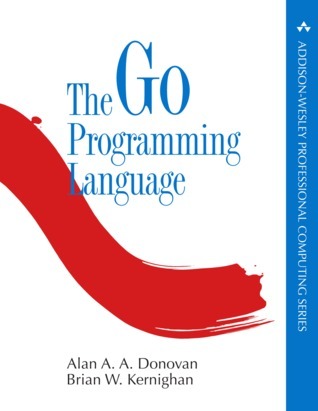
The Go Programming Language
Go is an open source programming language that makes it simple to build secure, scalable systems.

Tailscale has reached general availability
Just over a year ago, we founded Tailscale with a common sense of nostalgia for the “good old days” of LANs. In our collective opinion (then and now) networking and cloud infrastructure has become too complicated. Attempts to increase team connectivity and migrate towards remote work results in a corresponding burden of security. This reduces productivity. Systems and approaches don’t scale without significant time and effort. Everyone wins.
Fragile narrow laggy asynchronous mismatched pipes kill productivity - Tristan Hume
Something I’ve been thinking about recently is how when I’ve worked on any kind of distributed system, including systems as simple as a web app with frontend and backend code, probably upwards of 80% of my time is spent on things I wouldn’t need to do if it weren’t distributed. I came up with the following description of why I think this kind of programming requires so much effort: Everything is fragile narrow laggy asynchronous mismatched untrusted pipes. I think every programmer who’s worked on a networked system has encountered each of these issues, this is just my effort to coherently describe all of them in one place. I hope to prompt you to consider all the different hassles at once and think about how much harder/easier your job would be if you did/didn’t have to deal with these things. I think this is part of why web companies like Twitter seem to have so much lower impressiveness per engineer productivity than other places like game companies or SpaceX, although there’s other pieces to that puzzle. While part of the difficulty of distributed systems is inherent in physics, I think there’s lots of ideas for making each part of the problem easier, many already in common use, and I’ll try to mention lots of them. I hope that we as programmers continually develop more of these techniques and especially general implementations that simplify a problem. Like serialization libraries reducing the need for hand-written parsers/writers, I think there’s a lot of developer time out there to save by implementing generalized solutions where we currently painstakingly reimplement common patterns. I also think all these costs mean you should try really hard to avoid making your system distributed if you don’t have to.
API Platform Unkey Ditches Serverless After Performance Struggles
Developer Platform Unkey has written about rebuilding its entire API authentication service from the ground up, moving from serverless Cloudflare Workers to stateful Go servers after re-evaluating the constraints of their serverless architecture. The move resulted in a sixfold performance improvement and eliminated the workarounds that had become a dominant part of its engineering efforts.

Preserving Order in Concurrent Go Apps: Three Approaches Compared
Concurrency breaks ordering by design, but sometimes we need both. Explore three methods to preserve order in concurrent Go applications, from standard ReplyTo channels to sophisticated permission passing, with benchmarks and real-world trade-offs.

We're Building the New Internet | About Tailscale
Learn about Tailscale as a company and our mission: to remove the overhead and complexity of building a trusted, secure network.
GopherCon Europe 2023: Xe Iaso - Reaching the Unix Philosophy's Logical Extreme with Webassembly
Optimizing Protocol Buffers in Go Applications
If you’ve ever wondered why your Go service is eating memory like it’s at an all-you-can-eat buffet, chances are you haven’t optimized your Protocol Buffers usage. I’ve been there, watching heap profiles with the kind of horror usually reserved for checking your bank account after a night out. But here’s the good news: Protocol Buffers in Go can be wickedly fast and memory-efficient when you know the tricks. Let me walk you through the optimization techniques that transformed my services from memory-hungry monsters into lean, mean, serialization machines.

Composio
Just-in-time tool calls, secure delegated auth, sandboxed environments, and parallel execution across 1,000+ apps.
The Go programming language
Go may be our generation's most important new programming language. It is exceptionally expressive, highly efficient in both compilation and execution, and enables the development of extremely reliable and robust programs. It shares the same spirit programmers once found in C: it helps serious professional programmers achieve maximum effect with minimum means. Now, Go shares something else with C, too. Brian Kernighan, who wrote the world's most respected and useful C primer for working programmers, has just done the same for Go. Together with Google Go insider Alan Donovan, Kernighan explains what Go does and doesn't borrow from C ... the great ideas it borrows from other modern languages ... and how it avoids features that lead to unnecessary complexity and unreliable code. Throughout, their short, carefully-crafted code examples demonstrate today's most effective Go idioms, so you can start using Go effectively right from the beginning, and quickly take advantage of its full power. All code has been extensively reviewed by Go's creators at Google for both completeness and accuracy
Complexity and Strategy | HackerNoon
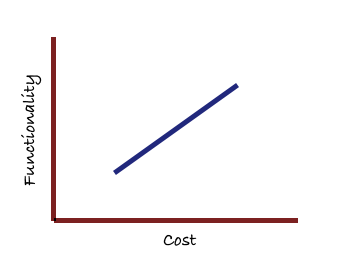
I struggled with how to think about complexity through much of my career, especially during the ten years I spent leading Office development. Modeling complexity impacted how we planned major releases, our technical strategy as we moved to new platforms, how we thought about the impact of new technologies, how we competed with Google Apps, how we thought about open source and throughout “frank and open” discussions with Bill Gates on our long term technical strategy for building the Office applications.
Complexity and Strategy | HackerNoon
I struggled with how to think about complexity through much of my career, especially during the ten years I spent leading Office development. Modeling complexity impacted how we planned major releases, our technical strategy as we moved to new platforms, how we thought about the impact of new technologies, how we competed with Google Apps, how we thought about open source and throughout “frank and open” discussions with Bill Gates on our long term technical strategy for building the Office applications.
Go 1.7 is released - The Go Programming Language
Go 1.7 adds faster x86 compiled code, context in the standard library, and more.
Tailworm
The design choices of the open source tailscale and headscale software have created an environment ripe for risk, while marketing security as its design and purpose. Choices have been made to move away from security-in-depth, removing layers of authentication, and replacing daemons such as OpenSSH which employ privilege-separation with a highly-privileged process. Other findings include broader-than-advertised network security boundaries, which seems to be legitimate bugs, but the missing security and isolation is precisely what users are advertised by these tools.