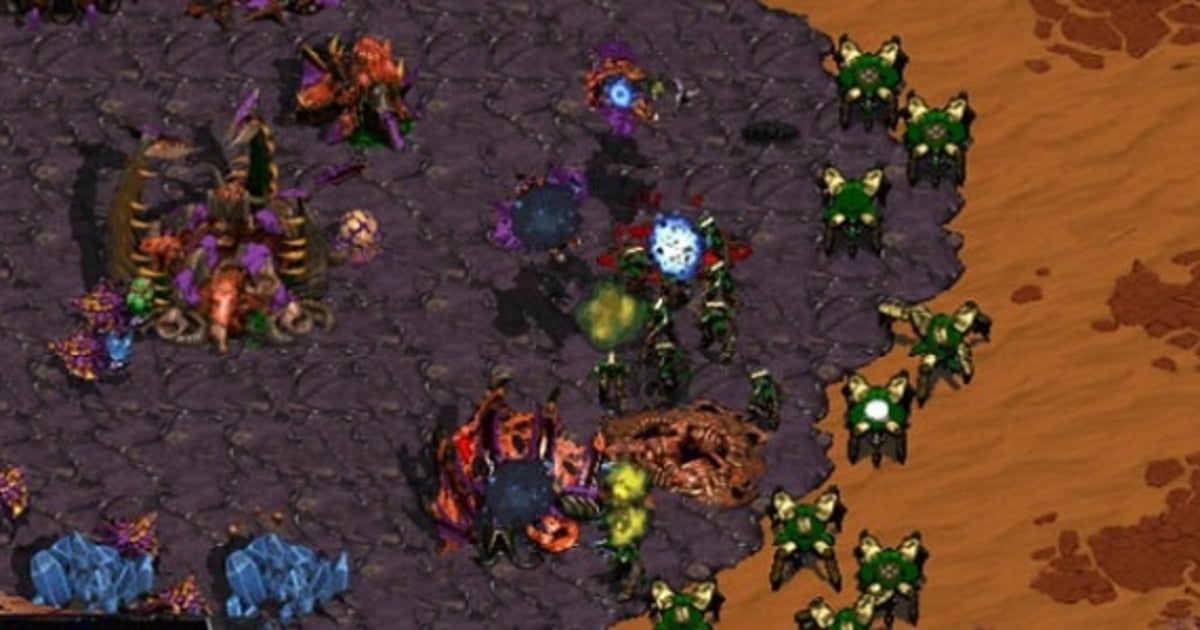
Learn more about the early days of LAN.
A Lament For The LAN Party
Before broadband and the connected world of information, we found different ways to mix our social life and our games. …

My journey to the heart of the forgotten internet
Slowly but surely, huge swaths of the internet are vanishing. But the artefacts of the early web are still out there, and they have lessons for the future.

Future Histories of Other Networks – Lori Emerson
ChatGPT Memory and the Bitter Lesson
I reverse-engineered ChatGPT's memory system to understand what it stores, how it works (spoiler: not RAG!), and why OpenAI built it this way. Complete with prompts you can try yourself to explore your own ChatGPT memory.

Usenet
Usenet, short for User's Network, is a worldwide distributed discussion system available on computers. It was developed from the general-purpose Unix-to-Unix Copy (UUCP) dial-up network architecture. Tom Truscott and Jim Ellis conceived the idea in 1979, and it was established in 1980. Users read and post messages to one or more topic categories, known as newsgroups. Usenet resembles a bulletin board system (BBS) in many respects and is the precursor to the Internet forums that were developed after the introduction of the World Wide Web. Discussions are threaded, as with web forums and BBSes, though posts are stored on the server sequentially.

The rise of Whatever
This was originally titled “I miss when computers were fun”. But in the course of writing it, I discovered that there is a reason computers became less fun, a dark thread woven through a number of events in recent history. Let me back up a bit.

remember
For groups The final step in organizing group conversations about computer use is to commit to remembering what has been said before. And to say it again....

TCP/IP Protocol Fundamentals Explained with a Diagram
Have you ever wondered how your computer talks to other computers on your local LAN or to other systems on the internet? Understanding the intricacies of how computers interact is an important part of networking and is of equal interest to a sysadmin as well as to a developer. In this article, we will make
ST 4U 413: Smalltalk at Tektronix
When the Internet Was a Place - Front Porch Republic
Not too long ago, the internet was a place you visited. The family desktop sat in its designated closet or back office. In schools, there were rooms filled with computers blinking in tandem, waiting for your class to arrive and hop online. You had to purposefully arrive at the internet, and when done, you left […]

Basic Memory
AI conversations that actually remember. Never re-explain your project to your AI again. Join our Discord: https://discord.gg/tyvKNccgqN
Two Takes on the Eternal September
September, and with it the start of classes at most educational institutions in the United States, is almost upon us. In honor of this, I’d like to look back this week on the September that started twenty-eight years ago in 1993 and is still continuing: Usenet’s Eternal September. Twenty-eight years in, I still don’t think we understand exactly what the implications of this change were, nor have we decided what direction Internet communities should turn in response. I don’t have all the answers either, but I’d like to suggest two useful ways of thinking about it.
Mnemonic convergence in social networks: The emergent properties of cognition at a collective level
Significance Human memory is highly malleable. Because of this malleability, jointly remembering the past along with another individual often results in increased similarity between the conversational partners’ memories. We propose an approach that examines the conversation between a pair of participants as part of a larger network of social interactions that has the potential to reveal how human communities form collective memories. Empirical evidence indicating that dyadic-level conversational alignment processes give rise to community-wide shared memories is presented. We find that individual-level memory updating phenomena and social network structure are two fundamental factors that contribute to the emergence of collective memories. , The development of shared memories, beliefs, and norms is a fundamental characteristic of human communities. These emergent outcomes are thought to occur owing to a dynamic system of information sharing and memory updating, which fundamentally depends on communication. Here we report results on the formation of collective memories in laboratory-created communities. We manipulated conversational network structure in a series of real-time, computer-mediated interactions in fourteen 10-member communities. The results show that mnemonic convergence, measured as the degree of overlap among community members’ memories, is influenced by both individual-level information-processing phenomena and by the conversational social network structure created during conversational recall. By studying laboratory-created social networks, we show how large-scale social phenomena (i.e., collective memory) can emerge out of microlevel local dynamics (i.e., mnemonic reinforcement and suppression effects). The social-interactionist approach proposed herein points to optimal strategies for spreading information in social networks and provides a framework for measuring and forging collective memories in communities of individuals.

How to keep learning in the age of LLMs | Oğuzhan Olguncu
Notes on how I keep learning as a programmer in the age of LLMs
Part I: The Next Great Online Community
There’s a lack of innovation in community software. Let's dive into internet history, and get inspired!