

This is a 24/7 live feed of Claude Sonnet 4.6 prompting talkie-1930-13b-it in order to explore its knowledge, capabilities, and inclinations. talkie’s outputs reflect the culture and values of the texts it was trained on, not the views of its authors.
Mapping the Mind of a Large Language Model
We have identified how millions of concepts are represented inside Claude Sonnet, one of our deployed large language models. This is the first ever detailed look inside a modern, production-grade large language model.
Vintage chatbot lives in the past like an elderly relative
: Talkie's training data stops at the end of 1930, and its creators hope it'll help us better understand how AI thinks

Models overview
Claude is a family of state-of-the-art large language models developed by Anthropic. This guide introduces the available models and compares their performance.
Introducing Claude Sonnet 5
Our most agentic Sonnet yet, with top-tier intelligence for coding and everyday professional work.

Large Language Models As The Tales That Are Sung
Gene Wolfe, Albert Lord, machine culture.

Empirical evidence of Large Language Model's influence on human spoken communication
From the printing press to social media, innovations in communication technology have repeatedly reshaped how ideas spread through human culture. Chatbots powered by generative artificial intelligence constitute a new medium, encoding cultural patterns in their neural representations and disseminating them in conversations with hundreds of millions of people. Whether these patterns transmit into human language, and ultimately shape human culture, is a fundamental question. While fully quantifying the causal impact of a chatbot like ChatGPT on human culture is challenging, lexical shifts in human spoken communication may offer an early indicator. Here we show that words preferentially generated by ChatGPT, such as delve, showcase, boast, intricacies and meticulous, increased abruptly in spontaneous human speech. A synthetic-control analysis of 737,083 hours of conversation from 824,634 podcast episodes, screened for unscripted speech, causally links this shift to ChatGPT's release. The measurable influence on spontaneous speech suggests that humans internalize the lexical choices of large language models (LLMs). A preregistered experiment (N = 496) confirms they do, as a brief chatbot interaction led participants to adopt its words as their own, persisting past a distractor task and confirmed in forced lexical choice, indicating entrenchment in the active vocabulary. Together these results show that machines trained on human data now feed their own traits back into human language, integrating LLMs into the ongoing processes of cultural evolution.. This coupling raises concerns about linguistic homogenization and the capacity of a few major AI providers for latent cultural influence at scale.

The LLMentalist Effect: how chat-based Large Language Models rep…
The new era of tech seems to be built on superstitious behaviour
Tracing the thoughts of a large language model
Anthropic's latest interpretability research: a new microscope to understand Claude's internal mechanisms
How Large Language Models Actually Work
Large language models are cultural technologies. What might that mean?
Four different perspectives

Build A Large Language Model (From Scratch), Published by Manning, ISBN 978-1633437166
Implement a ChatGPT-like LLM in PyTorch from scratch, step by step
Scaling Monosemanticity: Extracting Interpretable Features from Claude 3 Sonnet
We find a diversity of highly abstract features. They both respond to and behaviorally cause abstract behaviors. Examples of features we find include features for famous people, features for countries and cities, and features tracking type signatures in code. Many features are multilingual (responding to the same concept across languages) and multimodal (responding to the same concept in both text and images), as well as encompassing both abstract and concrete instantiations of the same idea (such as code with security vulnerabilities, and abstract discussion of security vulnerabilities).
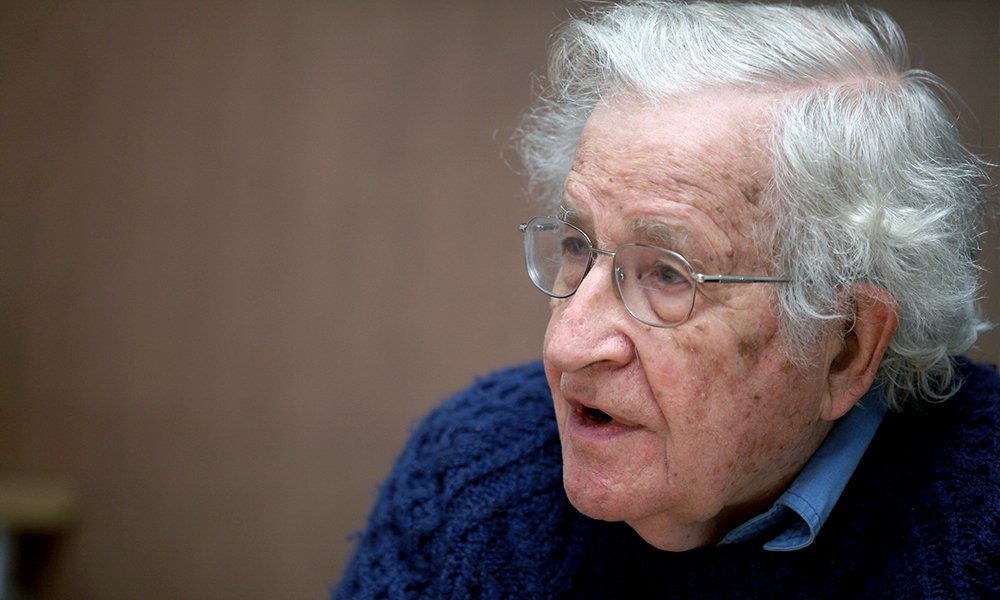
On Language and Humanity: In Conversation With Noam Chomsky
The father of modern linguistics is still opening up new kinds of questions and topics for inquiry.
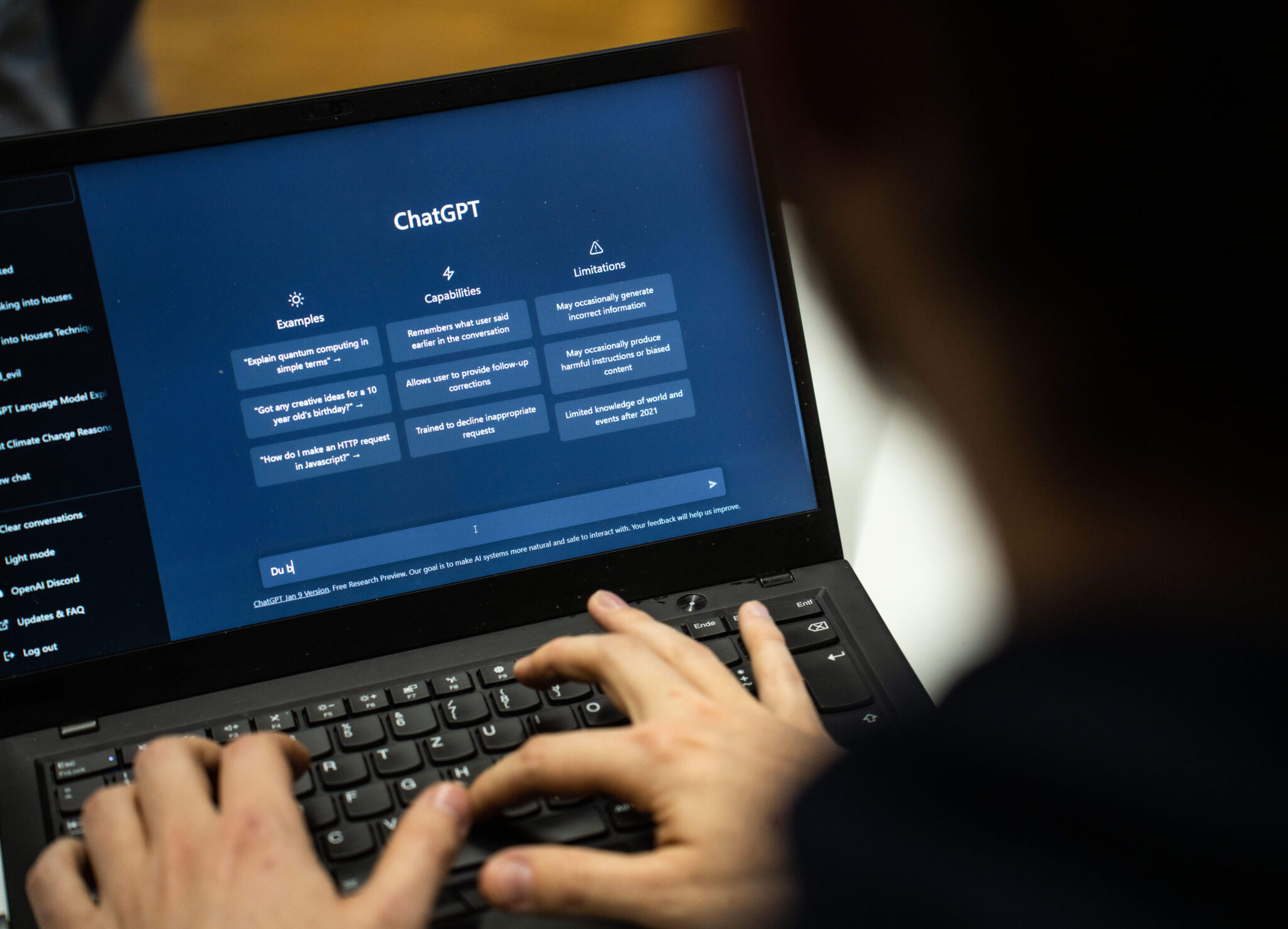
Do You Speak ChatGPTese? Beyond Writing, AI Is Also Flattening The Way We Talk
A study of hundreds of thousands of YouTube videos and podcasts reveals that AI isn’t just changing how we write, it’s subtly altering our spoken language too, raising new concerns about cultural homogenization and who controls the words we use. A study of hundreds of thousands of lectures and podcasts reveals that AI isn’t just changing how we write, it’s subtly altering our spoken language too, raising new concerns about cultural homogenization and who controls the words we use.
For fans of Talkie-1930 and all the methodological questions raised by historical models, here's a new entrant into the field, TypewriterLM, trained up to 1913. Corpus, instruction-tuning datasets, and event dataset are released. arxiv.org/abs/2606.02991

Pretraining Language Models on Historical Text
arxiv.org