

AI systems are consuming the world's content without compensating its creators. This session explores data streaming as a new paradigm — where content flows to AI in real time, with built-in rights management, usage tracking, and fair compensation — and asks what it would take to make this infrastructure decentralized, sovereign, and governed by the communities it serves.
Greyhaven — Sovereign AI Systems for Enterprise
Greyhaven builds custom sovereign AI systems: on-premise inference, private data pipelines, and model-agnostic architecture so enterprises maintain full control over their AI.
HUGE — AI Without Giving Up Your Privacy
We're building an Agentic AI Platform running on your Device that lives with YOU, isolated from the cloud, fundamentally reimagining the relationship between humans and artificial intelligence through ownership, privacy, and massive context. In an age of capture and control, HUGE sells independence and sovereignty.
Content Independence Day: no AI crawl without compensation!
It’s Content Independence Day: Cloudflare, along with a majority of the world's leading publishers and AI companies, is changing the default to block AI crawlers unless they pay creators for content.
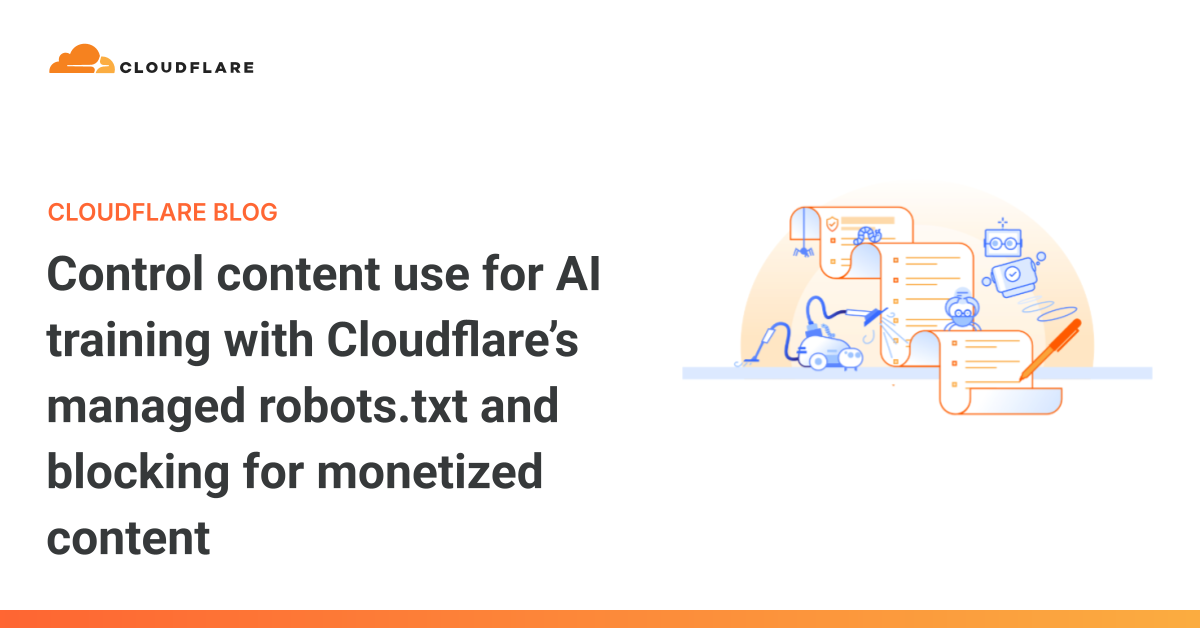
Control content use for AI training with Cloudflare’s managed robots.txt and blocking for monetized content
Cloudflare is making it easier for publishers and content creators of all sizes to prevent their content from being scraped for AI training by managing robots.txt on their behalf, and allowing targeted blocking of AI crawling on sites that serve ads.
EU's data centre expansion will fast-track profits and power for US Big Tech and investors
The global competition to ‘win’ the AI-race is driving an unparalleled expansion of large-scale data centres across the world. Cloaked in a narrative of pursuing European tech sovereignty and adopting AI widely and rapidly, the EU is now proposing to fast-track data centre development across the region in what appears to be a gift to […]

Unlawful by design: Exposing the human rights costs of generative AI - Amnesty International
This briefing examines how standalone generative AI systems, based on unlawful web scraping, are in conflict with international human rights law (IHRL) and standards through their design, development and deployment. While these technologies promise sophisticated automation and efficiency, they rely on data collection and model training practices that abuse privacy rights, enable discrimination, and threaten […]

Content Independence Day, one year on- building the business model for the agentic Internet
One year after declaring Content Independence Day, a dynamic market for monetized content has officially emerged. In this report, we examine how the rise of autonomous AI agents is upending traditional search referrals and detail the new infrastructure required to support a sustainable web economy.

A Roadmap to Democratic AI — The Collective Intelligence Project
Our roadmap outlines concrete steps that can be taken in 2024 to build a more democratic AI ecosystem that is adaptive, accountable, processes decentralized information, provides public goods, and safeguards human wellbeing. We describe what the ecosystem could build, research, advocate for, and fun
Building a Solidarity Ecosystem for AI (SSIR)
How cooperatives, public institutions, and social movements can come together to intentionally build a practical, community-owned alternative to extractive AI systems. <meta property=

Nobody Wants to Pay for Your AI
AI is everywhere today. It writes social posts, suggests email replies, recommends your next binge-watch, and quietly powers tools you use without even noticing.

‘Order from Amazon’: Tech giants storing mass data for Israel’s war
The Israeli army is using Amazon’s cloud service and AI from Google and Microsoft for military activities in Gaza, investigation reveals.

FAIRdata.ai — FAIR Data Assessment
Assess your research data's FAIRness. Automated pipeline using F-UJI + Claude AI. Free to use.

A Strategy for Protecting Content from AI
Because that’s the world we live in these days.

AI-Native Cloud | DigitalOcean
Run AI products in production with a unified stack for agents, inference, and cloud—built for control, performance, and economics at scale.
Firms like Meta and A16z admit having to pay billions for training data would ruin their generative-AI plans as they fight new copyright rules
Meta, Google, Microsoft, and Andreessen Horowitz are trying to keep AI developers from having to pay for copyrighted material used in AI training.
JamiiAfrica
Deploying Africa’s Civic OS—a decentralized, secure, and AI-driven digital infrastructure that enables citizens to hold authorities accountable while giving institutions credible, data-backed incentives to respond