


Life is complicated. Regardless of what your beliefs or politics or ethics are, the way that we set up our society and economy will often force you to act against them: You might not want to fly somewhere but your employer will not accept another mode of transportation, you want to eat vegan but are […]
Technologist Hippocratic Oath
An optional oath for building ethically considered experiences
Review of <i>The Ethics of Public Health Paternalism</i>
Martin Wilkinson’s book The Ethics of Public Health Paternalism is a normative analysis of paternalistic governmental policies within liberal democracies that …

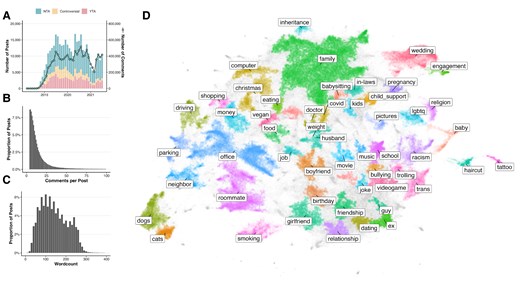
A large-scale investigation of everyday moral dilemmas
Abstract. Questions of right and wrong are central to daily life, yet scientific understanding of everyday moral dilemmas is limited. We conducted a data-d
Why the US government labelled Anthropic a ‘supply chain risk’: A timeline - The Economic Times
The Department of War has demanded that Anthropic’s AI models be made available to it for "any lawful use." Anthropic has, however, refused to cross its strict ethical red lines — no fully autonomous weapons and no mass domestic surveillance.
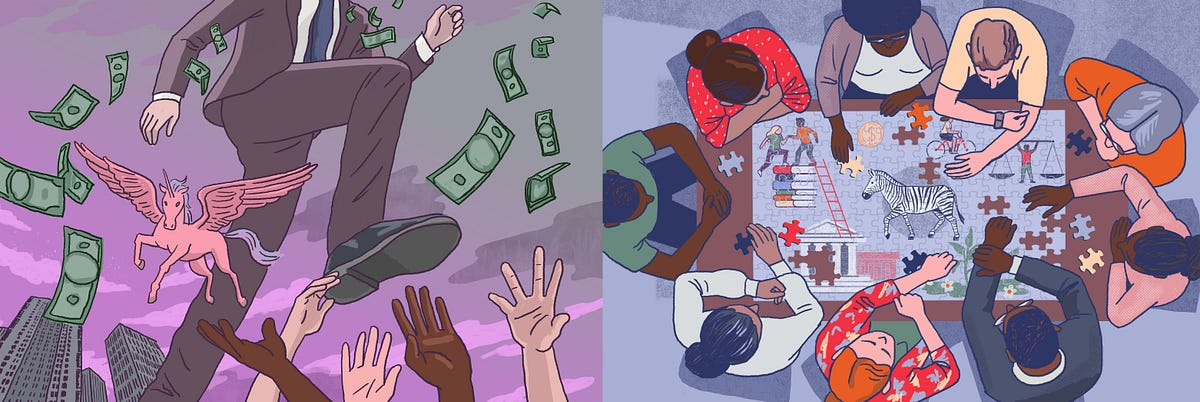
Pivot to People: It’s Time to Build the New Economy
Today’s calls for ethical, humane, responsible, regulated and beneficial technology, compounded with venture capital’s virtue signaling in…
Cheating in the Lab Predicts Fraud in the Field: An Experiment in Public Transportation
We conduct an artefactual field experiment using a diversified sample of passengers of public transportation to study attitudes toward dishonesty. We find that the diversity of behavior in terms of (dis)honesty in laboratory tasks and in the field correlate. Moreover, individuals who have just been fined in the field behave more honestly in the lab than the other fare dodgers, except when context is introduced. Overall, we show that simple tests of dishonesty in the lab can predict moral firmness in life, although fraudsters who care about social image cheat less when behavior can be verified ex post by the experimenter. Data and the online appendix are available at https://doi.org/10.1287/mnsc.2016.2616 . This paper was accepted by Uri Gneezy, behavioral economics.

There is no ethical case for staying on X
X has crossed a line it cannot uncross. This is no longer a debate about moderation or free speech trade-offs, but about predictable harm enabled by design. When a platform becomes ethically indefensible, outrage is not enough – walking away matters.


The Reversal Test: Eliminating Status Quo Bias in Applied Ethics
View all available purchase options and get full access to this article.
Generative Ethics: How AI Model Choice Shapes Social and Financial Performance
This paper estimates potential effects of AI adoption on firms' ethical decision making. Here I focus on variation in models' partiality, defined as the weight given to the party it serves relative to a third party. Study 1 applies an established instrument from computer science, administering 5,000 autonomous-vehicle dilemmas to each of fifteen frontier models and recovering a measure of moral partiality. Models differ sharply. All favor third parties over their principal, but by very different amounts. Some are nearly indifferent, while others will let up to five passengers die rather than kill a single pedestrian. Study 2 casts the same models as business advisors choosing, across 260 pairs, between projected firm revenue and jobs created outside the firm. From each model's choices, I estimate how much revenue it will give up per job. Twelve models pay for community employment, at rates from $923 to $7,066 per job; two place no measurable weight on it; and one, xAI's Grok, requires additional revenue before it will accept community jobs at all. Partiality in the vehicle dilemmas predicts how much revenue models give up for community jobs (ρ = .725, p = .002). AI thus introduces a new source of variation in how firms balance their objectives, and which model a firm adopts is a decision about whose interests the organization will prioritize.

Morality vs. Politics as a Framing Problem: How (Not) to Misunderstand the Fight Against Climate Change
Topoi - This paper is guided by two research hypotheses: (1) In contemporary public discourse, many of the most urgent political problems are predominantly framed and understood in moral terms; (2)...
Plant-based meat has been relentlessly — and unfairly — attacked as “ultra-processed.” Can the industry save itself?
Beyond Meat and Impossible Foods are placing big, divergent bets on the future of meat. Who will win?


The brutal trade-off that will decide the future of food
A growing number of thinkers say factory farming can help save the planet. Are they right?

Moral Imaginations - But how could it work? Like this? moralimaginations.com/watchet-imagines-1 foodrise.org.uk/wp-content/uploads/2025/07/MT…
General 3 — Moral Imaginations
www.moralimaginations.com