

In 1893, Frederick Jackson Turner argued that much that is distinctive about America was shaped by the existence of free land to the West where anyone could start over, and that this condition infused America with its characteristic liberty, egalitarianism, rejection of feudalistic hierarchy, self-sufficiency, and ambition.
Forms Upon the Frontier: Folk Life and Folk Arts in the United States (Monograph Series, Vol. XVI, No. 2, April 1969)
Good condition. (folklore, frontier life) A copy that has been read but remains intact. May contain markings such as bookplates, stamps, limited notes and highlighting, or a few light stains.

Book Review of Making All the World America
Steven T. Newcomb reviews Timothy Bowers Vasko’s Making All the World America: Native Information and the Doctrine of Discovery (University of Pennsylvania Press, 2026).
Inégalités : à la recherche des racines de l'exceptionnalisme américain
Traduction française de « A la recherche of the roots of US inequality “exceptionalism”» de Branko Milanovic

How The US Took Over The World
America, América: a new history of the New World
"The story of how the United States' identity was formed is almost invariably told by looking east to Europe. But as Greg Grandin vividly demonstrates, the nation's unique sense of itself was in fact forged facing south-no less than Latin America's was indelibly stamped by the looming colossus to the north. In this stunningly original reinterpretation of the New World Grandin reveals how North and South emerged from a constant, turbulent engagement with each other. America, América traverses half a millennium, from the Spanish Conquest-the greatest mortality event in human history-through the eighteenth-century wars for independence, the Monroe Doctrine, the coups and revolutions of the twentieth century, and beyond. Grandin shows, among other things, how royalist Spanish America, by sending troops and supplies, helped save the republican American Revolution; how in response to U.S. interventions, Latin Americans remade the rules, leading directly to the founding of the United Nations; and how the Good Neighbor Policy allowed FDR to assume the moral authority to lead the fight against world fascism. Grandin's book sheds new light on well-known historical figures like Bartolomé de las Casas, Simón Bolívar, and Woodrow Wilson, as well as lesser-known actors such as the Venezuelan Francisco de Miranda, who almost lost his head in the French Revolution and conspired with Alexander Hamilton to free America from Spain; the Colombian Jorge Gaitán, whose unsolved murder inaugurated the rise of Cold War political terror, death squads, and disappearances; and the radical journalist Ernest Gruening, who in championing non-interventionism in Latin America, helped broker the most spectacularly successful policy reversal in United State history. This is a monumental work of scholarship that will fundamentally change the way we think of slavery and racism, the rise of universal humanism, and the role of social democracy in staving off extremism. At once comprehensive and accessible, America, América shows that centuries of bloodshed and diplomacy not only helped shape the political identities of the United States and Latin America but also the laws, institutions, and ideals that govern the modern world. A culmination of a decades-long engagement with hemispheric history, drawing on a vast array of sources, and told with authority and flair, this is a genuinely new history of the New World"-- Provided by publisher

Imperialism in the Twenty-First Century - Monthly Review
John Smith teaches international political economy at Kingston University in London. This paper has been abstracted from his book Imperialism in the Twenty-First Century, forthcoming from Monthly Review Press in... READ MORE

The Pacing of the Frontier
In the wake of the letter calling on us to prepare to potentially Pace the Frontier, there has been much discussion of when pacing the frontier would be prudent, and whether it makes sense to prepare to do so.

Imperialism | The Paper Pilot
The Paper Pilot's digital garden of thoughts on philosophy, politics, and sociology
What Francis Fukuyama Is Seeing at 'The End of History'
Francis Fukuyama's essay “The End of History?” was published in the summer of 1989, a few months before the fall of the Berlin Wall. The essay's argument — that liberal democracy would not…

The Nation on No Map: Black Anarchism and Abolition
The Nation on No Map examines state power, abolition, a…

Preface | The World After Capital
Since publishing the previous version of The World After Capital, I have met with people across the political spectrum to discuss the ideas from the book. When I present these in person, I emphasize that the ideas are neither left nor right but forward (credit to Scott Santens who first used this phrase about Universal Basic Income). My writing, however, at times has alienated readers who identify as being more on the right. In this new edition, I am therefore making an extra effort to emphasize how both my diagnosis of where we are at and my suggestions for how to move forward do not map onto the existing political divides. Instead this is a new way of understanding our challenges and opportunities that can be the basis for movements and parties that are not trapped in Industrial Age ideology.
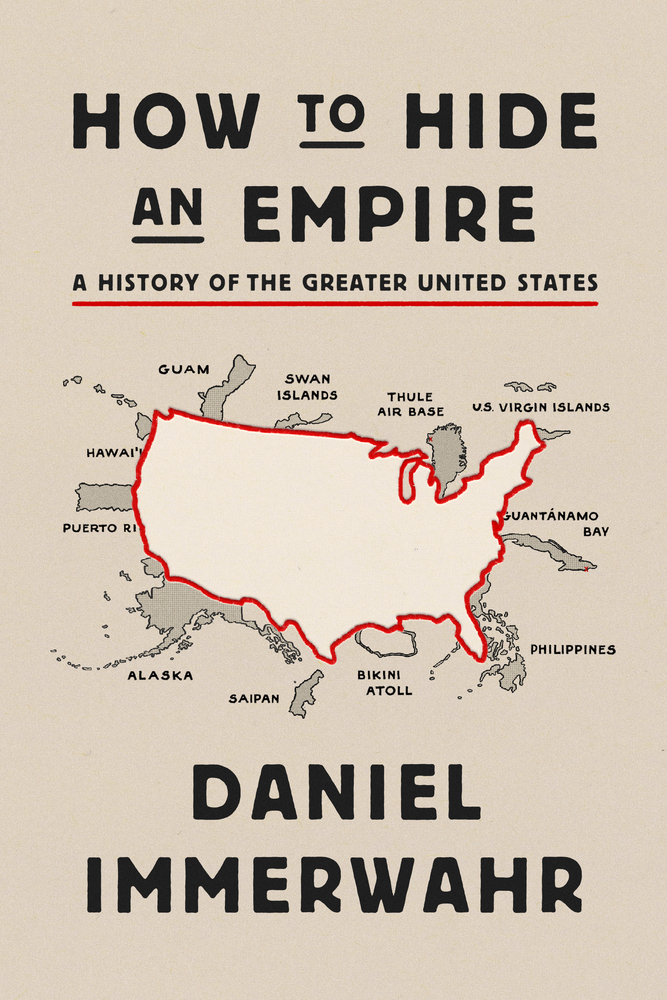
How to Hide an Empire: A History of the Greater United …
A pathbreaking history of the United States' overseas p…
Pioneers, Settlers and Town Planners
The rants and raves of Simon Wardley on Evolution, Technology, Economics and Business

NYC in 1880 (!) '[Martí] recoiled at the mix of commercial materialism and libertarian individualism that he thought was driving the United States toward madness. A nation is not a “wild horse race”; people must be “harnessed together” by something other than self-interest' (from America, América)
