

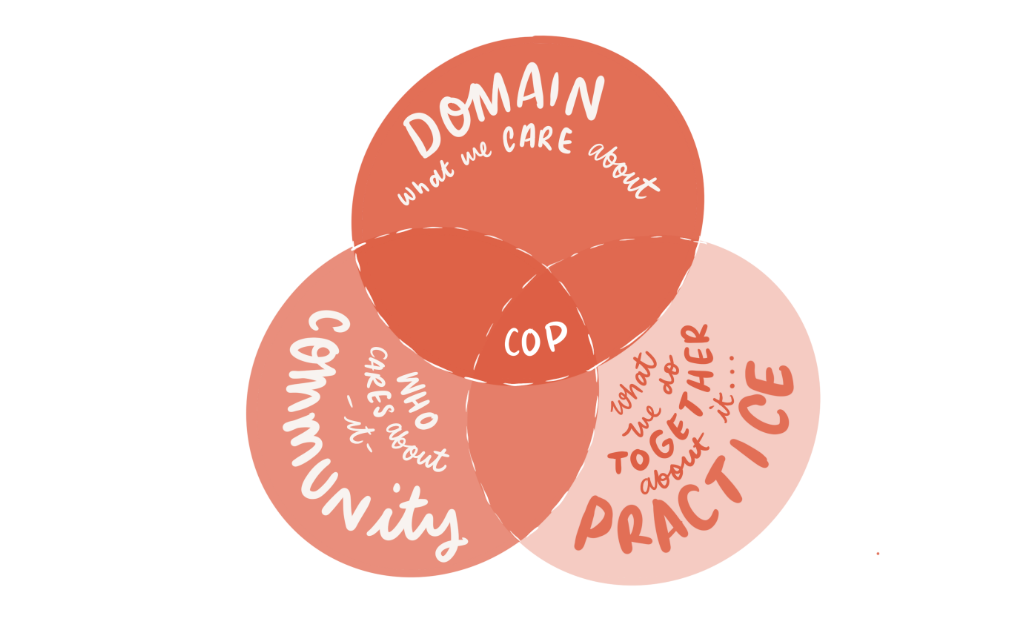
“Learning is not merely the acquisition of knowledge by individuals. It is a process of social participation.” A slightly bastardised…
A model for nesting connected groups with communities of practice
In the new edition of my book, Building Successful Communities of Practice, I share insights into community size and interactions. I've been using this theory with clients to create nested layers that include communities of practice that serve as a model for their organisation.

Community-driven informal adult environmental learning: Using theory as a lens to identify steps toward concientización
This article examines community-driven adult environmental learning in a volunteer watershed stewards program. We look for evidence of elements that portray steps toward “concientización”—the proce...

What Exactly is Acquired During Skill Acquisition? | Request PDF
Request PDF | What Exactly is Acquired During Skill Acquisition? | In this paper we propose that the term skill acquisition, as commonly used in traditional psychology, and the philosophy, education, movement... | Find, read and cite all the research you need on ResearchGate

The power of community learning
It's easy to imagine that some things have to be the way they've always been. That music has to be delivered on a round platter. That an overnight stay needs to be in a hotel. And that le…

How Learning Happens | Seminal Works in Educational Psychology and Wha
How Learning Happens introduces 28 giants of educational research and their findings on how we learn and what we need to learn effectively, efficiently, and

DIY Infrastructure Building for Power – Esther Han Beol Jang
Mastery learning
Mastery learning is an instructional strategy and educational philosophy that emphasizes the importance of students achieving a high level of competence (e.g., 90% accuracy) in prerequisite knowledge before moving on to new material. This approach involves providing students with individualized support and repeated opportunities to demonstrate mastery through assessments. If a student does not initially achieve mastery, they receive additional instruction and support until they do. Mastery learning is based on the idea that all students can learn effectively with appropriate instruction and sufficient time, and it contrasts with traditional teaching methods that often focus on covering a set amount of material within a fixed timeframe, regardless of individual student needs.
Groundings with my Siblings: Lessons Learned Building for Community
I had the privilege of discussing Blacksky and AT Protocol at several different college campuses, conference venues and other settings along with webinars and doing user research. I plan to share those learnings to help others build better products and how we particularly plan to incorporate those learnings from both a product and operations standpoint.
underneath
underneath.study is an offsite and online learning + arts collective dedicated to the principle of generosity as knowledge. situated in the belief of sharing skills, resources, and time, underneath.study and its offerings stem from generosity within and should be as accessible and straightforward as possible. our offerings are built on community and promise a tangible or lyrical artifact at the end to be shared as a token of shared time together, and published in our collective zine publication on a rolling basis.
Peer Production in Citizen Science: A Community-Centered Approach on the Example of Personal Science
Citizen science encompasses a wide range of practices where online collaboration for knowledge production plays a significant role. However, the study of forms of online collaboration other than crowdsourcing in citizen science has remained largely unexplored. This thesis aims to fill this gap by investigating peer production as a form of collaboration in online citizen science communities of practice. First, peer production theory was operationalized as a working model and used to analyze collaboration in citizen science case studies. This was followed by a comprehensive participatory design process for a specific use case involving the personal science community of practice. This process resulted in the creation of the “Personal Science Wiki”, an online space for consolidating community knowledge through peer production. Subsequently, a usability and card sorting study identified and resolved issues with the wiki implementation, and provided insights into mental models and content requirements regarding self-research knowledge. The lessons learned from the participatory design process were generalized as process recommendations for designing peer production solutions and knowledge management systems with communities of practice.
What Good Is ‘Community’ When Someone Else Makes All the Rules? (Published 2018)
Life online can offer us a sense of belonging in any number of virtual villages. But the power to control those spaces isn’t very communal at all.

Shadow Learning: Building Robotic Surgical Skill When Approved Means Fail
I explore here how trainees in a community of practice learn new techniques and technologies when approved practices for learning are insufficient. I do so through two studies: a two-year, five-sited, comparative ethnographic study of learning in robotic and traditional surgical practice, and a blinded interview-based study of surgical learning practices at 13 top-tier teaching hospitals around the U.S. I found that learning surgery through increasing participation using approved methods worked well in traditional (open) surgery, as current literature would predict. But the radically different practice of robotic surgery greatly limited trainees’ role in the work, making approved methods ineffective. Learning surgery in this context required what I call “shadow learning”: an interconnected set of norm- and policy-challenging practices enacted extensively, opportunistically, and in relative isolation that allowed only a minority of robotic surgical trainees to come to competence. Successful trainees engaged extensively in three practices: “premature specialization” in robotic surgical technique at the expense of generalist training; “abstract rehearsal” before and during their surgical rotations when concrete, empirically faithful rehearsal was prized; and “undersupervised struggle,” in which they performed robotic surgical work close to the edge of their capacity with little expert supervision—when norms and policy dictated such supervision. Shadow learning practices were neither punished nor forbidden, and they contributed to significant and troubling outcomes for the cadre of initiate surgeons and the profession, including hyperspecialization and a decreasing supply of experts relative to demand.

Copying Better: How To Acquire The Tacit Knowledge of Experts
Much of expertise is tacit: that is, it cannot be captured through words alone. We look at techniques, drawn from the field of Naturalistic Decision Making, designed to acquire the tacit knowledge of experts.

In pursuit of Cognitive Solidarity
Guest post by Pip Sanderson, National Institute of Teaching (England)
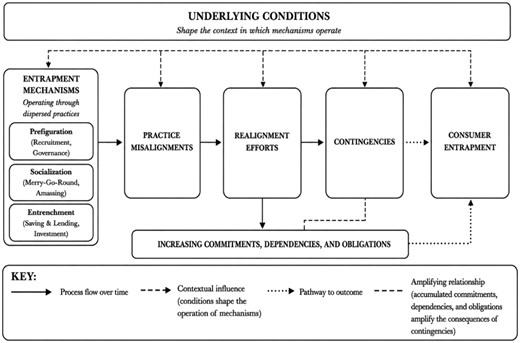
Consumer Entrapment
Abstract Why do consumers sometimes remain trapped in the very practices and communities that once helped them? Consumer practice research has largely emphasized the enabling outcomes of sustained practice participation, with less attention given to how those same practices can become entrapping. This article explores how consumer entrapment emerges within interconnected collective practices. Drawing on an ethnographic study of Chama, a community-based savings and support group in Kenya, it integrates practice theory with Hodder’s theory of entanglement. The study identifies three mechanisms (prefiguration, socialization, and entrenchment) through which participation generates commitments, dependencies, and obligations that produce recurring practice misalignments. Consumers continually work to realign these misalignments, yet under specific conditions, these efforts reproduce the contingencies that sustain participation while progressively deepening entrapment. The findings reveal a central tension: efforts to restore practice alignment can sustain what consumers value while simultaneously reproducing the interdependencies through which consumer entrapment emerges.
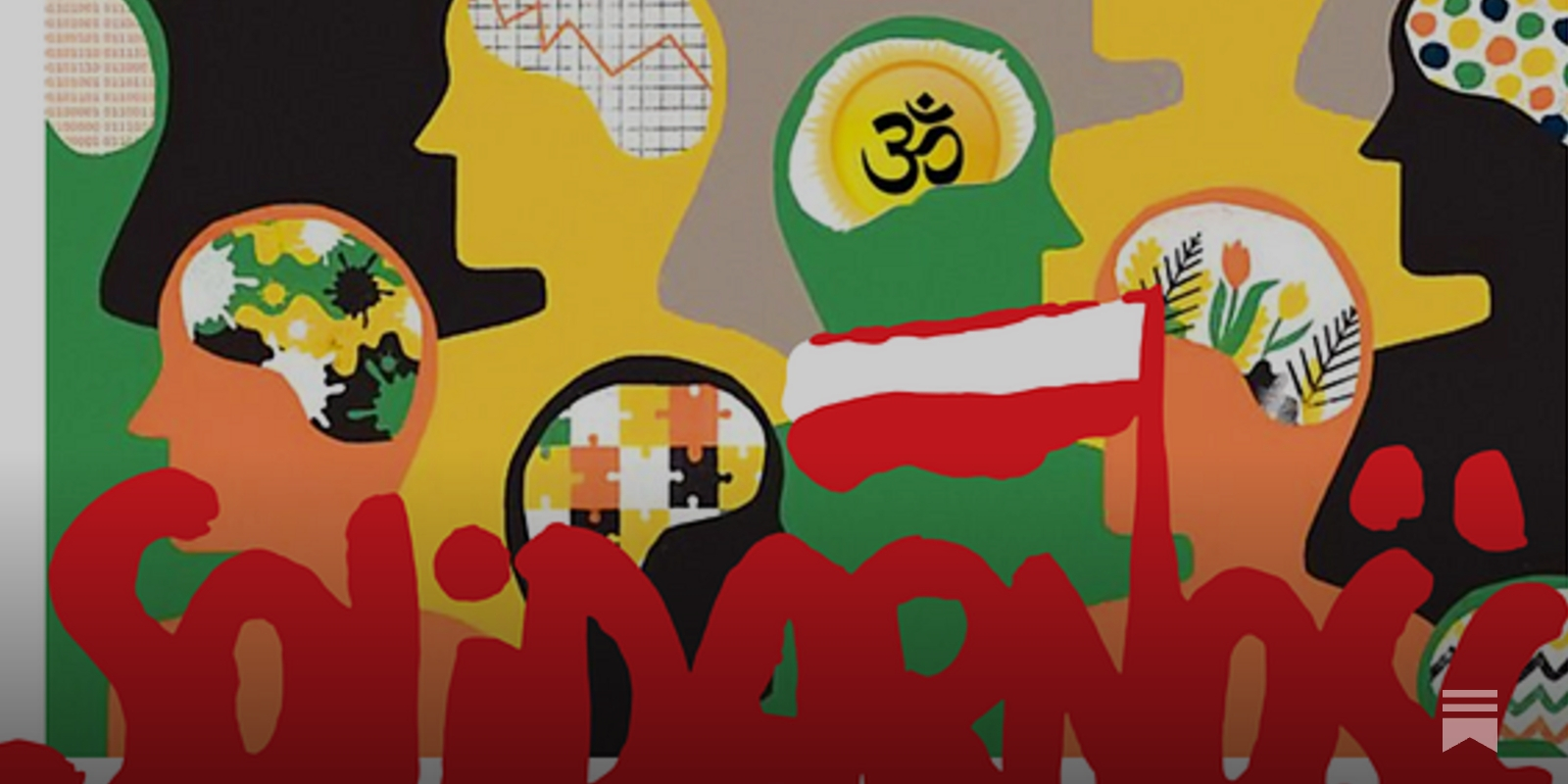
There is something to @benjaminjriley.bsky.social 's ways educators see the "science of learning". I think the SoL is a term more popular in the US. This post could have been the same in the UK as a way educators talk about "cognitive science". buildcognitiveresonance.substack.com/p/the-science-of-learning-tax…

The Science of Learning Taxonomy
buildcognitiveresonance.substack.com