


Our toolkit summarises the existing evidence on approaches to widening participation and student success for disadvantaged and underrepresented groups.
Hypothesis | The #1 Social Annotation Tool for Higher Education
Hypothesis is the leading social annotation platform trusted by 300+ institutions to boost student engagement, comprehension, and critical thinking — seamlessly integrated into your LMS.

Programs Reviewed
Evidence Based Programs seeks to identify social programs related to K-12 education, employment and training, crime preventions, and other key areas of…

Accessibility Beyond Accommodations: A Systematic Redesign of Introduction to Computer Science for Students with Visual Impairments
Computer science education has evolved extensively; however, systemic barriers still prevent students with visual impairments from fully participating. While existing research has developed specialized programming tools and assistive technologies, these solutions remain fragmented and often require complex technical infrastructure, which limits their classroom implementation. Current approaches treat accessibility as individual accommodations rather than integral curriculum design, creating gaps in holistic educational support. This paper presents a comprehensive framework for redesigning introductory computer science curricula to provide equitable learning experiences for students with visual impairments without requiring specialized technical infrastructure. The framework outlines five key components that together contribute a systematic approach to curriculum accessibility: accessible learning resources with pre-distributed materials and tactile diagrams, in-class learning kits with hands-on demonstrations, structured support systems with dedicated teaching assistance, an online tool repository, and psychosocial support for classroom participation. Unlike existing tool-focused solutions, this framework addresses both technical and pedagogical dimensions of inclusive education while emphasizing practical implementation in standard university settings. The design is grounded in universal design principles and validated through expert consultation with accessibility specialists and disability services professionals, establishing foundations for future empirical evaluation of learning outcomes and student engagement while serving as a template for broader institutional adoption.

Information Access of the Oppressed: Freirean Design for Emancipatory Information Access
Online information access (IA) platforms are targets of authoritarian capture. We explore the question of how to safeguard our platforms and ensure emancipatory outcomes through the lens of Paulo Freire's theories of emancipatory pedagogy. Freire's theories provide a radically different lens for exploring IA's sociotechnical concerns relative to the current dominating frames of fairness, accountability, and transparency. We make explicit, with the intention to challenge, the technologist-user dichotomy in IA platform development that mirrors the teacher-student relation in Freire's analysis. By extending Freire's analysis to IA, we critique the technologists-as-liberator frame where it is the burden of (altruistic) technologists to mitigate the risks of emerging technologies for marginalized communities. Instead, we advocate for Freirean Design whose goal is to structurally expose the platform for co-option and co-construction by community members in aid of their emancipatory struggles.
Innovative Time Strategies for Schools | Unlocking Time
Explore free resources about innovative time strategies to fuel student-centered learning in schools -- includes tools, case studies and opportunities to dig deeper.

Study Hacks - Decoding Patterns of Success - Cal Newport
The Study Hacks blog by author and professor Cal Newport - on deep work, success, productivity, work-life balance.
Keynote: Bridging Gaps with Code: Transforming K12 Education with Jupyter Everywhere - I. Martinez
The ICAP Framework: Linking Cognitive Engagement to Active Learning Outcomes
This article describes the ICAP framework that defines cognitive engagement activities on the basis of students’ overt behaviors and proposes that engagement behaviors can be categorized and differ...

Anatomy of an Enduring Gender Gap: The Evolution of Women’s Participation in Computer Science
Given growing interest in computing fields, as well as a longstanding gender gap in computer science, this study used nationwide survey data on college students during 4 decades to: (a) document tr...

DIY Infrastructure Building for Power – Esther Han Beol Jang
Khan Academy Blog
News, updates, and stories from the nonprofit that helps learners, teachers, and districts accelerate learning. Show all Educators ... Read more

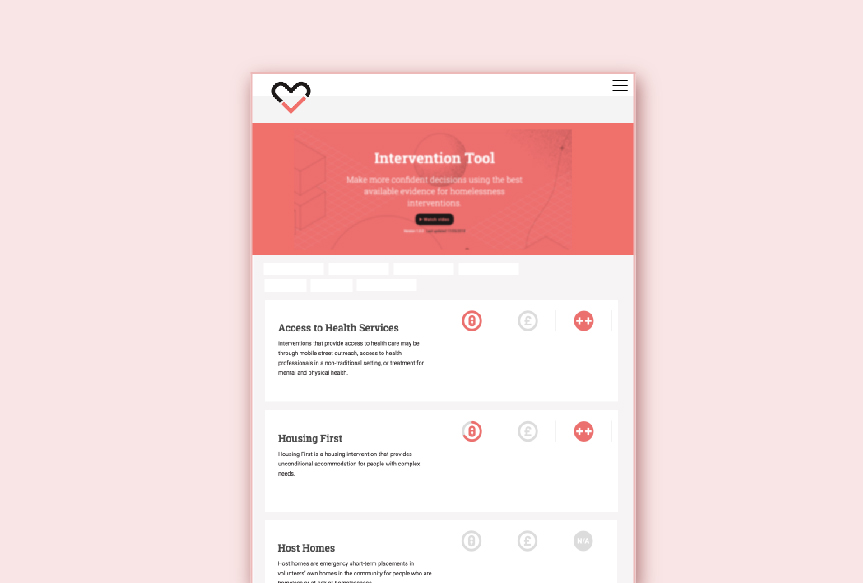
Intervention Tool | Centre for Homelessness Impact
A single, accessible and trusted entry-point to current body of evidence for homelessness interventions. The tool provides one-page overviews of the available evidence, including simple ratings for strength of evidence, cost-effectiveness and impact, as well as detail on what the studies say about each intervention.
Phone-Free Schools Movement | Protecting Student Well-Being
Join the Phone-Free Schools Movement to create healthier, more focused school days. We help schools implement bell-to-bell phone-free policies that boost learning, safety, and student well-being.
A first introduction to data science education in secondary schools: Teaching and learning about data exploration with <span style="font-variant:small-caps;">CODAP</span> using survey data
Abstract In this paper, we will describe an introduction to Data Science for secondary school students. We will report on the design and implementation of an introductory unit on “Data and data detectives with CODAP” in which secondary school students used the online tool CODAP to explore real and meaningful survey data on leisure time activities and media use (so‐called JIM‐PB data) in a statistical project setting as a starting point for data science. The JIM‐PB data set served as a valuable data set that offered meaningful and exciting opportunities for data exploration for secondary school students, and CODAP proved to be a valuable tool for the first explorations of this data.

We will discuss this paper in the civic participation journal club. Cannot wait to read it at lunchtime tomorrow🍎

Brihi Joshi
Reasoning about the "why" behind user behavior can improve LLM personas! ✨🧠📈 📝Excited to share our new work: Improving LLM Personas via Rationalization with Psychological Scaffolds 🔗 arxiv.org/abs/2504.17993 🧵 (1/n)
Participatory Action Research

A bunch of us are learning about how to convene and facilitate Participatory Action Research. This is an unorganized reading list of the best resources, references, etc we can find to school up on frameworks and approaches.
ParticipatoryEcosystem

Ronen Tamari (@ronentk.me)
