

AI-authored Lean mathematics, directed by a human-owned roadmap and gated by open, adversarial review.
When AI Writes the World's Software, Who Verifies It? — Leonardo de Moura
Leonardo de Moura — Creator of Lean and Z3
AI co-mathematician: Accelerating mathematicians with agentic AI
We introduce the AI co-mathematician, a workbench for mathematicians to interactively leverage AI agents to pursue open-ended research. The AI co-mathematician is optimized to provide holistic support for the exploratory and iterative reality of mathematical workflows, including ideation, literature search, computational exploration, theorem proving and theory building. By providing an asynchronous, stateful workspace that manages uncertainty, refines user intent, tracks failed hypotheses, and outputs native mathematical artifacts, the system mirrors human collaborative workflows. In early tests, the AI co-mathematician helped researchers solve open problems, identify new research directions, and uncover overlooked literature references. Besides demonstrating a highly interactive paradigm for AI-assisted mathematical discovery, the AI co-mathematician also achieves state of the art results on hard problem-solving benchmarks, including scoring 48% on FrontierMath Tier 4, a new high score among all AI systems evaluated.

Palomar – a registry of Lean verified mathematics
In recent months there has been a proliferation of AI-generated proofs of various old and new results, some of which have been formalized in the proof assistant language Lean. However, checking tha…

OpenAI’s math breakthrough played to AI’s strengths
I tried to explain OpenAI’s solution more clearly than OpenAI did.
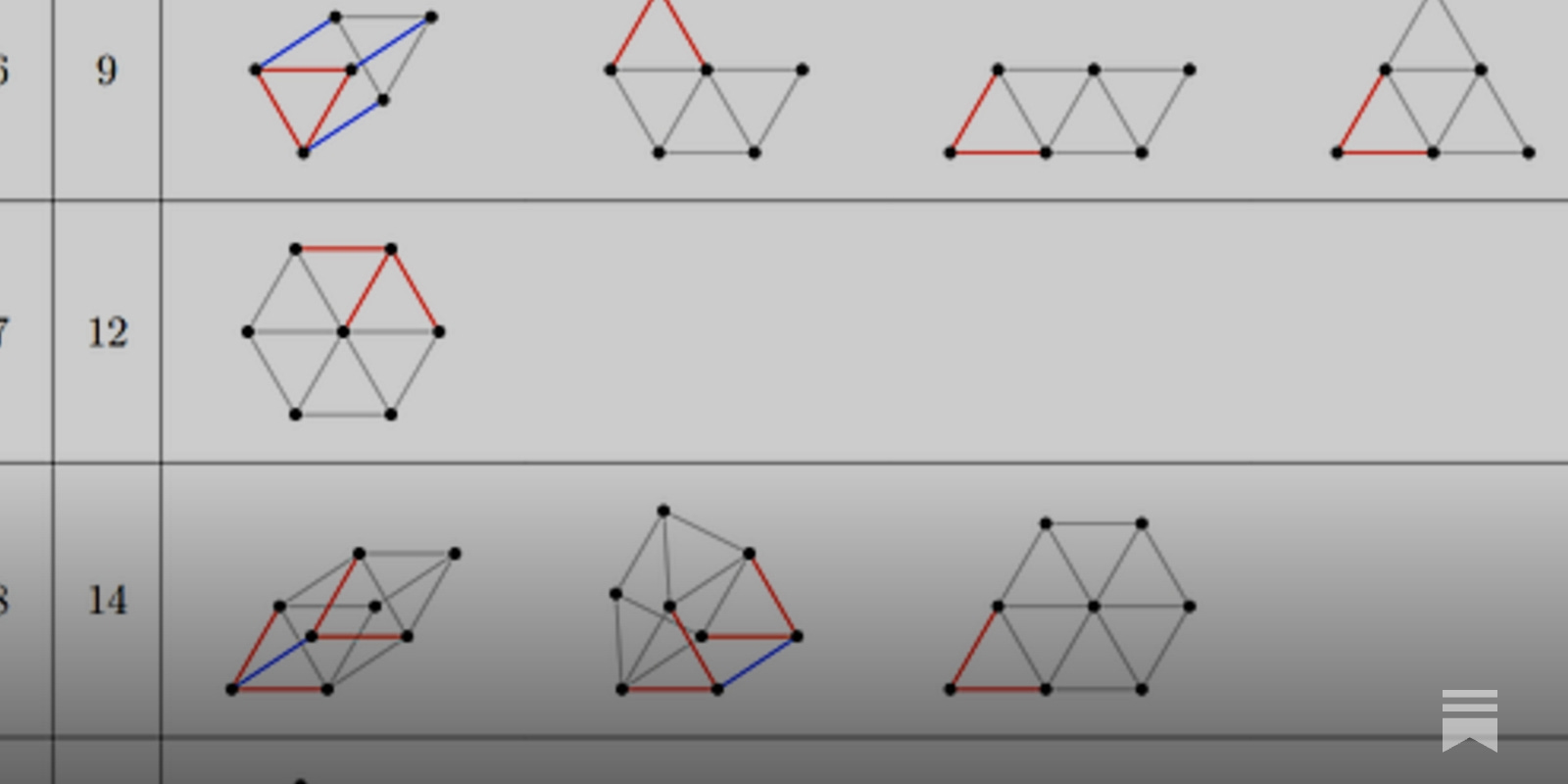
Thomas Wolf on Twitter / X
Very thoughtful piece from Kevin Buzzard (perfect IMO score, number theorist, pioneer of formal maths in Lean)if math is not just about “human understanding,” then what is it about?and if ai capabilities keep growing exponentially what happens since “mathematics is infinite”? https://t.co/h7yYmZS01T pic.twitter.com/wFp2fec52Q— Thomas Wolf (@Thom_Wolf) October 2, 2026

No. 020: Astra solves ten open math problems, AI agents fail at open-ended research, peer review under strain - The Hallway Track
The Hallway Track No. 020 - How AI is affecting the practice of science
Itai Yanai on Twitter / X
Unpopular opinion: Going straight to AI limits your creatively, because it short-circuits the iterative process you need to develop new ideas. pic.twitter.com/O2iPs0bfh0— Itai Yanai (@ItaiYanai) June 20, 2026

Olmo 3: Charting a path through the model flow to lead open-source AI | Ai2
Our new flagship Olmo 3 model family empowers the open source community with not only state-of-the-art open models, but the entire model flow and full traceability back to training data.

Accelerating Scientific Research with Gemini: Case Studies and Common Techniques
Recent advances in large language models (LLMs) have opened new avenues for accelerating scientific research. While models are increasingly capable of assisting with routine tasks, their ability to contribute to novel, expert-level mathematical discovery is less understood. We present a collection of case studies demonstrating how researchers have successfully collaborated with advanced AI models, specifically Google's Gemini-based models (in particular Gemini Deep Think and its advanced variants), to solve open problems, refute conjectures, and generate new proofs across diverse areas in theoretical computer science, as well as other areas such as economics, optimization, and physics. Based on these experiences, we extract common techniques for effective human-AI collaboration in theoretical research, such as iterative refinement, problem decomposition, and cross-disciplinary knowledge transfer. While the majority of our results stem from this interactive, conversational methodology, we also highlight specific instances that push beyond standard chat interfaces. These include deploying the model as a rigorous adversarial reviewer to detect subtle flaws in existing proofs, and embedding it within a "neuro-symbolic" loop that autonomously writes and executes code to verify complex derivations. Together, these examples highlight the potential of AI not just as a tool for automation, but as a versatile, genuine partner in the creative process of scientific discovery.
Dario Amodei — Machines of Loving Grace
How AI Could Transform the World for the Better

Dario Amodei — Machines of Loving Grace
How AI Could Transform the World for the Better
I’ll write romance novels if AI solves all maths, Chinese Fields winner jokes
As AI models prove they can push the boundaries, mathematicians are grappling with the threat that they could become obsolete.

No. 008: AI co-mathematician, compiler-verified protocols, open infrastructure bets - The Hallway Track
The Hallway Track No. 008 - How AI is affecting the practice of science
The Jagged AI Frontier

The nonintuitive strengths and weaknesses of AI performance relative to human performance, and how it is changing over time.
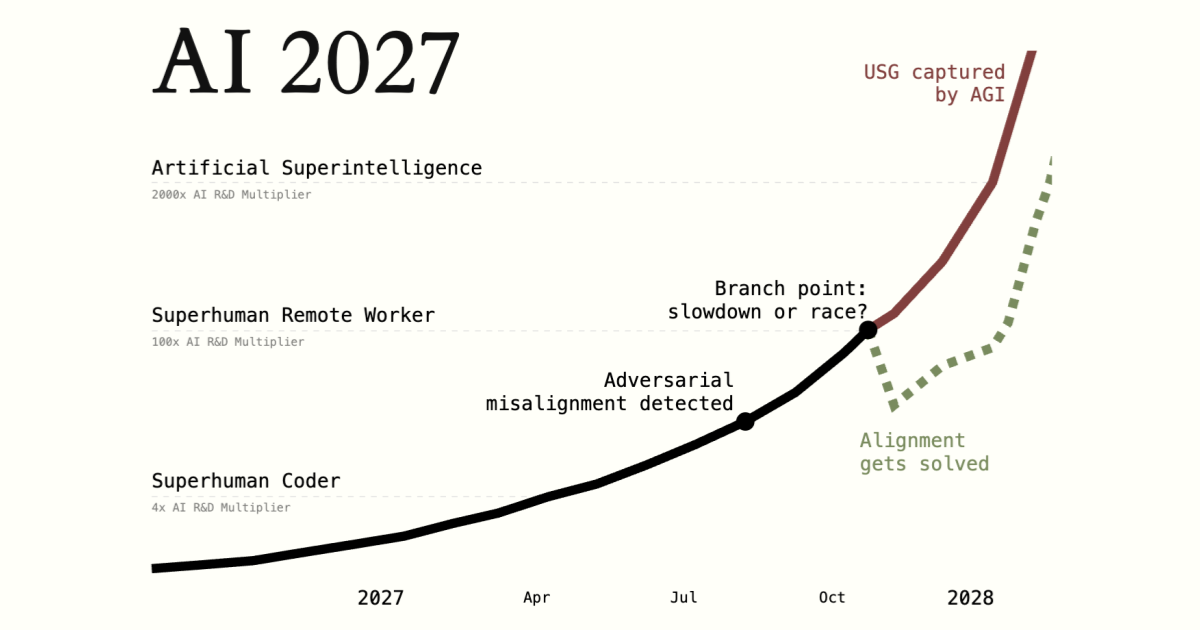
AI 2027
What will be left for us to work on?
OpenAI and Hugging Face partner to address security incident during model evaluation

Taking more seriously the claim that recent ML models do not "reason", it still is quite odd the particular ways that superhuman game-playin…
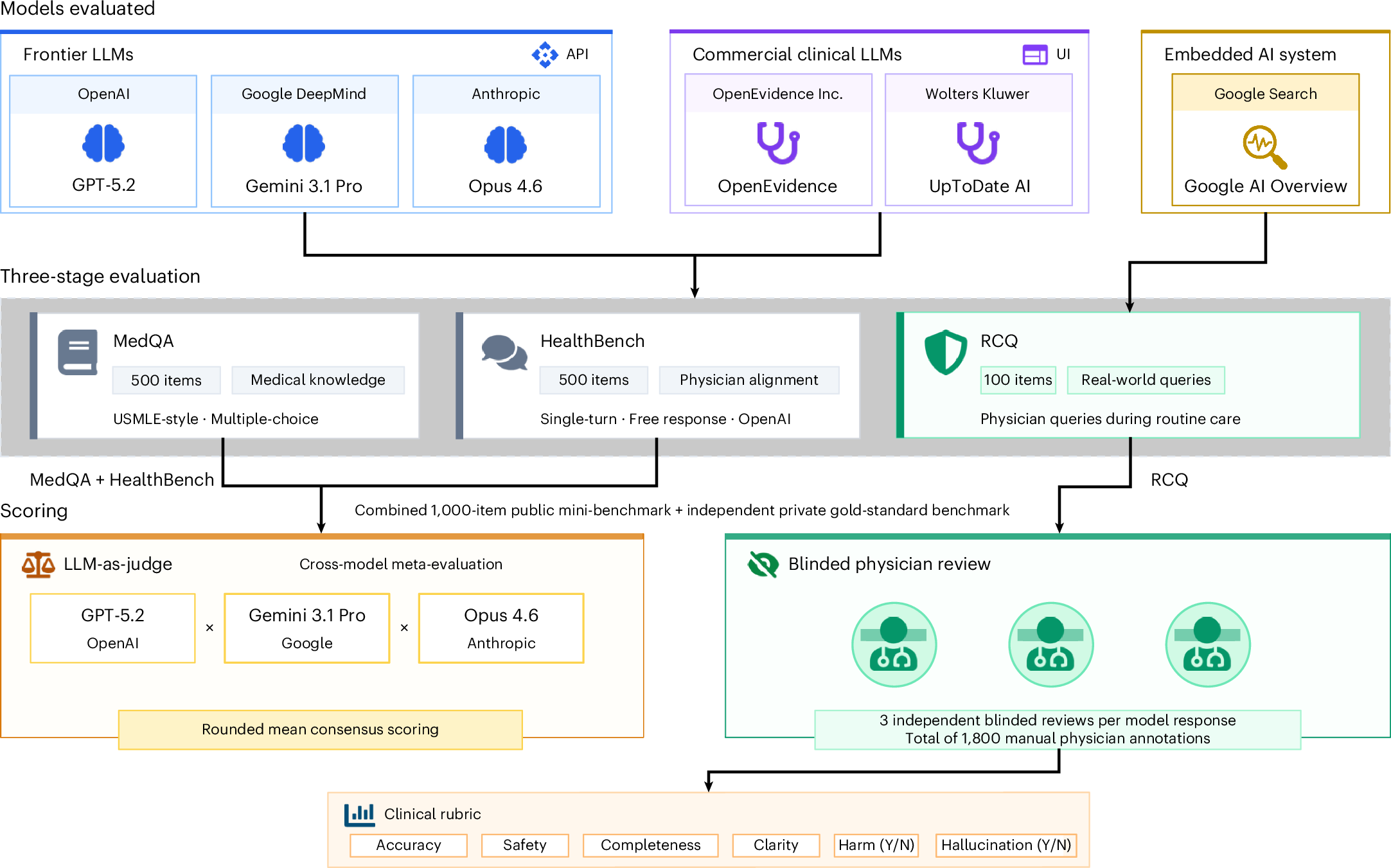
General-purpose large language models outperform specialized clinical AI tools on medical benchmarks
StoryScope: Investigating idiosyncrasies in AI fiction