

••• •• ••• •• •••
physics as a game loop. part 1: objects and waves - underreacted
Google Wave Developer Preview at Google I/O 2009
nLab
particle, relativistic particle, fundamental particle, spinning particle, superparticle
Sine, Saw, Square, Triangle, Pulse: Basic Waveforms in Synthesis and Their Properties
Learn the properties of 5 basic waveforms in sound synthesis to use their full potential in your synthesizer performance or design.
Wave: Small Business Software - Wave Financial
Create beautiful invoices, accept online payments, and make accounting easy—all in one place—with Wave’s suite of money management tools.

Interstellar medium
The interstellar medium (ISM) is the matter and radiation that exists in the space between the star systems in a galaxy. This matter includes gas in ionic, atomic, and molecular form, as well as dust and cosmic rays. It fills interstellar space and blends smoothly into the surrounding intergalactic medium. The energy that occupies the same volume, in the form of electromagnetic radiation, is the interstellar radiation field. Although the density of atoms in the ISM is usually far below that in the best laboratory vacuums, the mean free path between collisions is short compared to typical interstellar lengths, so on these scales the ISM behaves as a gas, responding to electromagnetic radiation, and not as a collection of non-interacting particles.

Ernst Chladni
Ernst Florens Friedrich Chladni was a German physicist and musician. His most important work, for which he is sometimes labeled the father of acoustics, included research on vibrating plates and the calculation of the speed of sound for different gases. He also undertook pioneering work in the study of meteorites and is regarded by some as the father of meteoritics.

experiments/second-sky/README.md at main · oaustegard/experiments
Random vibe-experiments. Contribute to oaustegard/experiments development by creating an account on GitHub.
Solar Symphony: Listening to the Sun's hidden "music"
What sound can teach us about our Sun? In this episode, we explore how NASA scientists translate electromagnetic waves from the Sun into sound, and even music. Through this process, researchers are gradually unlocking the Sun's secrets, from the steady \"hum\" of the star's rotation, to the way that solar winds \"play\" the Earth's magnetosphere like a harp. This story comes from the podcast NASA's Curious Universe, and features Host and Astrophysicist Padi Boyd, Sonification Specialist Robert Alexander and Heliophysicist Mike Hartinger. Explore the all new Defacto Sound website, and click the Contact Form to get in touch.If you know what this week's mystery sound is, tell us at mystery.20k.org.Follow Dallas on Instagram, TikTok, YouTube and LinkedIn.Join our community on Reddit and follow us on Facebook.Subscribe to NASA's Curious Universe wherever you get your podcasts.Get 50% off your first meal box plus free shipping at factormeals.com/factorpodcast.Get an exclusive 60% discount on Incogni and a 30-day money-back guarantee at incogni.com/20k.Claim your $75 sponsored job credit at indeed.com/hertz.Download the CFO's Guide to AI and Machine Learning at netsuite.com/20k.Learn more about your ad choices. Visit megaphone.fm/adchoices
The Brain Wave Collective | Meetup
The **Brain Wave Collective** is a member-owned community focused on learning, growth, and shared successes. We are pioneers who build with the latest AI & ML technologies, but you don't need to be a technologist to participate. All skills and backgrounds are necessary.Join us to level up and build

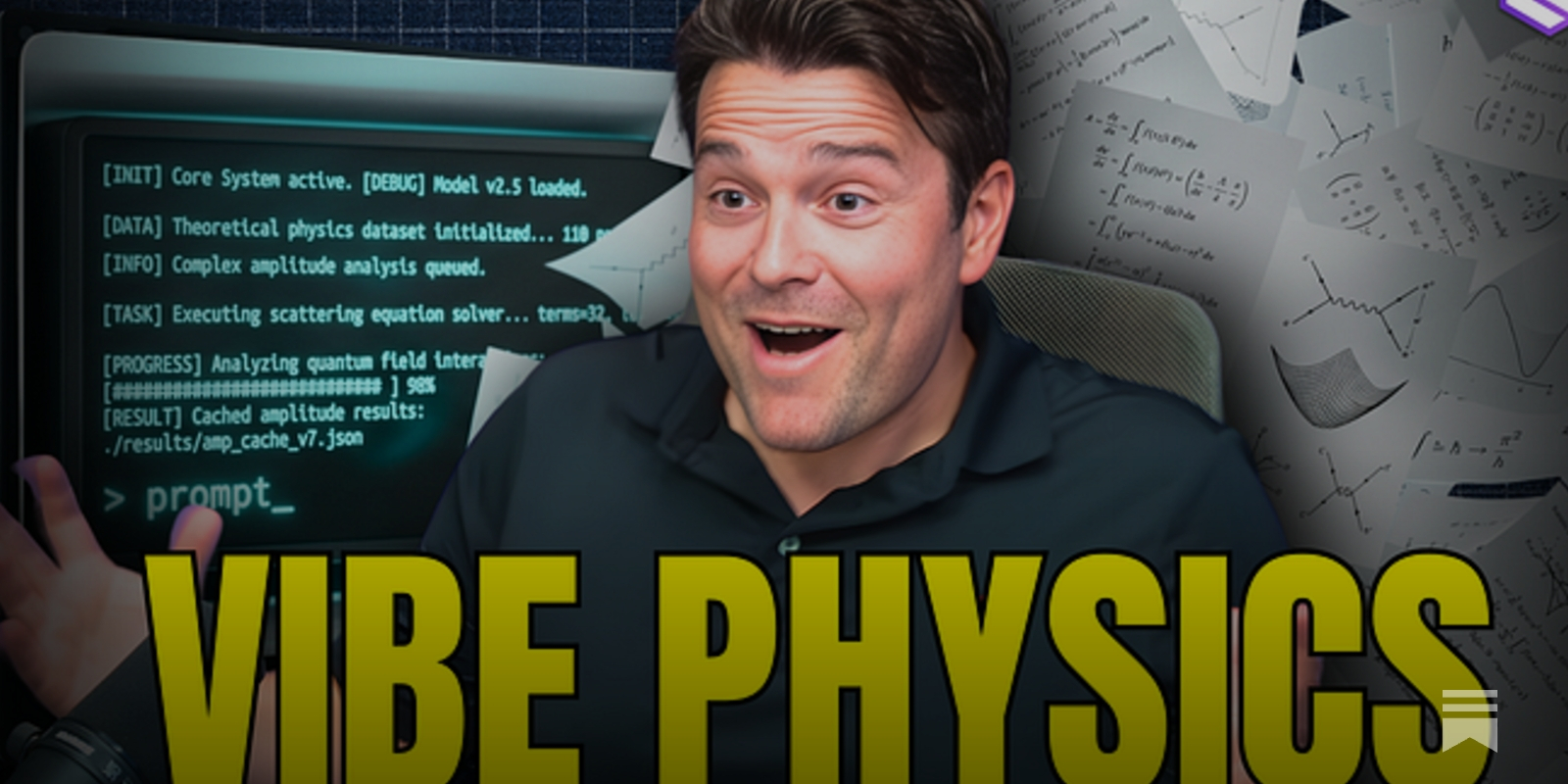
🔬Doing Vibe Physics — Alex Lupsasca, OpenAI
The full story of how GPT‑5.x derived new results in theoretical physics and quantum gravity.
Are Electrons Real?
A deceptively simple question spurred an exploration of physicists’ views on whether their theories describe reality.

WAVE Web Accessibility Evaluation Tools
WAVE® is a suite of evaluation tools that helps authors make their web content more accessible to individuals with disabilities. WAVE can identify many accessibility and Web Content Accessibility Guideline (WCAG) errors, but also facilitates human evaluation of web content. Our philosophy is to focus on issues that we know impact end users, facilitate human evaluation, and to educate about web accessibility.
Published work: ocean journalist Melissa Hobson, the Ocean Writer
As an ocean journalist, I've written about all sorts of fascinating things going on beneath the waves. Read some of my published work here.
Permacomputing, conservation & indigenous ways

Permaculture-aligned process in art, technology, and design.

Oberth effect

Mottainai
Thinning