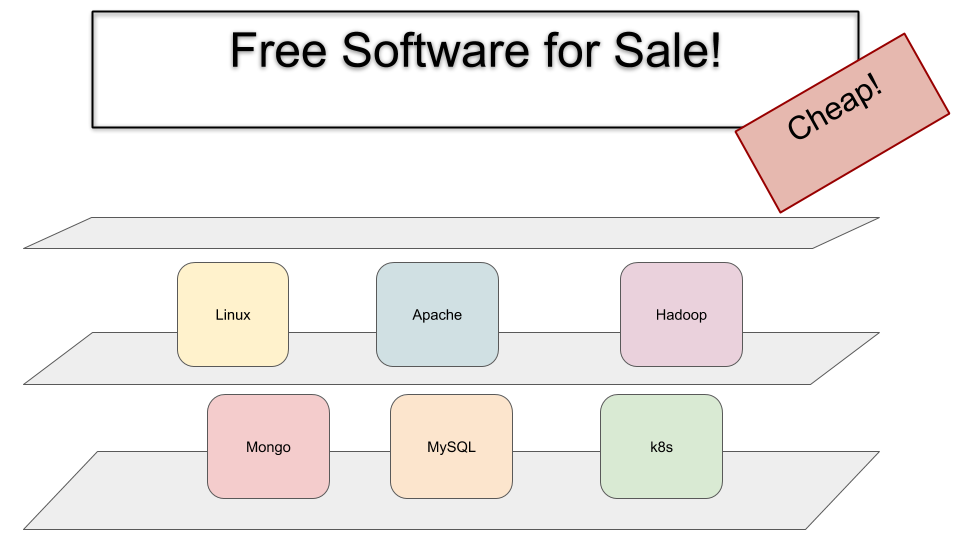
I like to envision businesses as manufacturing machines. You put something in one end and then it goes through all these defined processes of the business and then it comes out the other end as profit (or not). Depending on how those processes work, you get something different out the backend. The manufacturing machine analogy makes sense to me because it's easier to see why you should always be working on the business, not in the business.
There is NO Open Source Business Model
Preface: It has been brought to my attention by friends and trusted advisors that a valid interpretation of my point below is that open…

Revenue Models (2026): 19 Different Ways to Make Money [B2B & B2C] - Gust de Backer
So many different revenue models... But, which one fits your business? Over the past few decades, many new revenue models have proven to be profitable. That's why I'm going to show you 16 different revenue models so you can evaluate if there might be a better way to monetize the value you deliver to your customer. Let's start... What is…

Project vs. Product, Startup vs. Business
A couple of weeks ago I dropped into a thread by Mosh Lee, about how ATproto has too many projects and too few businesses. Yes!
Business Model Innovation - an overview | ScienceDirect Topics
The Open Source Distributor Business Model
Dirk Riehle, dirk@riehle.org, Published in Computer vol. 54, no. 12 (December 2021), pp. 99-103. Abstract This article defines and discusses one particular commercial open source business model, ca…

45 patterns to support sustainable business model innovation
Our new study presents a comprehensive and up-to-date overview of presently known business model patterns that hold the potential to contribute to the diffusion of ecologically and socially benefic…

Will capitalism end capitalism? | Steve Loftus | The Critic Magazine
Imagine waking up one morning to discover your job still exists, but your services are no longer required. The work is being done, just not by you, not by anybody. Somewhere, a machine is doing it…
Business Model Pattern List |
Discover powerful business model patterns by iconic firms and learn how you can leverage them for new insights for your own business model innovation initiatives.
Making Business Personal
Business can be a form of activism, art, spirituality, and creative expression.

The rise of industrial software | Chris Loy
> _**Industrial**_ > > _adj. (sense 3a)_ > > Of or relating to productive work, trade, or manufacture, esp.

Replacing Middle Management with APIs by Peter Reinhardt
There’s a trend in Silicon Valley startups to create a software layer in industries that were traditionally pure human services. Uber and Lyft have created software layers in the taxi industry, 99designs Tasks in the visual design industry, Homejoy in the cleaning industry, and so on. These new software services employ armies of human workers, optimizing their output, productivity and quality while driving price down.
Customer Operations Platform for Sales Teams | Front
Front unifies sales teams and support workflows, giving revenue teams shared visibility, automation, and control in one workspace.
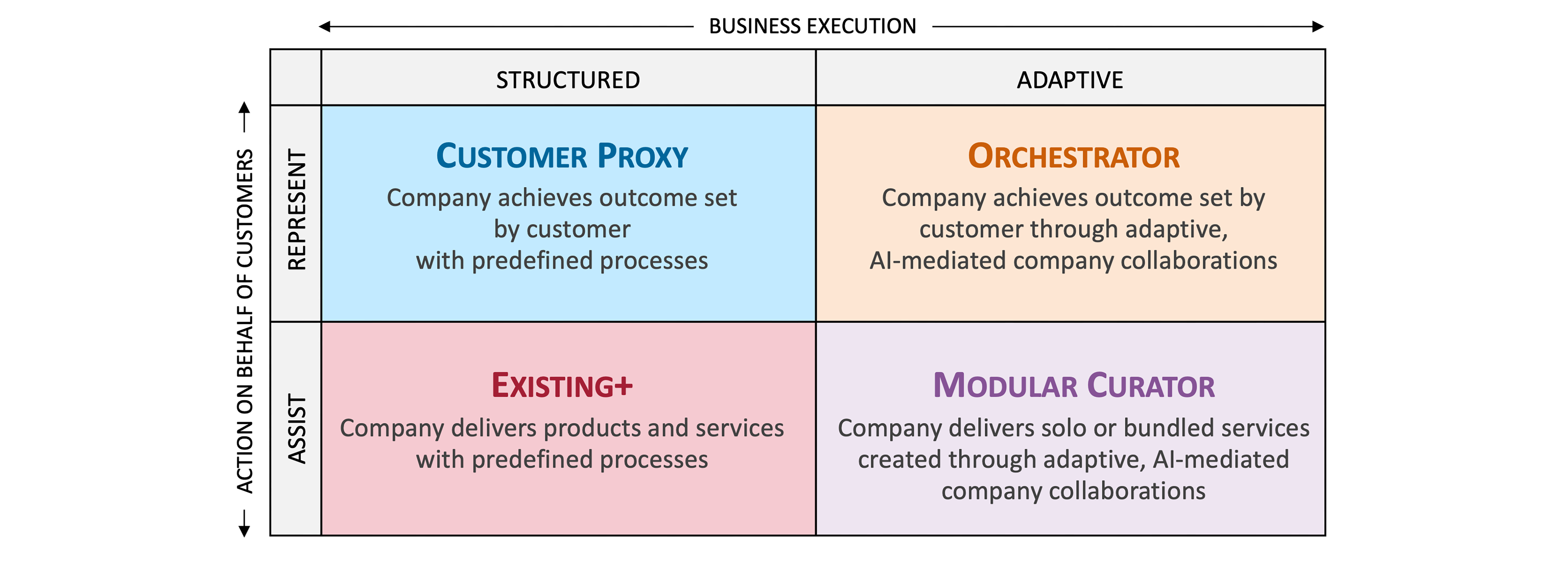
Business Models in the AI Era
MIT CISR anticipates that rapid advancements in AI will drive business model evolution over the next decade, and we propose that business models in the AI era will become increasingly outcome oriented and enabled by autonomous AI. In this briefing, we draw on our research from 2013 to 2025 involving 2,378 companies to describe how digital business models have developed over the last twelve years, and introduce a framework for AI-driven, real-time business models. We illustrate how companies have begun exploring these new business models with a case study of One New Zealand.
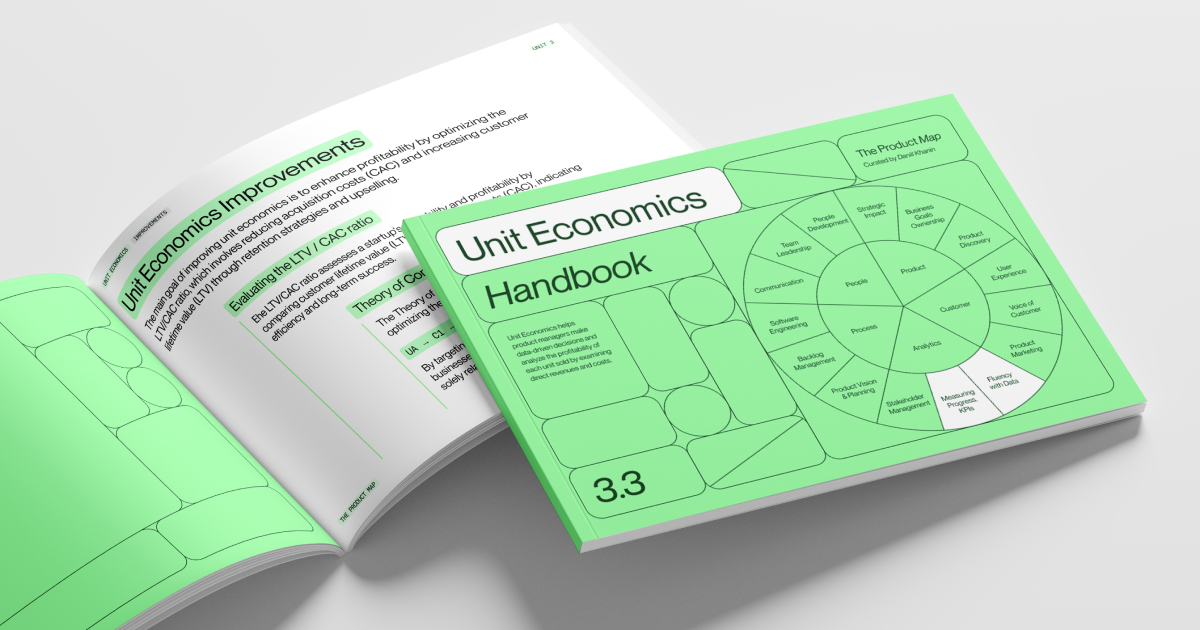
Unit Economics Handbook | Product Map
The Product Map Handbook is a valuable resource for product managers and entrepreneurs, offering practical insights into calculating and optimizing financial metrics across various business models. This comprehensive guide features the Unit Economics Canvas, a structured tool for analyzing and improving the profitability of business units.
Why we choose profit
We’re outspoken about running a profitable company in an industry that so often eschews profits for potential. So why? People ask us why all the time. Why choose profit? So I thought I’d detail som…