

We demand a world in which technology is created to protect and empower those who are impacted by it. Our technology must respect the rights and freedoms of those users. We need to take control for the purpose of collectively building a better world in which technology works in service to the good of human kind, protecting our rights and digital autonomy as individuals.
Reclaim Control | over your technology, your devices, your data, your digital life.
You have the right to control your data, devices, and services. We coordinate, develop and foster communities of Reclaimers who want digital independence. Together, let's reclaim the right to a technical future of data sovereignty, digital autonomy, responsible governance, and collective care online for all.
Interoperable Sovereignty: The Democratic Alternative to Digital Authoritarianism
A Democratic Architecture for the Digital Age Digital sovereignty has become a central concern for governments worldwide, yet its meaning remains contested. Too often it is framed as...

Digital Sovereignty
The term “digital sovereignty” has become an integral part of current political discourse. Across party lines and administrative levels, there is consensus: Being digitally sovereign is desirable and important. However, it often remains unclear what it actually means to be digitally sovereign and how this desirable state should be achieved.
Sovereignty and Landscape | Simon Wardley | 15 comments
X : What is digital sovereignty? Me : I was asked that question by some friends within Government at the beginning of this month. I know some have been working on the idea, which is very encouraging, but I gave my tuppence worth of a definition. "Digital sovereignty is a country's ability to make its own decisions about the technology it uses, the data it creates, and how digital systems work in service of its people rather than being forced to accept choices made by other entities. This requires continuous situational awareness of the economic and technological landscape to anticipate changes, maintain strategic advantage, and shape international digital norms. Digital sovereignty is achieved through strategic control over critical digital assets and relationships, extending from public sector systems to the broader digital ecosystem affecting citizens and economic interests." The key is choice. You are sovereign if you retain the ability to make your own decisions rather than being forced to accept the decisions of others. This doesn't mean you need to own the entire tech stack, or all the data but you do need to maintain control over critical assets and relationships. This can be achieved by many means not just by conflict with others but through co-operation and collaboration (i.e. all the forms of competition matter). You also can consciously compromise, accepting some loss of sovereignty in one space to gain sovereignty in another. Anyway, I quite like the Mike Bracken description https://lnkd.in/eFjzcAdr "Digital sovereignty is the agency and capacity of any organisation to make intelligent, informed choices to shape its digital future by design". I used to do a lot of work on sovereignty many years ago, so if you want to know more about my view and how to achieve this, well I have a series of hopefully useful but somewhat introductory posts. Sovereignty and Landscape https://lnkd.in/eku2X_Ea Societal versus Market benefit https://lnkd.in/eXxkCv-K Whose interests are you serving? https://lnkd.in/eAgHS5wc | 15 comments on LinkedIn

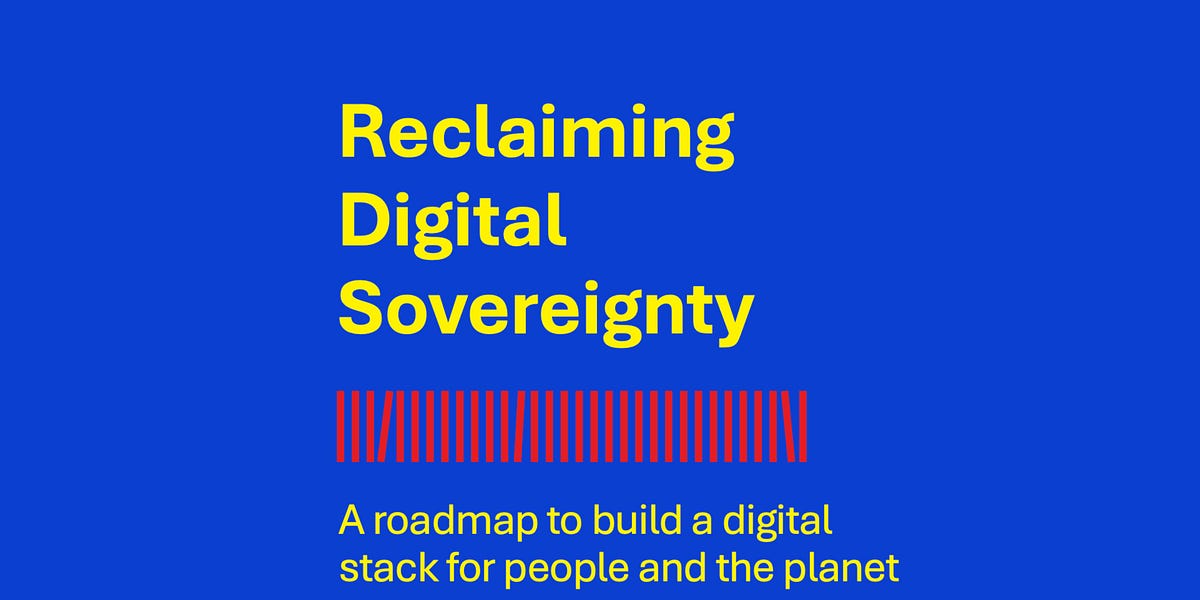
Why we must reclaim digital sovereignty
A new white paper envisions a radically different technological future
Protecting civilians in a data-driven and digitalized battlespace: toward a baseline humanitarian technology infrastructure
This article examines the realities of modern day warfare, including a rising trend in hybrid threats and irregular warfare which employ emerging technologies supported by digital and data-driven processes. The way in which these technologies become applied generates a widened battlefield and leads to a greater number of civilians being caught up in conflict. Humanitarian groups mandated to protect civilians have adapted their approaches to the use of new emerging technologies. However, the lack of international consensus on the use of data, the public and private nature of the actors involved in conflict, the transnational aspects of the widened battlefield, and the heightened security risks in the conflict space pose enormous challenges for the protection of civilians agenda. Based on the dual-usage aspect of emerging technologies, the challenges associated with regulation and the need for those affected by conflict to demonstrate resilience toward, and knowledge of, digital media literacy, this paper proposes the development of guidance for a "minimum basic technology infrastructure" which is supported by technology, regulation, and public awareness and education

The Digital Life Collective
The Digital Life Collective is an enabler. If you think we should be doing something we're not currently doing, we're here to help you and your project make the change you want to see in the world.
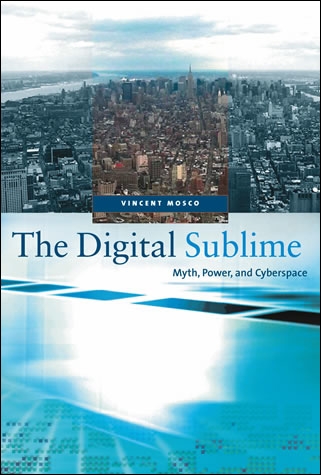
The Digital Sublime: Myth, Power, and Cyberspace
Interpreting the myths of the digital age: why we believed in the power of cyberspace to open up a new world.The digital era promises, as did many other te
Home — Digital Independence Day
An jedem ersten Sonntag im Monat veranstalten wir den Digital Independence Day. Wir holen uns unser freies digitales Leben zurück und wechseln zu demokratiefreundlichen digitalen Alternativen.

Decolonising Global Digital Transformation
Brigada Digital - Início
Somos uma organização com o objetivo de remover o controle proprietário nas tecnologias da informação de trabalhadores, militantes e organizações conscientes do conflito de classes, implementando software livre, proporcionando melhores condições de ação na luta pela superação da exploração social. Nossa luta é livrar a classe trabalhadora dos controles implantados pelas grandes empresas de tecnologia.
'Technology Freedom Cooperative' To Build Infrastructure for Human Rights and Justice Groups
A conversation with Maheen Khan, director of technology at the Invisible Institute, and Patrick Ball, director of research at HRDAG.

Digital Degrowth: Radically Rethinking our Digital Futures
We are fast approaching the point of “peak digital”, with the continued mass production and excessive consumption of digital technologies set to become a key driver of climate crisis, ecological breakdown and ongoing societal instability.<br /> <br /><i>Digital Degrowth</i> is a call to completely rethink our digital futures in these fast-changing times. It explores how degrowth thinking and alternate forms of “radically sustainable computing” might support ambitions of sustainable, scaled-down and equitable ways of living with digital technologies. Neil Selwyn proposes a rebalancing of digital technology use: digital degrowth is not a call for simply making reduced use of the digital technologies that we already have – rather it is an argument to reimagine digital practices that maximise societal benefits with minimal environmental and social impact. Drawing on illustrative examples from across computer science, hacker and environmental activist communities, this book examines how core degrowth principles of conviviality, autonomy and care are already being used to reimagine alternate forms of digital technology.<br /> <br />Original and stimulating, this is essential reading for students and scholars of media and communication, sustainability studies, political ecology, computer/data sciences, and across the social sciences.

Role of digitalization in environment, social and governance, and sustainability: Review-based study for implications
Digitalization gives people access to a vast network of untapped data, which has the potential to help society and the environment. Smart systems connected to the internet can systematically provide a unique opportunity to solve difficulties related to long-term sustainability. The goals are to create an egalitarian, ecologically sustainable, and healthy society. Technological resources are envisioned as game-changing instruments. Three key concerns integration benefits are highlighted here: (i) sustainable development goals, (ii) socio-economic development, and (iii) the role of digital technology in environmental sustainability. This viewpoint describes the potential that digitization can create a future sustainable society. The technological network would unite the urban and rural worlds under a shared banner of sustainable development, keeping all social elements in the loop. Nations that take a comprehensive strategy will be able to provide equitable growth and an efficient, sustainable, and digital existence for their citizens. As a result, digitization provides better living conditions, active public involvement, clean governance, and transparency in public welfare programs and processes. People who are well-informed, self-aware, and digitally equipped will be better learners, thinkers, reformers, participators, and change and growth agents, marching forward on sustainable progress. The advantages of digitization in hastening the transition to sustainable industrial processes and improving people's health and happiness are explored. Finally, the perspective encapsulates the advantages of digitization by offering a holistic vision of how technology could aid in addressing major challenges such as endangered world biodiversity and climate change.

Digital Sovereignty: A Framework to improve digital readiness of the Government of Canada
The Government of Canada (GC) must be able to manage and protect its data, systems and infrastructure to operate securely and independently in a globally connected environment. This paper explains what digital sovereignty means for the GC and how it informs the management of government digital operations. Broader issues such as Canada’s economic, industrial, or national security interests are out of scope of this paper.
Governable Stacks against Digital Colonialism
Critics have been converging around the logic of colonialism to describe the Internet economy. If we are serious about the laden language of the colonial, we should be ready to learn from struggles against pre-digital empires and colonial regimes. Although acts of insurrection may attract more attention, one thing leaders and theorists of anticolonial resistance have stressed persistently is the centrality of self-governance in everyday life as both a means and end of their movements. But the dominant platforms for online communities are not well-suited for durable self-governing. Resistance often relies on the same colonial firms it opposes. What would community-governed technologies look like? This paper introduces the concept of “governable stacks”, a framework for self-governing as resistance to digital colonialism.