


Startup Scrible is launching its rich web annotation tool to the public today. Scrible is also announcing that it has received a $500,000 grant from the National Science Foundation (NSF). The service's bookmarklet allows users to save and organize web pages and richly annotate articles with highlighters and sticky notes. You can also share annotated web pages with others. All of your saved web annocations are stored within your Scrible account and the startup will index this so your can search and filter through your saved content.
Dweb: Social Feeds with Secure Scuttlebutt – Mozilla Hacks - the Web developer blog
Scuttlebutt is a free and open source social network with unique offline-first and peer-to-peer properties. Mainstream closed platforms have become a more popular way of creating and consuming content than ...

Jared Goering on Twitter / X
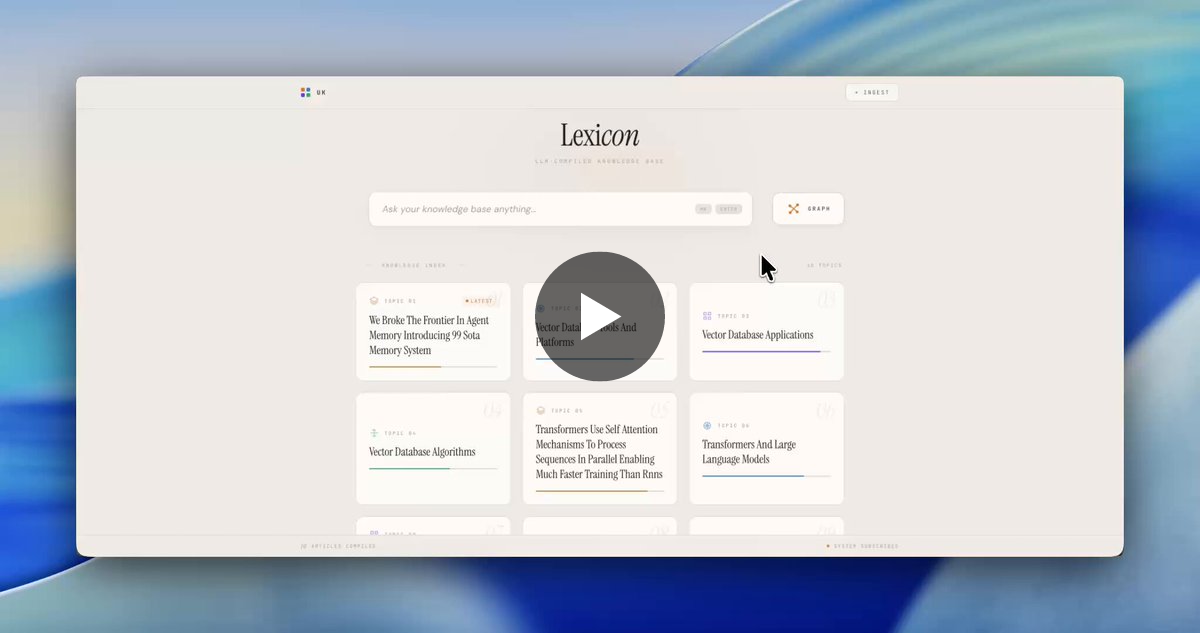
Saw this and immediately built it. Open-sourced the whole thing:Ingest URLs, PDFs, tweets, images → LLM compiles a linked markdown wiki → Q&A with citations, knowledge graph, contradiction linting, auto-research, export to HTML/PDF/slides.Been using it nonstop as a personal… https://t.co/ypaXlEA7pn pic.twitter.com/8Z2DLAyQjH— Jared Goering (@jaredgoering) April 4, 2026
The anatomy of a nanopublication
As the amount of scholarly communication increases, it is increasingly difficult for specific core scientific statements to be found, connected and curated. Additionally, the redundancy of these statements in multiple fora makes it difficult to determine attribution, quality and provenance. To tackle these challenges, the Concept Web Alliance has promoted the notion of nanopublications (core scientific statements with associated context). In this document, we present a model of nanopublications along with a Named Graph/RDF serialization of the model. Importantly, the serialization is defined completely using already existing community-developed technologies. Finally, we discuss the importance of aggregating nanopublications and the role that the Concept Wiki plays in facilitating it.
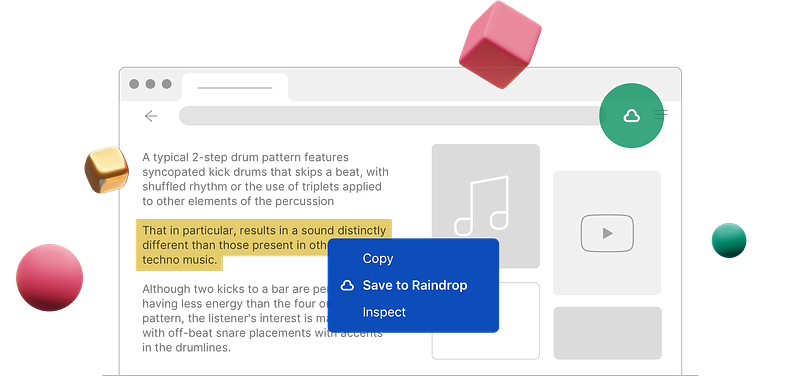
Mustard
A browser extension that lets you annotate any webpage with notes and share them with your Bluesky and/or GitHub followers.
How to implement a web-based rich text editor in 2023?
Since 2011 I’ve been spending a great junk of my time taming web browsers to behave correctly and predictably when editing rich text. If you’ve ever tried to include a custom rich text editor in your web application, you know it’s a rather difficult problem to solve. I’d even predict that you’ll mos…

Scratch – A minimalist markdown scratchpad
An offline-first, open source markdown note-taking app. No cloud, no account, no subscriptions.

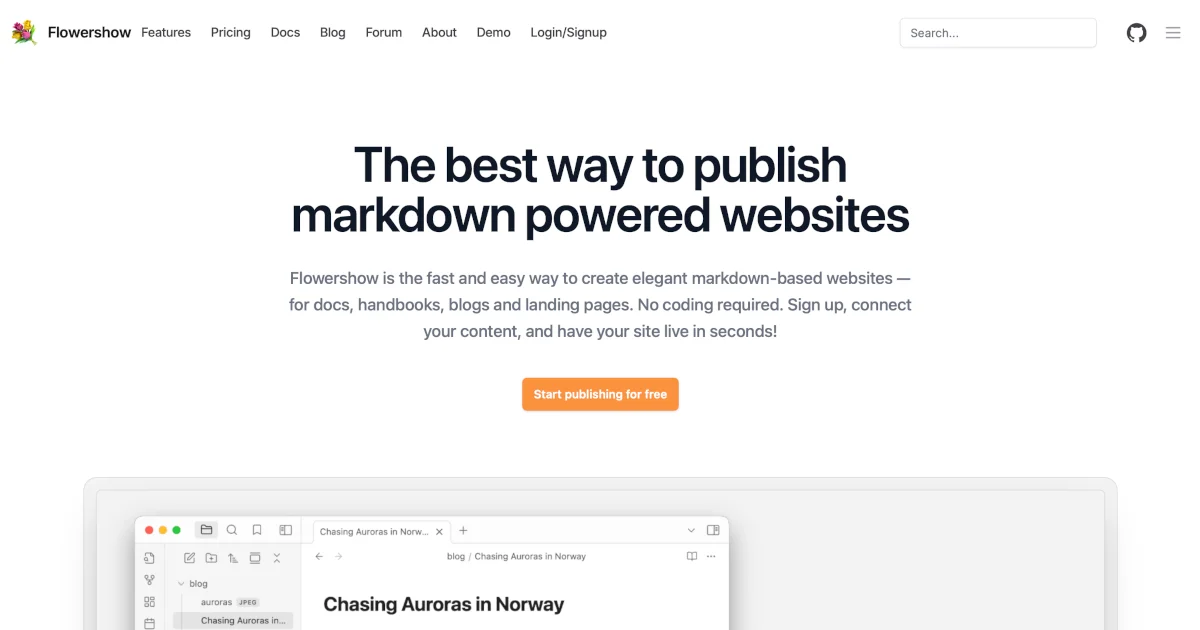
Publish Markdown as a Website — Blogs, Docs & Knowledge Bases | Flowershow - Flowershow — Publish Markdown as a Website
Turn markdown files into beautiful websites in seconds. Publish Obsidian vaults, blogs, docs, and knowledge bases — free, no coding required.
Hyperlink Academy
It's a lightweight collaborative publishing tool for quick tiny docs that can grow into rich creative surfaces ✨🌱
Curvenote Scientific Content Management System
A web-first experience that brings science and data to the surface. Enhance comprehension and maximize impact and reach of your research using rich metadata and interactive figures.
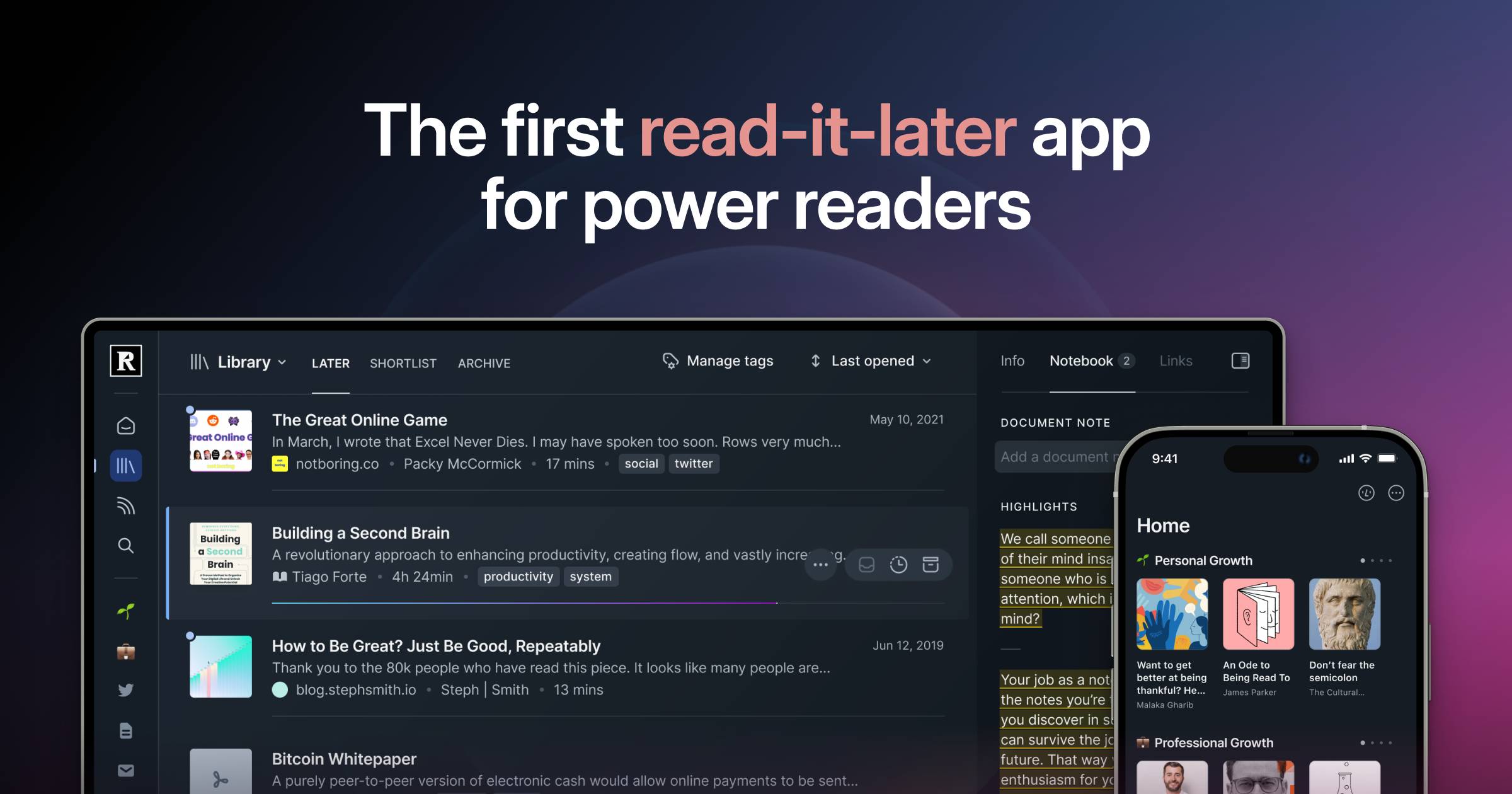
Readwise Reader: The first read-it-later app built for power readers.
Save everything to one place to overcome content overload, search instantly, and highlight like a pro.
Social bookmarking
Social bookmarking is an online service which allows users to add, annotate, edit, and share bookmarks of web documents.[1][2] Many online bookmark management services have launched since 1996; Delicious, founded in 2003, popularized the terms "social bookmarking" and "tagging". Tagging is a significant feature of social bookmarking systems, allowing users to organize their bookmarks and develop shared vocabularies known as folksonomies.
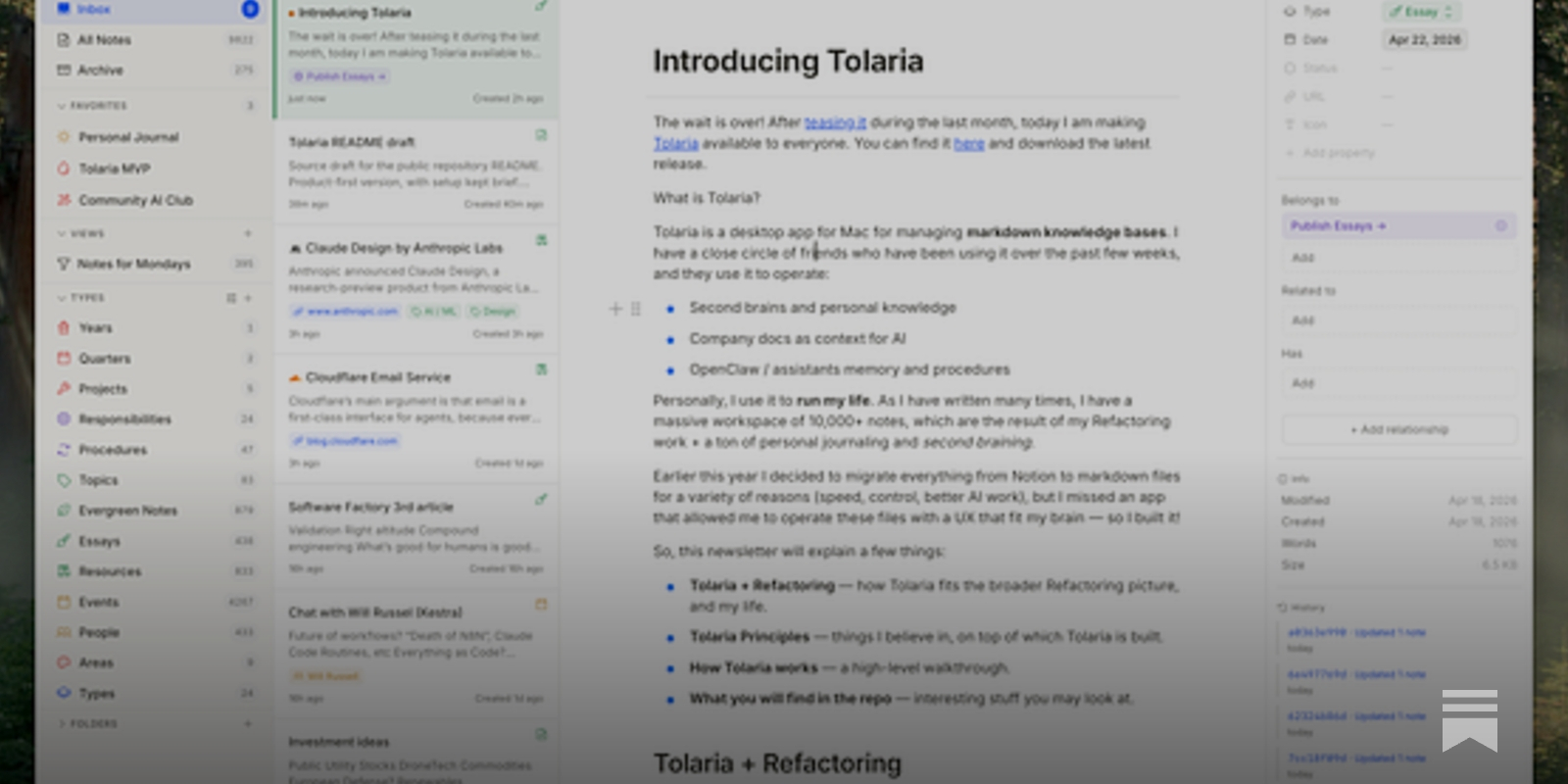
Introducing Tolaria 💧
A free & open source macOS app for managing markdown knowledge bases.
Lexicon suggestions for reader apps on AT Proto (such as @leaflet.pub Reader and @skyreader.app): - storing the reading status of a given URL - “liking” or “recommending” an URL - public (and when permissioned data will be out, private, or access controlled) folders to organize subscriptions
At Side Project Saturday (hosted by @val.town) I demoed a bookmarking service I'm building to learn more about ATProto and user-owned data. I've a bit stuck on bookmark lexicons and what belongs in a record. Thx to @awarm.space for suggesting I write down my questions donohoe.dev/2026/bookmark-lexicons-atprot…

What Is a Bookmark?
donohoe.dev
