“So did you ever kill anyone?” I asked Ryan Blair, a former Los Angeles gang member who is now a successful serial entrepreneur and author of the new best-selling autobiography Nothing to Lose: How I Went From Gang Member To Multimillionaire Entrepreneur. “No," he answered, of course. But while Blair might not have killed anyone, he has certainly made a killing as an entrepreneur – forming his first technology start-up when he was 21 and currently running ViSalus Sciences, a high profile multi-level-marketing company. Blair’s savvy as an entrepreneur is articulated in Nothing To Lose – a self-help book that lays out the smartest route from the jail cell to the boardroom.
What Kills Startups? Blackbox Releases Report/App To Help Founders Avoid The Deadpool | TechCrunch
It's not easy being green -- or an entrepreneur. The inherent risk in becoming an entrepreneur or founding a startup is high. Sleepless nights, sweat equity, bribing new users to come to your product -- it's all part of the nerve-racking, code-spinning, and teeth grinding process. That's why most of these swashbucklers are pirates by nature. But the truth of the matter is that few startups ever make it far enough to find the buried treasure or piggyback on Facebook all the way to glory; in fact, the cold, hard reality is that more than 90 percent of all startups fail. That's why four young international entrepreneurs (Bjoern Herrmann and Aleksandra Markova) created the so-called Startup Genome Report, because they wanted to a deep dive into what makes a startup successful -- and what causes so many to drink from the cup of FAIL.

Masters of deception: the gang that ruled cyberspace
The bestselling account of a band of kids from New York…

Craig Newmark Founded Craigslist To Give Back, Now He's A Billionaire
"Death is my exit strategy," says Craigslist's founder.

Merchant of Death: The case of Kenneth Law and the shadowy online network that helps people end their lives - Toronto Life
After Kenneth Law lost his job as a low-level cook at the Royal York hotel, he found another way to make money: peddling suicide kits on the internet. Now, he’s been linked to the deaths of over 100 people around the world—and their grieving families want justice

The network revolutionary: How Brendan O’Brien is rewiring the internet with n0
Builders for Human Agency #1: b5

The Everywhere Millionaire: Who Is Really Rich in America and How They Got There
From two leading economists comes a groundbreaking new portrait of the hidden fortunes of Main Street business owners—ordinary Americans who built extraordinary wealth and are quietly rewriting the rules of money and power. Most people think the path to great wealth runs through Wall Street or Silicon Valley. We’re told you must be a Zuckerberg, a Musk, or a Jamie Dimon to get rich. But this story is wrong. Drawing on unprecedented data from a decade of research and vivid real-life stories of entrepreneurs—from a self-made hot-dog stand billionaire to the heirs of an auto dealer—Zidar and Zwick reveal a surprising truth: prosperity is more attainable, more widely distributed, and closer to home than we imagine. A multitude of Americans have built staggering fortunes by running often unglamorous businesses far from the spotlight. A quiet revolution in the business world—the rise of “pass-through” firms like S-corporations and partnerships—supercharged this wealth, channeling vast income directly to business owners rather than traditional corporations.Part economic detective story, part roadmap to riches, this book reveals: —The Hidden 1%: They might be a local beer distributor, a dentist with a regional network of practices, a commercial HVAC contractor with trucks around town, or a restaurateur who keeps opening new locations. For every public company CEO, more than a thousand private business owners each have transformational wealth.— The Blueprint for Wealth: Zidar and Zwick describe where Main Street Millionaires come from, how they grew rich, and how much money they make. Their stories suggest the American Dream is not dead and many paths to prosperity remain open today. — Power Brokers: Armed with their fortunes, Main Street Millionaires wield power in city halls, statehouses, and Washington, often bending policy to protect what they’ve built. They are both growing the economic pie and grabbing bigger slices for themselves.The Everywhere Millionaire celebrates the stories of entrepreneurs who seized opportunities while asking hard questions about how concentrated wealth and power shape society. It is an essential guide to seeing the economy as it really is and recognizing the surprising paths to prosperity—and influence—everywhere.
Selling Out and the Death of Hacker Culture
Selling Out and the Death of Hacker Culture We’ve sold each other for profit and lost what makes us happy. Part I. The very first hackathon I attended was back in high school. It consisted of me, a …
A quiet movement is forming: entrepreneurs building for human agency — not just agents’ sake.
Read our invitation to join the discussion around building truly agentic tech: products that preserve human agency.

Who killed Canadian Venture?
We might have an economic serial killer on our hands...

Effective Altruism: the charitable movement influencing Silicon Valley | Front Burner | CBC Podcasts | CBC Listen
Effective altruism, a charitable movement that has become highly influential in Silicon Valley, suffered a huge blow to its reputation in 2022 — when its most famous proponent, Sam Bankman-Fried, was exposed for fraud and his FTX crypto exchange collapsed. But while it moved out of the limelight, it never went away. And when AI company Anthropic goes public next week, analysts are predicting that effective altruism-linked charitable causes could be poised to rake in tens of billions of dollars. Today, we look at the philosophical foundations of effective altruism, its many controversies, and how it influences Silicon Valley executives’ thinking and the tech they develop. Our guest is David Z Morris. He’s the Managing Editor of Zero Knowledge Media, a former reporter for Fortune Magazine, a former chief columnist at CoinDesk, and the author of Stealing the Future: Sam Bankman-Fried, Elite Fraud, and the Cult of Techno-Utopia. For transcripts of Front Burner, please visit: https://www.cbc.ca/radio/frontburner/transcripts [https://www.cbc.ca/radio/frontburner/transcripts]

The thing about being active in the hacker house scene is you are accidentally signing up for a career as a shadow politician in the Silicon Valley startup scene. This process is insidious because you’re initially just signing up for a place to live and a nice community. But giv
The thing about being active in the hacker house scene is you are accidentally signing up for a career as a shadow politician in the Silicon Valley startup scene. This process is insidious because you’re initially just signing up for a place to live and a nice community. But…— Sonia Joseph (@soniajoseph_) May 16, 2024
Secret History of Silicon Valley
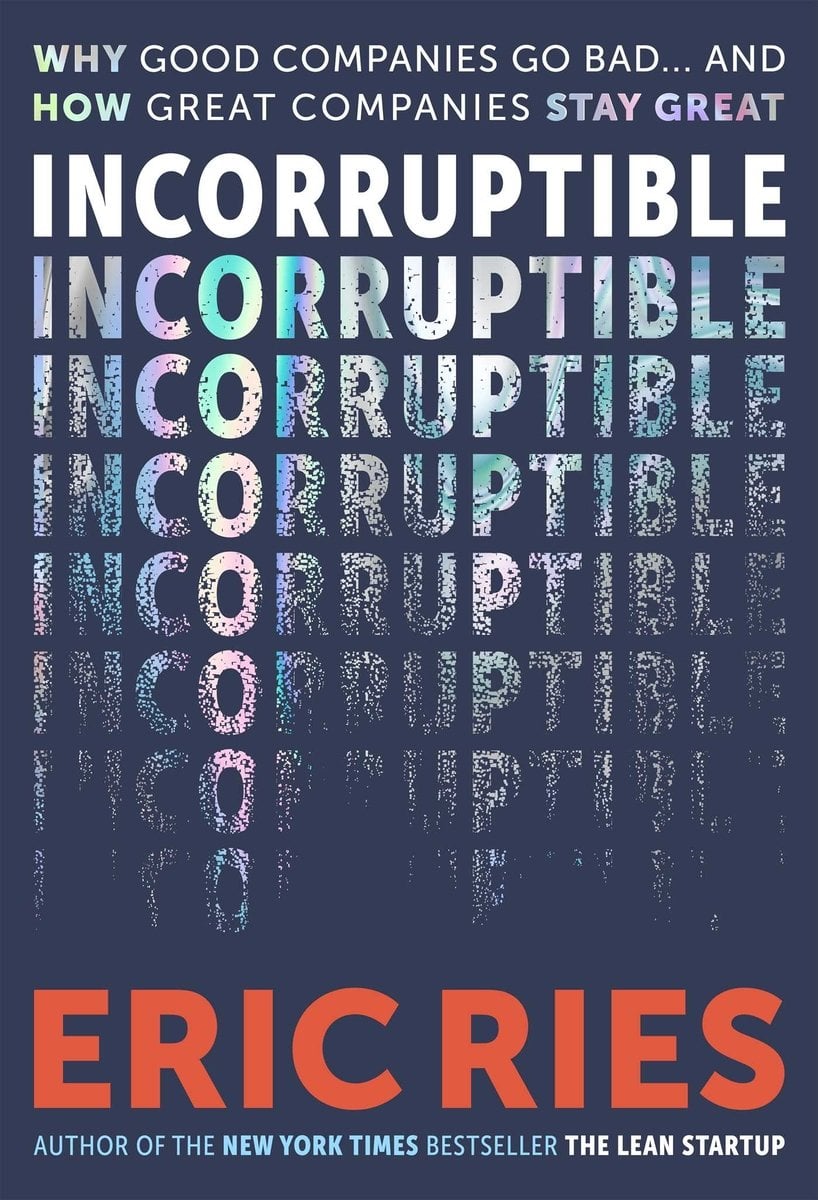
Incorruptible
Instant New York Times Bestseller "Incorruptible by Eric Ries is the best and most important business book of the year." —Dan Heath, NYT Bestselling Author & Podcast Host of "What It's Like To Be..." A Thinkers50 Best New Management Book | A Next Big Idea Club Must-Read From Eric Ries, creator of The Lean Startup, comes a bold and urgently needed rethink of how organizations are built—and why success itself so often turns companies against the people and principles that made them worth building in the first place. For decades, we've explained corporate corruption as a problem of bad actors, moral weakness, or isolated scandals. But that story doesn't match reality. Again and again, companies founded with strong ideals drift toward short-term thinking, extractive behavior, and mission abandonment—often despite the best intentions of the people inside them. Incorruptible argues that this failure is not primarily ethical. It is structural. As organizations grow, the systems that govern them—ownership, incentives, charters, accountability, and decision-making—quietly reshape behavior. When those systems are poorly designed, even principled leaders are pushed toward outcomes they never wanted. Success itself becomes a form of financial gravity, bending companies away from their original purpose. Drawing on two decades of work with founders, CEOs, investors, and institution builders, Ries shows how these failures arise predictably—and how they can be prevented. He reframes corporate governance not as bureaucracy or compliance, but as a creative and strategic act at the heart of building enduring, mission-controlled companies. At a moment when trust in business is eroding, Incorruptible offers a clear-eyed diagnosis and a practical blueprint for change. Success alone will not protect what matters most. Only incorruptible design can. Get more information and bonus materials at incorruptible.co.
Claude AI agent’s confession after deleting a firm’s entire database: ‘I violated every principle I was given’
A startup was left scrambling after a rogue AI agent deleted swaths of code underpinning its business

Goodbye Gatekeepers
Harvey Weinstein was a gate-keeper — a position that existed in multiple industries, including the media. That entire structure, though, is untenable on the Internet, and that’s a good thing.…

A forty-year career.
The Silicon Valley narrative centers on entrepreneurial protagonists who are poised one predestined step away from changing the world. A decade ago they were heroes, and more recently they’ve become villains, but either way they are absolutely the protagonists. Working within the industry, I’ve worked with quite a few non-protagonists who experience their time in technology differently: a period of obligatory toil required to pry open the gate to the American Dream.