


A new study shows that the media can significantly reduce partisan bias by simply making the text more difficult to read. Researchers found that
Using technology to craft accurate, persuasive political messages | TechCrunch
In a country that's increasingly polarized, where partisan politics shape perception, the question of how to create a compelling argument -- rooted in

The social media discourse of engaged partisans is toxic even when politics are irrelevant
Abstract. Prevailing theories of partisan incivility on social media suggest that it derives from disagreement about political issues or from status compet
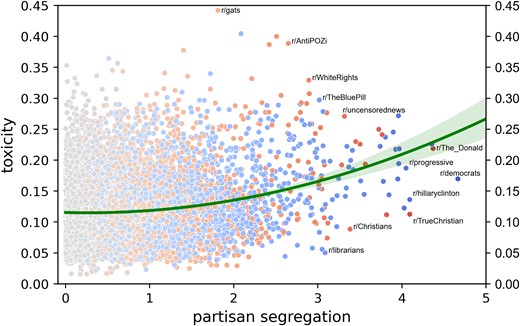
The social media discourse of engaged partisans is toxic even when politics are irrelevant
Abstract. Prevailing theories of partisan incivility on social media suggest that it derives from disagreement about political issues or from status compet
Why the backfire effect does not explain the durability of political misperceptions
Previous research indicated that corrective information can sometimes provoke a so-called “backfire effect” in which respondents more strongly endorsed a misperception about a controversial political or scientific issue when their beliefs or predispositions were challenged. I show how subsequent research and media coverage seized on this finding, distorting its generality and exaggerating its role relative to other factors in explaining the durability of political misperceptions. To the contrary, an emerging research consensus finds that corrective information is typically at least somewhat effective at increasing belief accuracy when received by respondents. However, the research that I review suggests that the accuracy-increasing effects of corrective information like fact checks often do not last or accumulate; instead, they frequently seem to decay or be overwhelmed by cues from elites and the media promoting more congenial but less accurate claims. As a result, misperceptions typically persist in public opinion for years after they have been debunked. Given these realities, the primary challenge for scientific communication is not to prevent backfire effects but instead, to understand how to target corrective information better and to make it more effective. Ultimately, however, the best approach is to disrupt the formation of linkages between group identities and false claims and to reduce the flow of cues reinforcing those claims from elites and the media. Doing so will require a shift from a strategy focused on providing information to the public to one that considers the roles of intermediaries in forming and maintaining belief systems.
The Role of Media in Political Polarization| Inoculation Can Reduce the Perceived Reliability of Polarizing Social Media Content
Little research is available on psychological interventions that counter susceptibility to polarizing online content. We conducted 3 studies (n1 = 472, n2 = 193, n3 = 772) to evaluate whether psychological resistance against polarizing social media content can be conferred, using the Bad News game, a “technique-based inoculation” intervention that simulates a social media feed. We investigate (1) whether technique-based inoculation can reduce susceptibility to content designed to fuel intergroup polarization; (2) whether technique-based inoculation can offer cross-protection against misinformation techniques that people were not inoculated against; and (3) whether political ideology plays a role in how people engage with anti-misinformation interventions. In Studies 1 and 3 (but not Study 2), we found that technique-based inoculation significantly reduces the perceived reliability of polarizing content and offers partial cross-protection against untreated misinformation techniques. We found no effect for attitudinal certainty and news-sharing intentions. Finally, we report preliminary evidence that people may choose to engage with politically congruent news topics within the intervention.
How to Change Public Opinion - Niskanen Center
Policy advocates engaged in changing public opinion rarely pay much attention to what the academic literature says about how public opinion is formed and how and why it changes. That’s too bad, because while political scientists disagree about a lot of things, this is not one of them. Several decades of robust empirical tests offer […]

Facts and Myths about Misperceptions
Misperceptions threaten to warp mass opinion and public policy on controversial issues in politics, science, and health. What explains the prevalence and persistence of these false and unsupported beliefs, which seem to be genuinely held by many people? Though limits on cognitive resources and attention play an important role, many of the most destructive misperceptions arise in domains where individuals have weak incentives to hold accurate beliefs and strong directional motivations to endorse beliefs that are consistent with a group identity such as partisanship. These tendencies are often exploited by elites who frequently create and amplify misperceptions to influence elections and public policy. Though evidence is lacking for claims of a “post-truth” era, changes in the speed with which false information travels and the extent to which it can find receptive audiences require new approaches to counter misinformation. Reducing the propagation and influence of false claims will require further efforts to inoculate people in advance of exposure (for example, media literacy), debunk false claims that are already salient or widespread (for example, fact-checking), reduce the prevalence of low-quality information (for example, changing social media algorithms), and discourage elites from promoting false information (for example, strengthening reputational sanctions).
How Political Opinions Change
A clever experiment shows it's surprisingly easy to change someone’s political views, revealing how flexible we are

The Danger of Exaggerating the Political Importance of Social Media - Cal Newport
The Pew Research Center recently released a new study on American Twitter use. As Jennifer Rubin reported in the Washington Post, one of the most ... Read more

Reranking partisan animosity in algorithmic social media feeds alters affective polarization
Today, social media platforms hold the sole power to study the effects of feed-ranking algorithms. We developed a platform-independent method that reranks participants’ feeds in real time and used this method to conduct a preregistered 10-day field experiment with 1256 participants on X during the 2024 US presidential campaign. Our experiment used a large language model to rerank posts that expressed antidemocratic attitudes and partisan animosity (AAPA). Decreasing or increasing AAPA exposure shifted out-party partisan animosity by more than 2 points on a 100-point feeling thermometer, with no detectable differences across party lines, providing causal evidence that exposure to AAPA content alters affective polarization. This work establishes a method to study feed algorithms without requiring platform cooperation, enabling independent evaluation of ranking interventions in naturalistic settings. , Editor’s summary Social media platforms’ opaque feed-ranking algorithms, which are designed to maximize engagement, may contribute to political polarization, body image, mental health, and other social issues. However, the evidence has rarely enabled conclusions about causality because external researchers need platforms’ permission to experimentally intervene. Collaborations with platforms also involve trade-offs that undermine researchers’ intellectual autonomy. Piccardi et al . circumvented this problem with a browser extension that intercepted feeds on X/Twitter in real time using a large language model (LLM) (see the Perspective by Allen and Tucker). Liberals and conservatives were randomly assigned to conditions where the LLM re-ranked feeds to up-rank or down-rank the visibility of hostile political content. Up-ranking increased political polarization, whereas down-ranking decreased it. This LLM tool enabled independent scholars to pull back the curtain on unresolved research questions without the platform’s permission. —Ekeoma Uzogara , INTRODUCTION Social media algorithms profoundly impact our lives, yet our understanding of these algorithms’ impact has been limited to interventions that the platforms themselves are willing to test and publish. In this article, we demonstrate a method for independent algorithmic reranking experiments in naturalistic settings and at scale. We leverage this method to demonstrate that algorithmic ranking can both raise and lower levels of affective political polarization in the United States, with no detectable differences across party lines. RATIONALE We built a browser extension that intercepted and reranked web-based social media feeds in real time. The extension used a large language model (LLM) to score content and then applied these scores to reorder the feed, all without requiring platform cooperation. Our approach identified content expressing antidemocratic attitudes and partisan animosity (AAPA) and controlled users’ exposure to such content through reranking. We conducted a preregistered field experiment with 1256 participants on X, the most widely used social media platform for political discourse in the United States, during the weeks leading up to the 2024 presidential election. Participants were randomly assigned to two parallel experiments in which their feeds were dynamically reranked for 1 week to either up- or down-rank AAPA posts. We measured the effects of these interventions on affective polarization (participants’ feelings toward the political outgroup) and emotional experience (anger, sadness, excitement, or calm) by using both in-feed and post-experiment surveys. Results were compared to those of participants in control conditions whose feeds were not reranked. RESULTS Reranking to change levels of exposure to AAPA content significantly influenced affective polarization. Increased AAPA exposure led to colder feelings toward the political outgroup, whereas decreased AAPA exposure led to warmer feelings. Both shifts amounted to more than 2 degrees on a 0- to 100- degree “feeling thermometer.” The impact on affective polarization was consistently detected in both in-feed and post-experiment surveys, with no evidence of partisan asymmetry. Changes to the feed algorithm caused in-feed but not post-experiment changes to participants’ negative emotions. CONCLUSION This work demonstrates a new method for reranking social media feeds that enables testing interventions without platform collaboration. We found that increasing exposure to AAPA posts significantly increases affective polarization and negative emotions, whereas decreasing exposure reduces them. These changes were comparable in size to 3 years of change in United States affective polarization. As political polarization and societal division become increasingly linked to social media activity, our findings provide a potential pathway for platforms to address these challenges through algorithmic interventions. Together, these interventions may result in algorithms that not only reduce partisan animosity but also promote greater social trust and healthier democratic discourse across party lines. A platform-independent field experiment demonstrates that reranking content expressing antidemocratic attitudes and partisan animosity in social media feeds alters affective polarization. A browser extension reranked participants’ social media feeds by reducing or increasing exposure to posts expressing AAPA, which in turn led to corresponding decreases or increases in affective polarization.
The Powerful Density of Hypertextual Writing
The NY Times has had a difficult time covering the 2024 election in a clear, responsible manner. But I wanted to highlight this short opinion piece from the pap
The revolt of the reader | The Observation Deck
Reading is important to me. While I’m not a quick reader nor an especially voracious one, I have found that long-form reading has had a profound influence on me over my life. And because reading is important to me, writing is too: writing not only allows us to convey our ideas, but the very act forces us to test and distill them — at once making our ideas more robust while providing the vehicle by which to share them.
The Dynamics of Distortion: How Successive Summarization Alters the Retelling of News
This work advances and tests a theory of how news information evolves as it is successively retold by consumers. Drawing on data from over 11,000 participants across ten experiments, the authors offer evidence that when news is repeatedly retold, it undergoes a stylistic transformation termed “disagreeable personalization,” wherein original facts are increasingly supplanted by opinions and interpretations with a slant toward negativity. The central thesis is that when retellers believe they are more (vs. less) knowledgeable than their recipient about the information they are relaying, they feel more compelled to provide guidance on its meaning and to do so in a persuasive manner. This enhanced motivation to guide persuasively, in turn, leads retellers to not only select the subset of facts they deem most essential but, critically, to provide their interpretations and opinions on those facts, with negativity being used as a means of grabbing their audience’s attention. Implications of this work for research on retelling and consumer information diffusion are explored.
“Writing is hard.” Thrilled to share that this simple idea led to a new paper in Political Analysis! Where most text methods focus on content, I test if expression is also effortful action. I find simple measures like character counts reveal attitudes and predict voting. cup.org/4cUmoXi 1/
