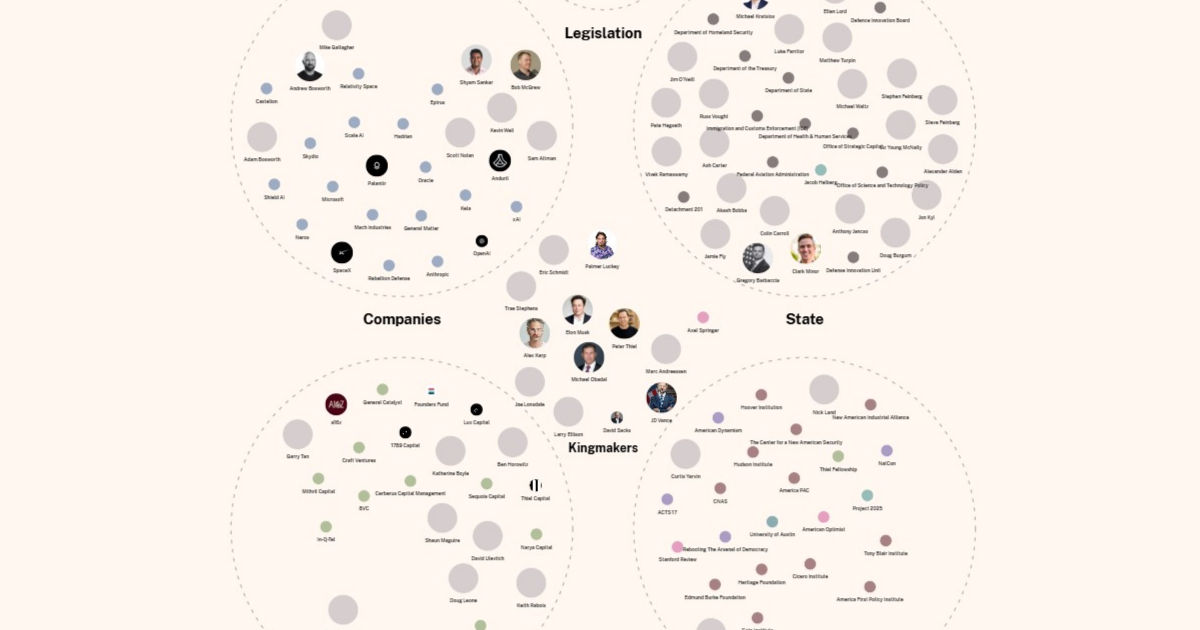
Many of us yearn for a return to one golden age or another. But there's a community of bloggers taking the idea to an extreme: they want to turn the dial way back to the days before the French Revolution. Neoreactionaries believe that all the good stuff from the past few centuries come from technology and capitalism, and that democracy and social progress have actually done more harm than good. They propose a return to old-fashioned gender roles, social order and monarchy.
Time and the Neo-Monarchist Turn
One of the classical arguments against democracy concerns its supposed short-termism. Early-modern political thought contrasted the pitfalls of elected authority, whose timebound character was seen to invite inconstancy, instability and plunder, with the merits of indefinite rule on the model of kingship. Such reasoning has seen two revivals in recent years, first in a neo-liberal form as an argument for technocracy (see independent central banking), second in a neo-reactionary form as an argument for an all-powerful executive or ‘monarch’ (see the contemporary international far Right). This article looks at the structure of these political arguments and the work they do. Having reconstructed their historical background, it charts how the neo-monarchist turn marks a radicalisation in democracy-scepticism, guided by a patrimonial logic of authority as property ownership. The article goes on to examine the political-economic factors to which this responds, as well as the contradictions to which neo-monarchism is prone. As the article concludes, temporal arguments for authoritarian politics may be dubious in substance but merit careful observation in a context of widespread disaffection with existing institutions.

Palantir's social media manifesto is a blueprint for technofascism
The surveillance firm’s viral X post calls for hard power, conscription and the end of pluralism. AI expert and academic Mark Coeckelbergh on what happens when technology becomes the gateway to authoritarianism
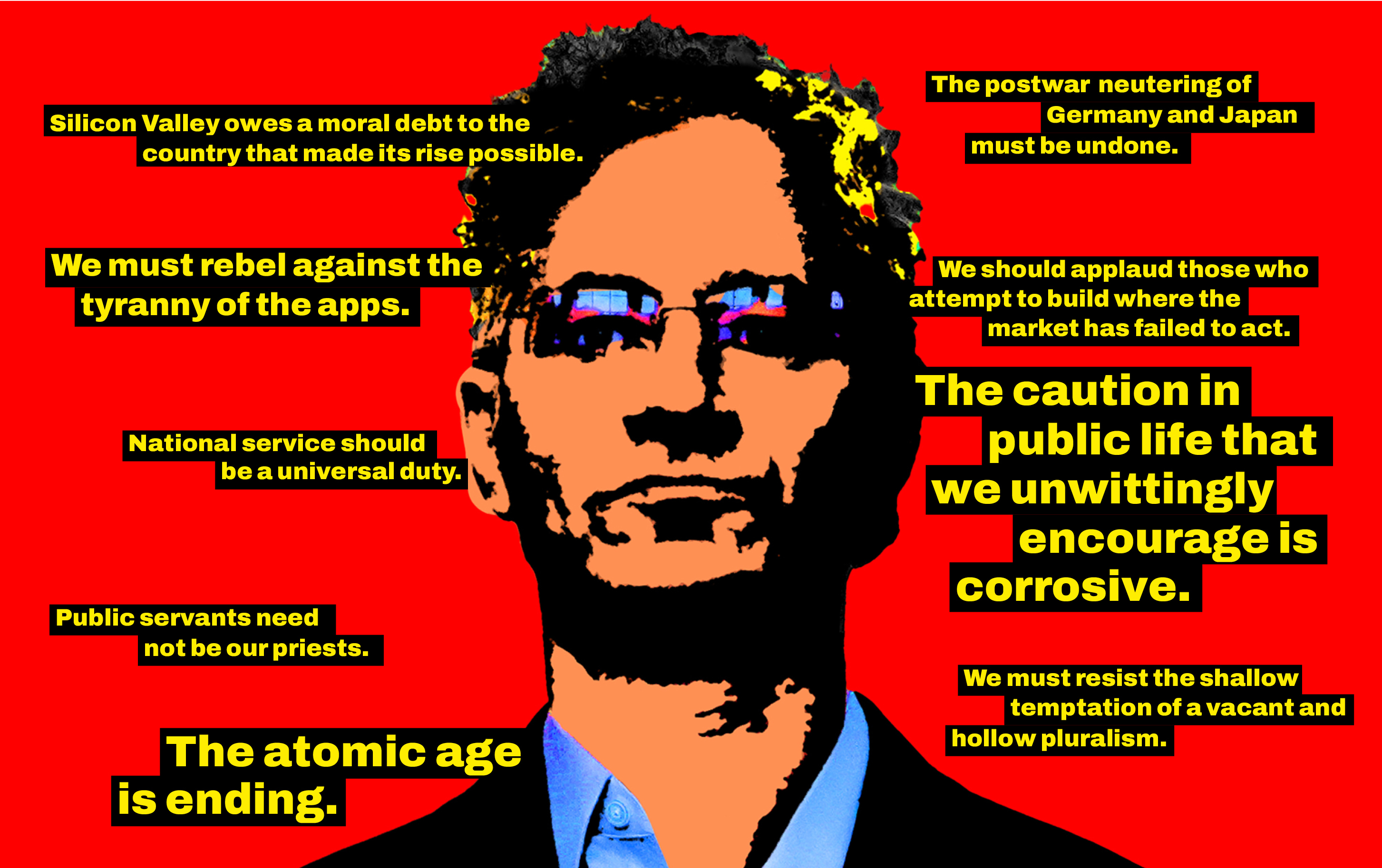
For all talk about how tech fascists want to "destroy democracy", people don't have a concrete idea of what comes after, i.e. "neo-feudalism" "monarchy" "patchworks", "fiefdoms", etc Very simple:
For all talk about how tech fascists want to "destroy democracy", people don't have a concrete idea of what comes after, i.e. "neo-feudalism" "monarchy" "patchworks", "fiefdoms", etc Very simple:— shanley (@shanley) August 5, 2026
Extropia's Children, Chapter 6: Geeks for Monarchy Redux
How and why did a custom-built online home for rational thinking attract a tiny but thriving coterie of far-right authoritarian racists who want to overthrow democracy in favor of monarchy?

Individuals, institutions, and innovation in the debates of the French Revolution
Significance How do democracies make decisions? We can read transcripts from parliament houses and legislative halls to see how particular ideas are introduced and debated, but we understand very little about the general principles of how these systems deal with information, or the origins of those principles. Here we study the parliamentary assembly of the first 2 years of the French Revolution, a model for democracies and revolutions across the globe, and show how patterns of speaking are created, picked up, and ignored or propagated. Political ideology, top–down rules, and individual charisma all affect how word patterns survive and thrive or, conversely, disappear and drop away. , The French Revolution brought principles of “liberty, equality, fraternity” to bear on the day-to-day challenges of governing what was then the largest country in Europe. Its experiments provided a model for future revolutions and democracies across the globe, but this first modern revolution had no model to follow. Using reconstructed transcripts of debates held in the Revolution’s first parliament, we present a quantitative analysis of how this body managed innovation. We use information theory to track the creation, transmission, and destruction of word-use patterns across over 40,000 speeches and a thousand speakers. The parliament as a whole was biased toward the adoption of new patterns, but speakers’ individual qualities could break these overall trends. Speakers on the left innovated at higher rates, while speakers on the right acted to preserve prior patterns. Key players such as Robespierre (on the left) and Abbé Maury (on the right) played information-processing roles emblematic of their politics. Newly created organizational functions—such as the Assembly president and committee chairs—had significant effects on debate outcomes, and a distinct transition appears midway through the parliament when committees, external to the debate process, gained new powers to “propose and dispose.” Taken together, these quantitative results align with existing qualitative interpretations, but also reveal crucial information-processing dynamics that have hitherto been overlooked. Great orators had the public’s attention, but deputies (mostly on the political left) who mastered the committee system gained new powers to shape revolutionary legislation.

SimPolitics
For more than six decades, the public has been promised that computers will revolutionize politics, both nationally and internationally. In SimPolitics, Fenw...

Technopoly: The Surrender of Culture to Technology
A witty, often terrifying that chronicles our transform…

How the Tech World Turned Evil
Once upon a time, they were counterculture idealists bringing power to the people. Today they’re greedy monopolists who’d sooner destroy our democracy than be reined in by government in any way—and they have to be stopped.

Cyber-Marx
In this highly readable and thought-provoking work, Nick Dyer-Witheford assesses the relevance of Marxism in our time and demonstrates how the information age, far from transcending the historic conflict between capital and its laboring subjects, constitutes the latest battleground in their encounter. Dyer-Witheford maps the dynamics of modern capitalism, showing how capital depends for its operations not just on exploitation in the immediate workplace, but on the continuous integration of a whole series of social sites and activities, from public health and maternity to natural resource allocation and the geographical reorganization of labor power. He also shows how these sites and activities may become focal points of subversion and insurgency, as new means of communication vital for the smooth flow of capital also permit otherwise isolated and dispersed points of resistance to connect and combine with one another. Cutting through the smokescreen of high-tech propaganda, Dyer-Witheford predicts the advent of a reinvented, "autonomist" Marxism that will rediscover the possibility of a collective, communist transformation of society. Refuting the utopian promises of the information revolution, he discloses the real potentialities for a new social order in the form of a twenty-first-century communism based on the common sharing of wealth.
The Social Meaning of the Personal Computer: Or, Why the Personal Computer Revolution Was No Revolution
This essay presents a processual model of the personal computing movement that depicts the PC's birth within the context of complex and often contradictory social strategies, each of which used the meaning of computer technology in a distinctive way. It suggests that innovators are constrained by such processes to depict new artifacts in culturally meaningful ways, so that it is difficult for them to conceive of their technologies in radical terms. The rhetoric of "revolution" aside, innovators found it expedient to draw from the stock of meanings at hand as they created new meaning-frameworks for their artifacts. The result is that the new artifacts did not express a coherent or effective political vision and failed to have the intended social effects. This study implies that new technologies frequently reproduce existing social and meaning systems; if they do bring about social change, the changes may differ from those intended by the innovators.
The Technological Republic: The Sunday Times bestseller from the great minds behind Palantir
The Sunday Times and #1 New York Times Bestseller‘The Technological Republic is far too important to ignore’ Times Literary SupplementSilicon Valley’s brightest minds once collaborated with governments to advance technologies, securing the West’s dominance on the global stage. But that relationship has corroded – with perilous repercussions for us all.Lifting the veil on tech giant Palantir and its broader political project, visionary co-founder and CEO Alexander C. Karp and his long-time deputy Nicholas W. Zamiska offer a searing critique of our collective culture of complacency. To regain geopolitical power and preserve our freedoms, we must tackle the world’s most pressing challenges – including the artificial intelligence arms race – together and head-on. Now is the time for the West to wake up.‘Bold and ambitious ... Essential reading’ Eric Schmidt‘Fascinating’ Financial Times‘A stirring manifesto’ Niall Ferguson‘Provocative and insightful’ Jamie Dimon
Jeremy Gilbert on Twitter / X
Really useful analysis of NR / neo-monarchism/ long-termism as authoritarian responses to the perception that democracy just can't get anything done (cos it's locked in to the short-termism of the popularity / electoral cycle). Free to read here: https://t.co/U4z0qmBReM https://t.co/NG4XIUM6O8— Jeremy Gilbert (@jemgilbert) September 21, 2026

The Authoritarian Stack
How Tech Billionaires Are Building a Post-Democratic America — And Why Europe Is Next