


While machine learning is introducing innovation and change to many sectors, it also is bringing trouble and worries to others. One of the most worrying aspects of emerging machine learning technologies is their invasiveness on user privacy.
Privacy Risk in Machine Learning: Analyzing the Connection to Overfitting
Machine learning algorithms, when applied to sensitive data, pose a distinct threat to privacy. A growing body of prior work demonstrates that models produced by these algorithms may leak specific private information in the training data to an attacker, either through the models' structure or their observable behavior. However, the underlying cause of this privacy risk is not well understood beyond a handful of anecdotal accounts that suggest overfitting and influence might play a role. This paper examines the effect that overfitting and influence have on the ability of an attacker to learn information about the training data from machine learning models, either through training set membership inference or attribute inference attacks. Using both formal and empirical analyses, we illustrate a clear relationship between these factors and the privacy risk that arises in several popular machine learning algorithms. We find that overfitting is sufficient to allow an attacker to perform membership inference and, when the target attribute meets certain conditions about its influence, attribute inference attacks. Interestingly, our formal analysis also shows that overfitting is not necessary for these attacks and begins to shed light on what other factors may be in play. Finally, we explore the connection between membership inference and attribute inference, showing that there are deep connections between the two that lead to effective new attacks.

Membership Inference Attacks Against Machine Learning Models
We quantitatively investigate how machine learning models leak information about the individual data records on which they were trained. We focus on the basic membership inference attack: given a data record and black-box access to a model, determine if the record was in the model's training dataset. To perform membership inference against a target model, we make adversarial use of machine learning and train our own inference model to recognize differences in the target model's predictions on the inputs that it trained on versus the inputs that it did not train on. We empirically evaluate our inference techniques on classification models trained by commercial "machine learning as a service" providers such as Google and Amazon. Using realistic datasets and classification tasks, including a hospital discharge dataset whose membership is sensitive from the privacy perspective, we show that these models can be vulnerable to membership inference attacks. We then investigate the factors that influence this leakage and evaluate mitigation strategies.
Membership Inference Attacks Against Machine Learning Models
We quantitatively investigate how machine learning models leak information about the individual data records on which they were trained. We focus on the basic membership inference attack: given a data record and black-box access to a model, determine if the record was in the model's training dataset. To perform membership inference against a target model, we make adversarial use of machine learning and train our own inference model to recognize differences in the target model's predictions on the inputs that it trained on versus the inputs that it did not train on. We empirically evaluate our inference techniques on classification models trained by commercial "machine learning as a service" providers such as Google and Amazon. Using realistic datasets and classification tasks, including a hospital discharge dataset whose membership is sensitive from the privacy perspective, we show that these models can be vulnerable to membership inference attacks. We then investigate the factors that influence this leakage and evaluate mitigation strategies.
darkshapes
Umbrella organization rethinking machine-learning technology as tools that work for people, not just corporations
Machine Unlearning
Once users have shared their data online, it is generally difficult for them to revoke access and ask for the data to be deleted. Machine learning (ML) exacerbates this problem because any model trained with said data may have memorized it, putting users at risk of a successful privacy attack exposing their information. Yet, having models unlearn is notoriously difficult. We introduce SISA training, a framework that expedites the unlearning process by strategically limiting the influence of a data point in the training procedure. While our framework is applicable to any learning algorithm, it is designed to achieve the largest improvements for stateful algorithms like stochastic gradient descent for deep neural networks. SISA training reduces the computational overhead associated with unlearning, even in the worst-case setting where unlearning requests are made uniformly across the training set. In some cases, the service provider may have a prior on the distribution of unlearning requests that will be issued by users. We may take this prior into account to partition and order data accordingly, and further decrease overhead from unlearning. Our evaluation spans several datasets from different domains, with corresponding motivations for unlearning. Under no distributional assumptions, for simple learning tasks, we observe that SISA training improves time to unlearn points from the Purchase dataset by 4.63x, and 2.45x for the SVHN dataset, over retraining from scratch. SISA training also provides a speed-up of 1.36x in retraining for complex learning tasks such as ImageNet classification; aided by transfer learning, this results in a small degradation in accuracy. Our work contributes to practical data governance in machine unlearning.
Deep Fakes: A Looming Challenge for Privacy
<p>Harmful lies are nothing new. But the ability to distort reality has taken an exponential leap forward with “deep fake” technology. This capability makes it possible to create audio and video of real people saying and doing things they never said or did. Machine learning techniques are escalating the technology’s sophistication, making deep fakes ever more realistic and increasingly resistant to detection. Deep-fake technology has characteristics that enable rapid and widespread diffusion, putting it into the hands of both sophisticated and unsophisticated actors.</p><p>While deep-fake technology will bring certain benefits, it also will introduce many harms. The marketplace of ideas already suffers from truth decay as our networked information environment interacts in toxic ways with our cognitive biases. Deep fakes will exacerbate this problem significantly. Individuals and businesses will face novel forms of exploitation, intimidation, and personal sabotage. The risks to our democracy and to national security are profound as well.</p><p>Our aim is to provide the first in-depth assessment of the causes and consequences of this disruptive technological change, and to explore the existing and potential tools for responding to it. We survey a broad array of responses, including: the role of technological solutions; criminal penalties, civil liability, and regulatory action; military and covert-action responses; economic sanctions; and market developments. We cover the waterfront from immunities to immutable authentication trails, offering recommendations to improve law and policy and anticipating the pitfalls embedded in various solutions.</p>
Deep Fakes: A Looming Challenge for Privacy
<p>Harmful lies are nothing new. But the ability to distort reality has taken an exponential leap forward with “deep fake” technology. This capability makes it possible to create audio and video of real people saying and doing things they never said or did. Machine learning techniques are escalating the technology’s sophistication, making deep fakes ever more realistic and increasingly resistant to detection. Deep-fake technology has characteristics that enable rapid and widespread diffusion, putting it into the hands of both sophisticated and unsophisticated actors.</p><p>While deep-fake technology will bring certain benefits, it also will introduce many harms. The marketplace of ideas already suffers from truth decay as our networked information environment interacts in toxic ways with our cognitive biases. Deep fakes will exacerbate this problem significantly. Individuals and businesses will face novel forms of exploitation, intimidation, and personal sabotage. The risks to our democracy and to national security are profound as well.</p><p>Our aim is to provide the first in-depth assessment of the causes and consequences of this disruptive technological change, and to explore the existing and potential tools for responding to it. We survey a broad array of responses, including: the role of technological solutions; criminal penalties, civil liability, and regulatory action; military and covert-action responses; economic sanctions; and market developments. We cover the waterfront from immunities to immutable authentication trails, offering recommendations to improve law and policy and anticipating the pitfalls embedded in various solutions.</p>
From Principle to Practice: Vertical Data Minimization for Machine Learning
Aiming to train and deploy predictive models, organizations collect large amounts of detailed client data, risking the exposure of private information in the event of a breach. To mitigate this,...
Machine Learning
Learn how Ente uses on-device machine learning to power private, end-to-end encrypted features like face recognition and semantic search—without a cloud.

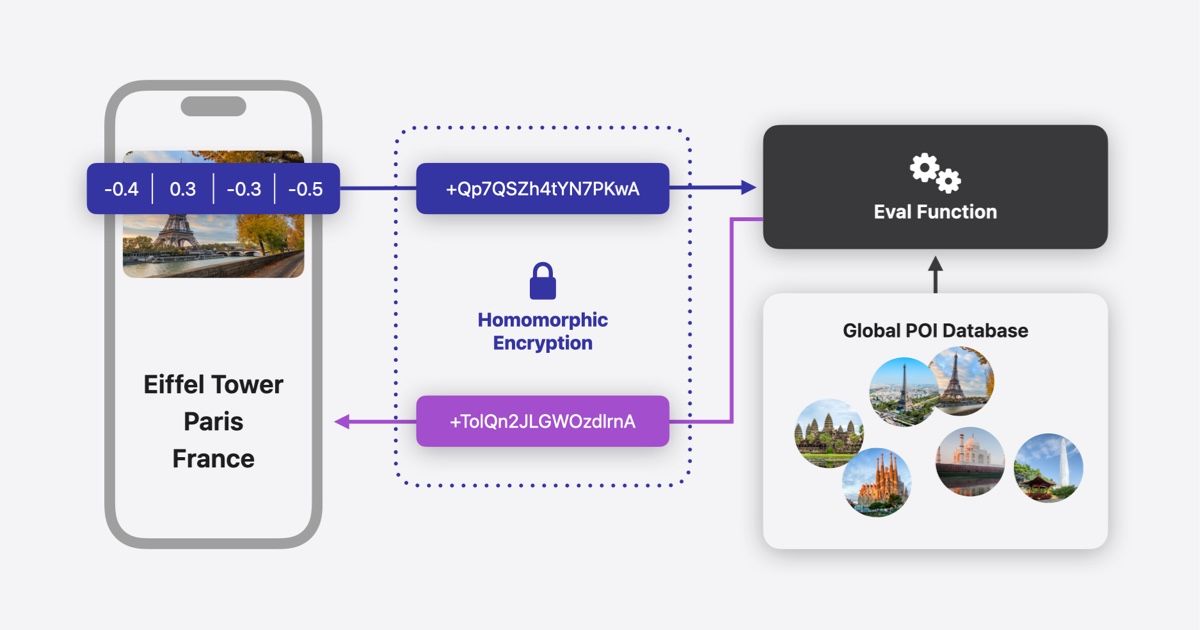
Combining Machine Learning and Homomorphic Encryption in the Apple Ecosystem
At Apple, we believe privacy is a fundamental human right. Our work to protect user privacy is informed by a set of privacy principles, and…
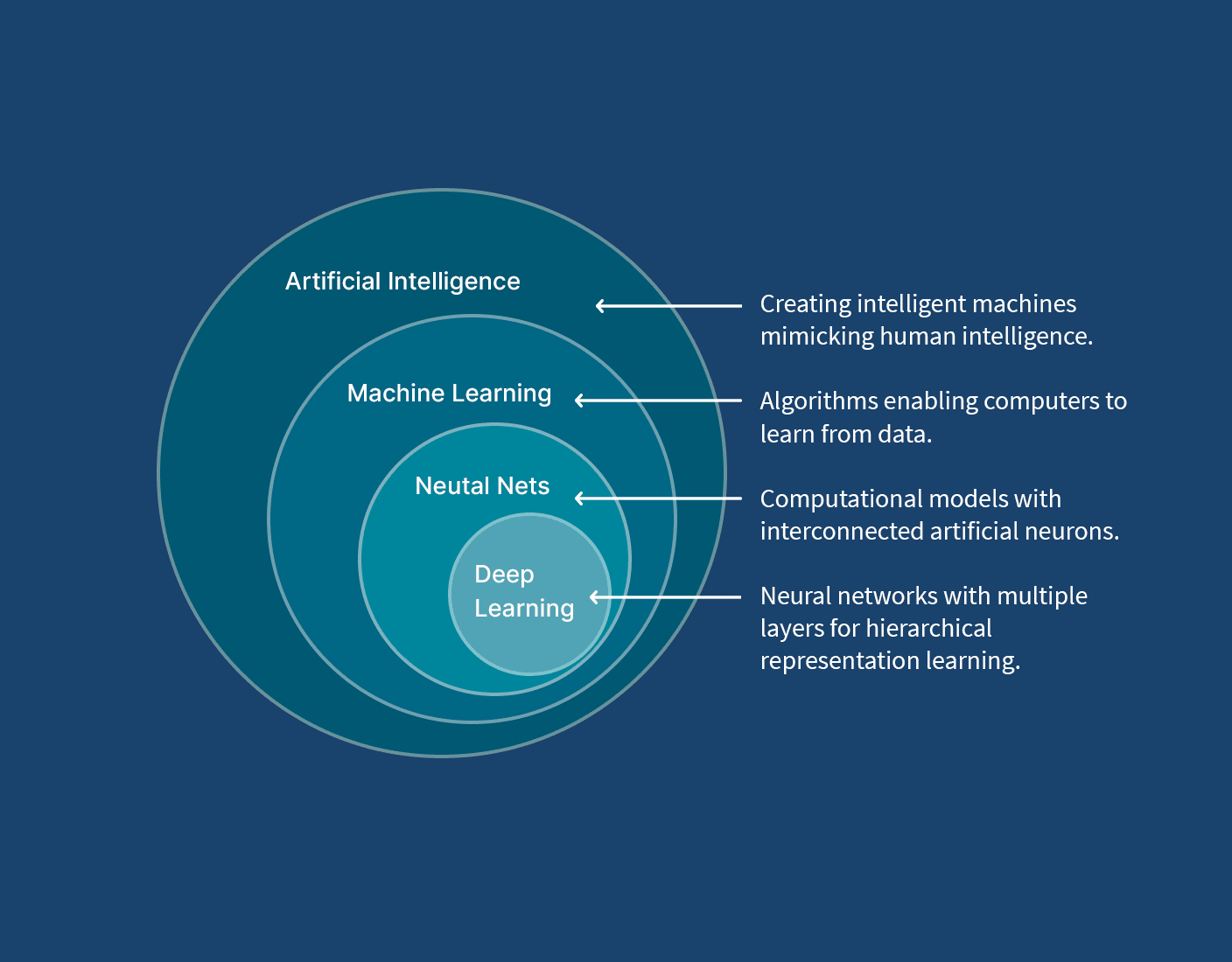
Machine Learning vs AI: Differences, Uses, & Benefits
Machine learning is a subset of AI focused on algorithms enabling computers to learn and make predictions without being programmed.
The hidden cost of Google's AI defaults and the illusion of choice
Google says it respects user privacy in AI, but the reality is not so black and white.

User Privacy and Large Language Models: An Analysis of Frontier Developers' Privacy Policies
Hundreds of millions of people now regularly interact with large language models via chatbots. Model developers are eager to acquire new sources of high-quality training data as they race to improve model capabilities and win market share. This paper analyzes the privacy policies of six U.S. frontier AI developers to understand how they use their users' chats to train models. Drawing primarily on the California Consumer Privacy Act, we develop a novel qualitative coding schema that we apply to each developer's relevant privacy policies to compare data collection and use practices across the six companies. We find that all six developers appear to employ their users' chat data to train and improve their models by default, and that some retain this data indefinitely. Developers may collect and train on personal information disclosed in chats, including sensitive information such as biometric and health data, as well as files uploaded by users. Four of the six companies we examined appear to include children's chat data for model training, as well as customer data from other products. On the whole, developers' privacy policies often lack essential information about their practices, highlighting the need for greater transparency and accountability. We address the implications of users' lack of consent for the use of their chat data for model training, data security issues arising from indefinite chat data retention, and training on children's chat data. We conclude by providing recommendations to policymakers and developers to address the data privacy challenges posed by LLM-powered chatbots.
User Privacy and Large Language Models: An Analysis of Frontier Developers' Privacy Policies
Hundreds of millions of people now regularly interact with large language models via chatbots. Model developers are eager to acquire new sources of high-quality training data as they race to improve model capabilities and win market share. This paper analyzes the privacy policies of six U.S. frontier AI developers to understand how they use their users' chats to train models. Drawing primarily on the California Consumer Privacy Act, we develop a novel qualitative coding schema that we apply to each developer's relevant privacy policies to compare data collection and use practices across the six companies. We find that all six developers appear to employ their users' chat data to train and improve their models by default, and that some retain this data indefinitely. Developers may collect and train on personal information disclosed in chats, including sensitive information such as biometric and health data, as well as files uploaded by users. Four of the six companies we examined appear to include children's chat data for model training, as well as customer data from other products. On the whole, developers' privacy policies often lack essential information about their practices, highlighting the need for greater transparency and accountability. We address the implications of users' lack of consent for the use of their chat data for model training, data security issues arising from indefinite chat data retention, and training on children's chat data. We conclude by providing recommendations to policymakers and developers to address the data privacy challenges posed by LLM-powered chatbots.
More Is Different for AI
Machine learning is touching increasingly many aspects of our society, and its effect will only continue to grow. Given this, I and many others care about risks from future ML systems and how to mitigate them. When thinking about safety risks from ML, there are two common approaches, which I'

Microsoft’s AI Red Team Has Already Made the Case for Itself
Since 2018, a dedicated team within Microsoft has attacked machine learning systems to make them safer. But with the public release of new generative AI tools, the field is already evolving.
