


The security landscape is ever-changing. It is the most non-constant industry on the planet. New threats appear and new solutions are built to squash them. Rinse, repeat. It’s a never-ending cycle in what seems like no end in sight. What’s the promised land? Can we ever reach an end-state where all software running across the world is secure and 100 percent free of breaches?
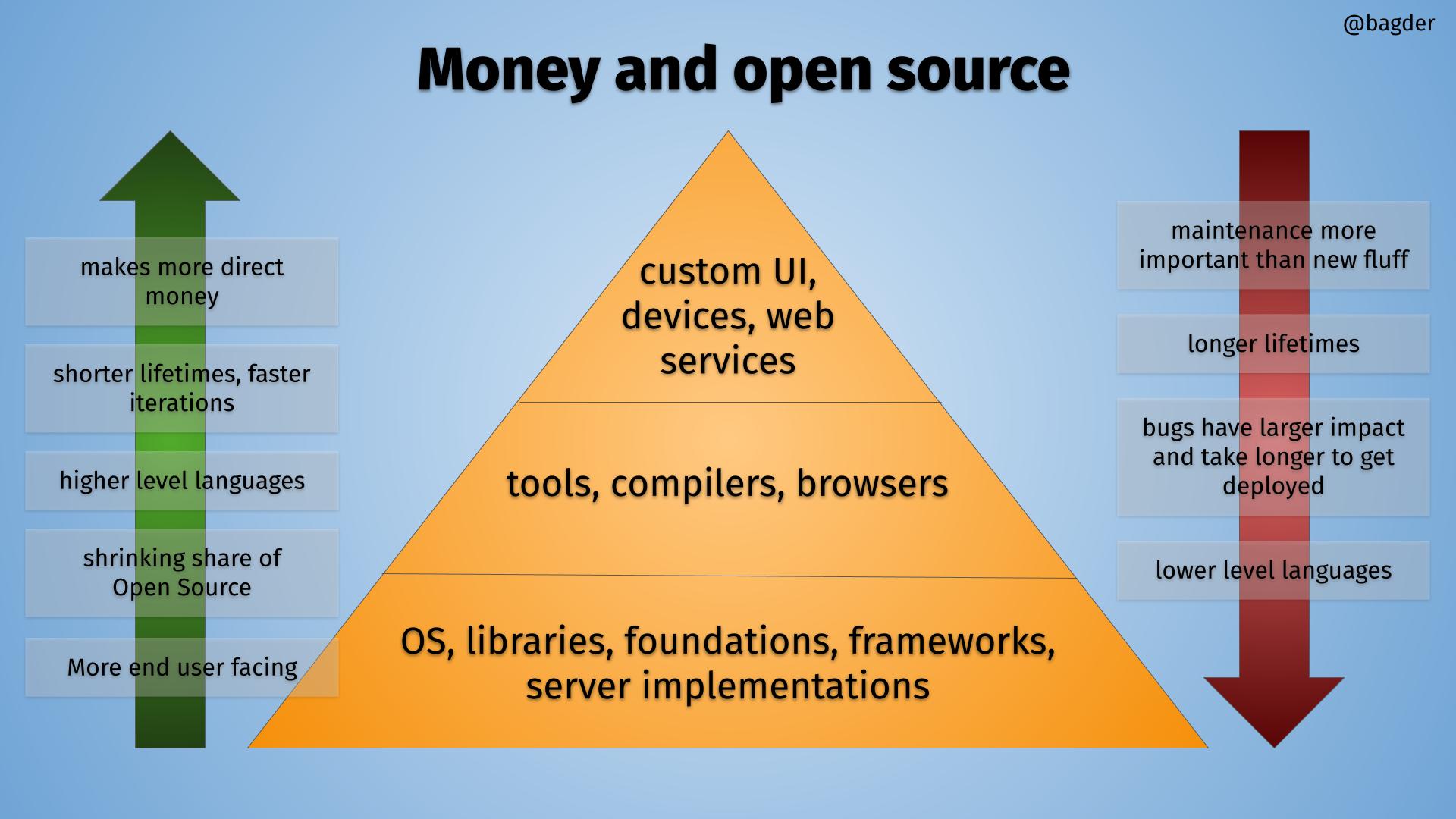
Enforcing the pyramid of Open Source
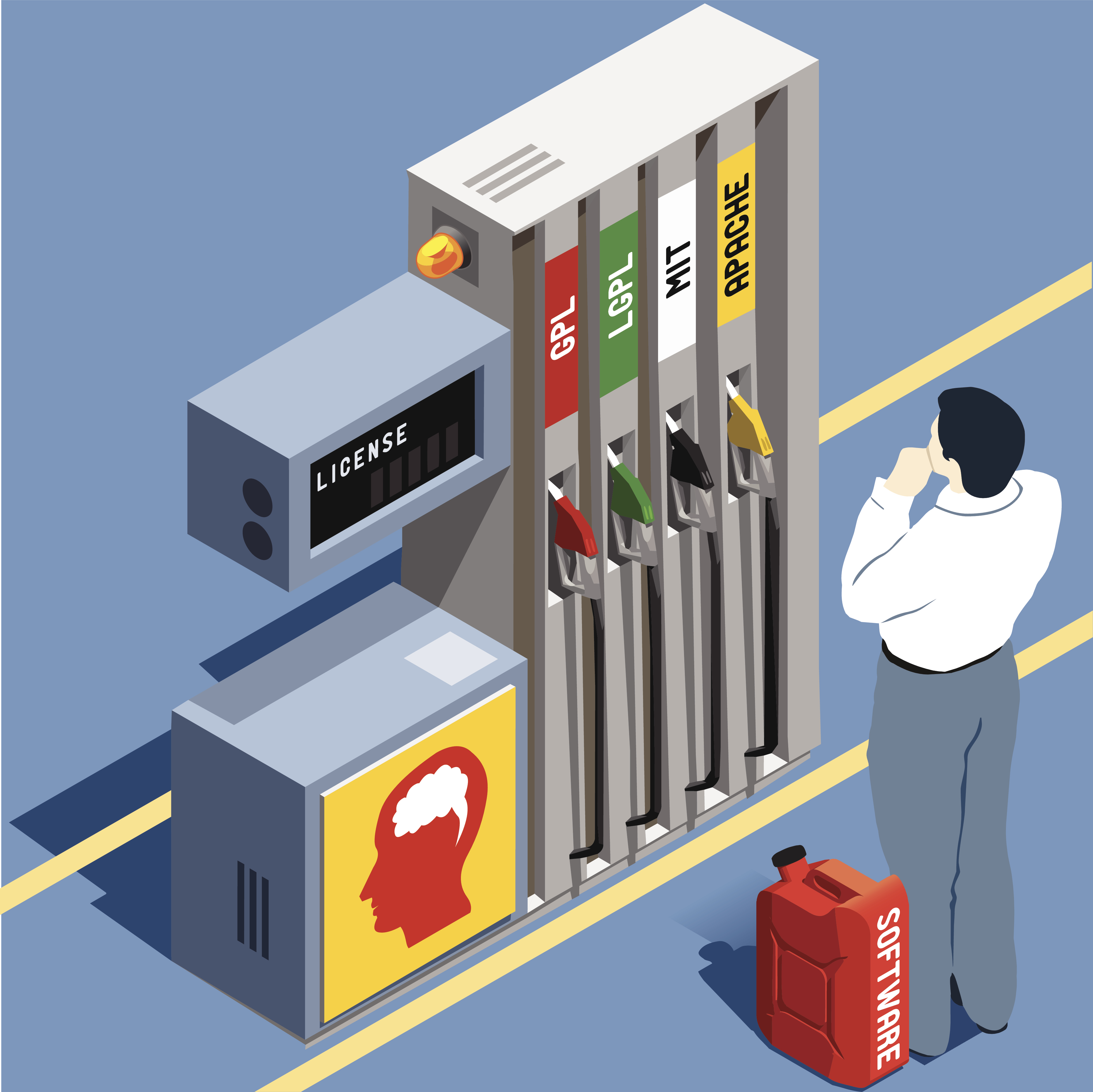
The well-known log4j security vulnerability of December 2021 triggered a lot of renewed discussions around software supply chain security, and sometimes it has also been said to be an Open Source related issue. This was not the first software component to have a serious security flaw, and it will not be the last. What can … Continue reading Enforcing the pyramid of Open Source →
The State Of Software Security In 2019 · Noncombatant
The future of software In the limit, software won't mean anything anymore. But in the interim period we'll wander through an increasingly odd "in-between" age for software. This… | Thomas Wolf | 63 comments
The future of software In the limit, software won't mean anything anymore. But in the interim period we'll wander through an increasingly odd "in-between" age for software. This transition period will be defined by three new precepts. Everflux software - instead of stepping from release to release, software now evolves continuously. Software creation has broken the sound barrier of our own keystrokes, and every model release pushes it faster. There is no reason to wait weeks or months for the next release when a single company merges over 30,000 code changes a day. Bug and vulnerability fixes need to ship quickly and continuously. And every piece of software sits in a lattice of dependencies, each one now shipping at a blistering pace. Translucent sources – A new territory has opened between open source and closed source. Today Claude will happily pick apart any Electron app, and any binary shipped with debug symbols has become a reverse-engineering playground for LLMs. In other words, much so-called closed-source software is now open source in all but name, and keeping code closed makes less and less sense. Even the notion of IP and copyright is breaking in software. I'm writing this text on a personal text editor I prompted Claude to vibe-code from a few videos of people demoing editor features they liked. A mere description of the interface is increasingly enough for an LLM to rebuild the internals. Software IP seems to be dissolving like cotton candy in a raccoon's paws. Bespoke features - Now that all software is open source, nothing prevents us from modifying everything. And personalization is just one prompt and a couple million tokens away, so there is absolutely no reason anymore to wait for someone else to add this feature you want. Everyone becomes their own product manager. Want a search box, an API bridge, a custom button? It's a couple of minutes away. A major challenge appears when bespoke features crash into our first tenet: everflux software. I could fork it for good to add my search box, but I'd lose all future benefit from the software creator. How do you personalize software that was never meant to be personalized, without shouldering all of its future maintenance? Merge conflicts won't be the exception anymore; they'll be a constant of everflux software. Agents will rebase our personal features onto each new release overnight, and software will look less like a product and more like a living species, evolving through constant mutation. Substack post: https://lnkd.in/dw2Re-kA Image: M.C. Escher, Metamorphosis II, November 1939 - March 1940 | 63 comments on LinkedIn

Nicholas Carlini - Black-hat LLMs | [un]prompted 2026
Microsoft Build 2026: Securing code, agents, and models across the development lifecycle | Microsoft Security Blog
Discover how Microsoft enables fast, secure AI development with MDASH and new security capabilities.
Securing our future: July 2026 progress report on Microsoft's Secure Future Initiative | Microsoft Security Blog
Microsoft’s latest Secure Future Initiative report outlines progress on secure foundations, AI-powered defense, and future-ready cybersecurity.

Patch the Planet: global response coordination as agents uncover critical vulnerabilities
Patch the Planet connects security researchers, maintainers, and incident responders to help address critical vulnerabilities across open source.
Code Worth Writing - Ray Myers | SSW 2026
How open-source software took over the world | TechCrunch
It was just five years ago that there was an ample dose of skepticism from investors about the viability of open source as a business model. Fast-forward to today and we’ve witnessed the growing excitement in the space.
NSF investing in secure open-source ecosystems
Open-source software is ubiquitous, supporting artificial intelligence, data science, cloud computing, telecommunications and scientific research tools. Despite these benefits, the number of open-source developers is relatively small, and many projects lack sufficient resources, slowing the pace of innovation and making maintenance difficult. In addition, weaknesses in open-source software, such as security flaws, supply chain risks or insider threats, can spread across many connected systems. In extreme cases, these weaknesses could lead to large-scale failures that affect national or global systems.
Don’t be afraid to code in the open: here’s how to do it securely
There are two big concerns government organisations have around making source code open. They want to know which subsets of the code should be kept closed and how to code in the open securely. To address these questions I’ve introduced two pieces of …
Vulnerability Research Is Cooked
For the last two years, technologists have ominously predicted that AI coding agents will be responsible for a deluge of security vulnerabilities. They were right! Just, not for the reasons they thought.
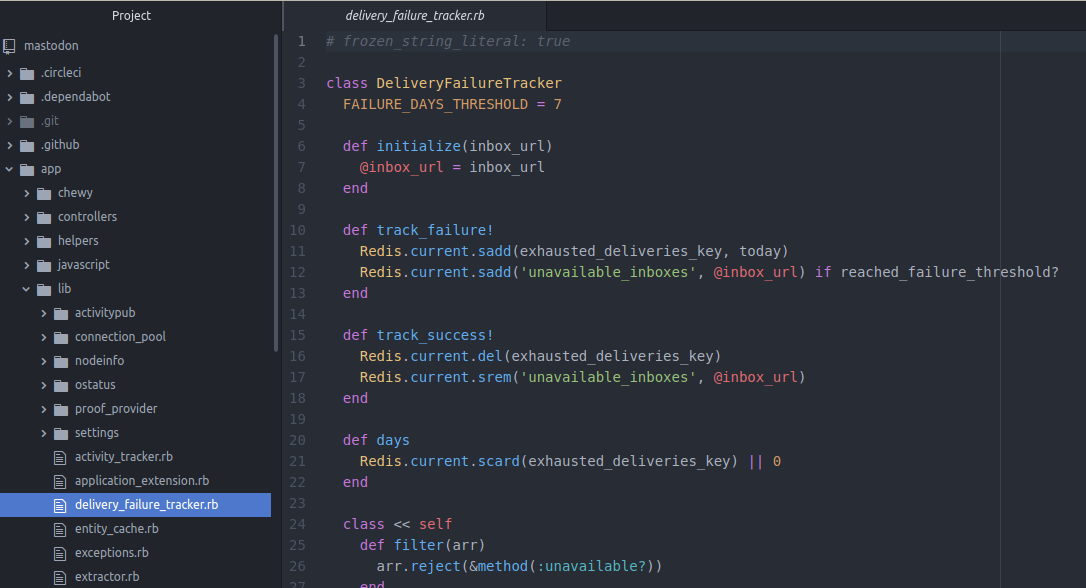
Hacker, Hack Thyself
We’ve read so many sad stories about communities that were fatally compromised or destroyed due to security exploits. We took that lesson to heart when we founded the Discourse project; we endeavor to build open source software that is secure and safe for communities by default, even if there

Hacker, Hack Thyself
We’ve read so many sad stories about communities that were fatally compromised or destroyed due to security exploits. We took that lesson to heart when we founded the Discourse project; we endeavor to build open source software that is secure and safe for communities by default, even if there
New open source effort: Legal code to make reporting security bugs safer
The Disclose.io framework seeks to standardize "safe harbor" language for security researchers.
