

Although neuroscientists have a general idea of what parts of the brain do what, catching them in the act is a difficult proposition. But UC Berkeley researchers have managed to do it, visualizing based on direct measurement the path of a single thought (or at least thread) through the brain.
Your Brain on Politics: The Cognitive Neuroscience of Liberals and Conservatives
Can neuroscience provide evidence for a liberal and conservative thinking style?

This Is Your Brain on Podcasts (Published 2016)
Different people’s brains absorb a compelling story in the roughly the same complicated pattern, using many parts of the brain, researchers found.

The brain's 7D sandcastles could be the key to consciousness | New Scientist
We’ve glimpsed mind-bending geometric structures that fleetingly encode our thoughts, memories and feelings – and could solve the greatest mystery of all

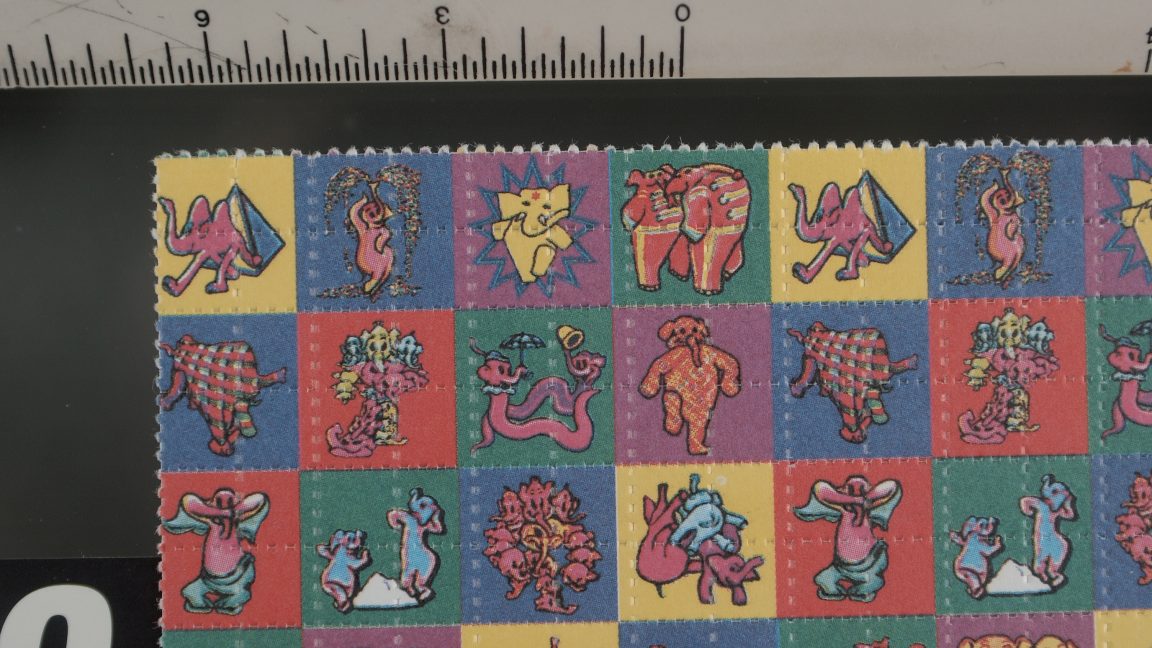
Watching brains on acid using an MRI
Acid may limit the brain's ability to tell internal ideas from external events.
RSA Animate - Iain McGilchrist: The Divided Brain - A Cognitive Whiteboard Animation
Verbalizable Representations Form a Global Workspace in Language Models
If the mind is an ocean, we spend our lives floating at the surface. Beneath us, an enormous amount of processing takes place without our knowledge: our visual systems parsing the contours of a face, our motor circuits maintaining our posture. At any given moment, only a small fraction of this neural activity is accessible to us. Yet it is this privileged sliver of activity that we rely on to reason deliberately: to plan what ingredients to buy for a recipe, or to puzzle out why an engine won’t start. Such thoughts can be articulated out loud, deliberately held in mind, and brought to bear on whatever task the moment demands. This distinction, between our accessible thoughts and our unconscious processing, is perhaps the most striking feature of human cognition.
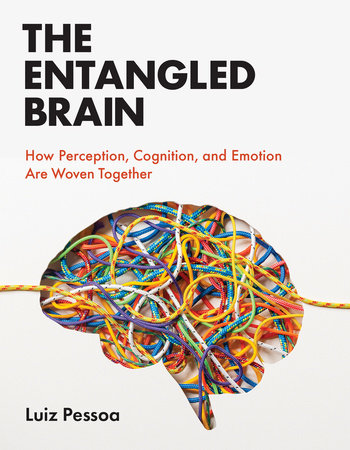
The Entangled Brain: How Perception, Cognition, and Emotion Are Woven Together
A new vision of the brain as a fully integrated, networked organ.Popular neuroscience accounts often focus on specific mind-brain aspects like addiction, c
Neuroscientists show how neurons respond to sequences of familiar objects
The world grows increasingly more chaotic year after year, and our brains are constantly bombarded with images. A new study from Center for the Neural Basis of Cognition (CNBC), a joint project between ...

The Neuroscience At The Heart Of Learning And Leading
Joshua Freedman (@eqjosh) shares the science behind what's going on inside your head. Emotional intelligence, he says, is the difference that makes the difference. Photo: Flickr/labguest Marco Iacoboni is one of the pioneers in a new area of neuroscience. A few years ago in Parma, Italy, scientists were researching how the brain [...]

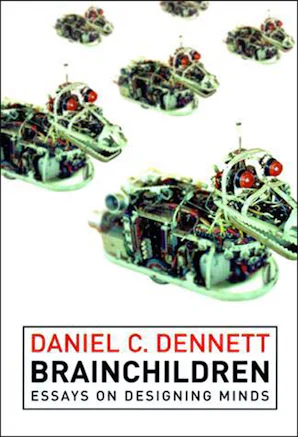
Brainchildren
Minds are complex artifacts, partly biological and partly social; only a unified, multidisciplinary approach will yield a realistic theory of how they came i...
Smoke-away on Twitter / X
Andrej Karpathy: "What you want is the inner thought monologue of your brain... The trajectories in your brain as you're doing problem solving, if we had a billion of that, AGI is here roughly speaking." pic.twitter.com/C0kBUITPBv— Smoke-away (@SmokeAwayyy) October 18, 2024

Open-source software reveals complete 3D architecture of brain cells
The neurons in our brain that underlie thought connect to each other using tiny branch-like structures on their surfaces known as dendritic spines. Now scientists at Columbia's Zuckerman Institute and ...

Do not give up your brain
It's tempting to just let tools think for you, but you still need to be able to think for yourself and stay sharp.


The brain in the machine: How AI could help explain how we think | IBM
Scientists are using large AI models to predict patterns of brain activity at scale, a development that researchers say is pushing neuroscience toward a new kind of digital imaging.
